The $11 Million Moor That Refuses to Be a Forever Estate
Forget the superyacht. Forget the private island in the Bahamas. The rarest status symbol in Britain right now is a patch of soggy peatland that you promise not to keep. In the far northern reaches of Northumberland, where the roads dissolve into gravel and the GPS sends you up a grassy track to nowhere, a quiet revolution is unfolding. It involves a glacial bowl of 7,500 acres, an £8.5 million price tag, and a radical idea that has the old-money landowners reaching for their single malts: what if the ultimate act of wealth is giving it all away?
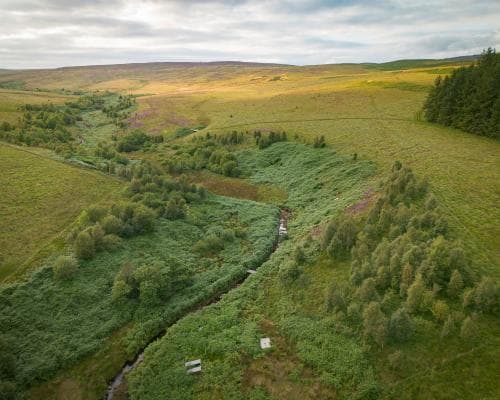
This is Emblehope Moor, the largest contiguous rewilding site under single ownership in England. It's a landscape of desiccated bogs, non-native spruce, and hidden drains that have sucked the life out of the peat. But it's also a place where golden eagles are already prospecting, where merlins dart, and where red squirrels and pine martens still cling to the edges. The new custodian is Restore, a nature restoration company with a plan that sounds like a TED Talk crossed with a private equity playbook. They've bought the moor with a £4.5 million loan from Triodos Bank, a green lender, and they're raising another £4 million to fund a 20-year transformation. The goal: bring back beavers, curlews, black grouse, and a functioning water system. But here's the twist that makes this deal the talk of every grouse moor from Yorkshire to Scotland: once the investors have been paid back with a two-times return, and the bank is squared away, Restore will simply hand the entire site over to the local community. No forever laird. No dynastic ownership. Just a well-funded, wild landscape left to the people who live next to it.
Benedict Macdonald, the environmental writer and founder of Restore, puts it bluntly: "We've got to take the greed out of it for it to work." That's not a line you hear often in the world of land acquisition, where the default setting is to buy, enclose, and hoard. Macdonald's model is deliberately hybrid — part capitalist, part communitarian — and he wants it to become the national template for the uplands. The numbers are compelling: a two-times return for investors is modest by hedge fund standards, but it's a far cry from the negative yields on many conservation projects. And the environmental upside is staggering. Emblehope is a Site of Special Scientific Interest, and its streams still hold trout and salmon. But decades of sheep grazing, grouse shooting, and dog training have left the peat parched. The first tasks are to rewet the moor by blocking the hidden drain network and to rip out swaths of sitka spruce. The sphagnum moss, which should be a water-soaked sponge even in summer, is currently crackling dry. Restore's modelling suggests that rewetting could turn this landscape into a carbon sink and a biodiversity hotspot simultaneously.
What's happening at Emblehope is part of a larger mosaic that environmentalist Ben Goldsmith has dubbed "Britain's Yellowstone." Just down the road, Rothbury — the largest estate to hit the market in three decades — is the target of a £30 million fundraising appeal by the Wildlife Trusts, and they're nearly there. Nearby, the 12,000-acre College Valley and the 4,000-acre Hepple Wilds are accelerating their own restoration efforts, while the vast 148,000-acre Kielder Forest is being managed for biodiversity by Forestry England. Macdonald is quick to note that this isn't Yellowstone in scale, but it is England's largest wild landscape by a long factor. What's striking is the shift in values. For a century, owning an estate like Emblehope was about shooting, grazing, and the quiet prestige of knowing your land stretched to the horizon. Now, the prestige is in how quickly you can make it wild again — and whether you're willing to walk away.
For the ultra-wealthy, this represents a new kind of luxury: the luxury of legacy without the burden of ownership. The old model was to buy a Scottish castle and a grouse moor, keep it in the family for centuries, and maybe open a small museum. The new model is to invest in something that will outlive you not because you own it, but because you let it go. Restore's structure is being watched closely by family offices and impact investors who are tired of the usual greenwashed ETFs and carbon offsets. Here's a deal where you can actually see your money turn into sphagnum moss and golden eagle nests, and then disappear into the hands of a community trust. It's a strange kind of ROI, but for a certain breed of billionaire, it's the only one that matters.
The next 20 years will determine whether Emblehope becomes a model or a footnote. The £4 million fundraising target is still open, and the 20-year timeline means this is a patient capital play, not a quick flip. But if the model works, expect to see it replicated across the British uplands — and beyond. The message is clear: the future of luxury land ownership isn't in building higher fences. It's in tearing them down. For those who can afford it, the ultimate acquisition might just be the one you give away.
The Experience
Walk Emblehope Moor with Restore's founders during a private site visit, then discuss how your family office can back a rewilding project that returns both capital and wildness.