She Walked a Marathon in a Bionic Suit, Then Soared—Until the Sky Took Her
Claire Lomas, a disability campaigner who raised over £900,000 for spinal injury research and became the first person to complete a marathon in a bionic suit, died in a microlight crash while filming for Apple. A coroner has ruled her death accidental, but her legacy of fearless giving endures.
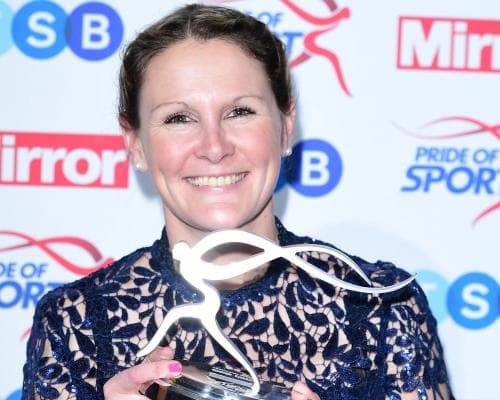
On a sweltering August afternoon in Jordan, a microlight aircraft veered off a desert runway and slammed into a rock. The pilot, 44-year-old Claire Lomas, died five weeks later from severe traumatic injuries. She wasn't a thrill-seeker chasing adrenaline. She was a mother, a former chiropractor, and a woman who had already cheated death once—and spent the rest of her life turning that second chance into a lifeline for others.
Lomas's story begins in 2007, when a horse-riding accident left her paralyzed from the waist down. Most of us would have retreated, but Lomas did the opposite. She turned her wheelchair into a launchpad. She raised more than £900,000 for the Nicholls Spinal Injury Foundation, a charity funding research to cure paralysis. And in 2012, she did something no one had ever done: she completed the London Marathon in 17 days, using a robotic "bionic" suit that moved her legs step by step. The image of her crossing the finish line, exhausted but beaming, became a symbol of defiance.
But Lomas wasn't content with one miracle. She kept pushing. She took up flying, using a specially adapted microlight that allowed her to pilot without her feet. That's what brought her to Amman in July 2024, filming an episode for Apple's Vision Pro virtual reality headset series, "Adventure." The goal was to show that disability doesn't mean limitation—that a woman in a wheelchair could soar. The camera was meant to capture her joy, not her final moments.
The inquest, held in Rutland and North Leicestershire, painted a careful picture of what happened. The Royal Aero Sports Club of Jordan found no violations of safety procedures. The 180-degree camera attached to the aircraft wasn't at fault. But there were whispers of something else. Ben Ashman, the designer who built Lomas's adapted microlight, told the hearing that she had posted on Facebook about putting on her "brave pants" before the flight—a phrase he'd never seen her use. She was, he believed, stressed. The senior coroner, Louise Pinder, recorded a verdict of accidental death, noting that during the final approach, "it became apparent" something went wrong.
Lomas's philanthropy wasn't just about writing checks. It was about living her message. She used her own body as proof that paralysis isn't the end. Her marathon walk raised awareness and funds simultaneously, showing that giving can be a spectacle of courage. The Nicholls Spinal Injury Foundation, which she championed, focuses on repairing the damaged spinal cord through innovative research—work that could one day make wheelchairs obsolete. Lomas's £900,000 helped keep that research alive, funding trials and scientists who are inching toward a cure.
Her death has rippled through the charity world, reminding us that even the most careful givers take risks. But her friends and family insist she'd want us to focus on the mission, not the tragedy. "She lived her life at full throttle," one close friend said. "She'd hate for anyone to stop trying because of what happened to her." That sentiment is now the foundation's rallying cry. The Nicholls Spinal Injury Foundation has announced it will continue Lomas's work, and donations have spiked in her memory.
What does Lomas's story teach us about the culture of giving? That philanthropy isn't always safe. Sometimes it's a woman in a bionic suit, walking 26.2 miles over 17 days, her hips chafed and her spirit unbroken. Sometimes it's a disabled pilot taking to the skies to show that human potential has no ceiling—until, tragically, it does. Claire Lomas gave us a template for courage: not just writing a check, but becoming the story. Her legacy is a challenge to every giver—billionaire or bus driver—to ask not, "What can I afford?" but "What am I willing to risk?"