Seni Adetu, the Guinness Nigeria veteran, takes a board seat at JPMorgan's planned merchant bank
Seni Adetu, former Guinness Nigeria CEO, joins the board of JPMorgan's proposed merchant bank as an independent non-executive director after CBN approval.
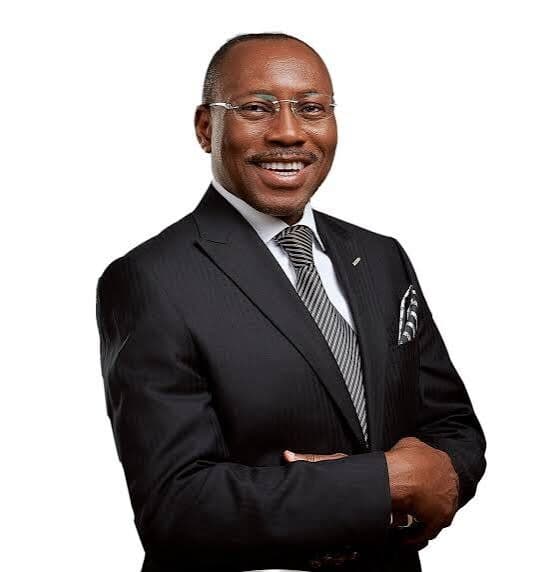
The most interesting board appointments in African finance rarely come with a ribbon-cutting. They arrive quietly, approved by a regulator, announced in a company notice, and only later do they reveal what a global institution is really planning. That is the case with Seni Adetu, the former managing director and chief executive of Guinness Nigeria Plc, who has been appointed an independent non-executive director of the proposed JPMorgan Merchant Bank Nigeria Limited — a move approved by the Central Bank of Nigeria.
Adetu is not a banker by training. He is a chemical engineering graduate of the University of Lagos who added an MBA in marketing there, and his reputation was built in consumer goods. He started at John Holt Plc, moved into international beverages, and in 2001 became managing director of Coca-Cola English West Africa, based in Ghana. Diogo later took him to Guinness Ghana Plc in 2006, where he was the first African to hold the top job, and in 2009 he became group managing director and chief executive of Diageo East Africa in Kenya. In 2012 he returned to Lagos as managing director and chief executive of Guinness Nigeria, a post he left in December 2014. Along the way he founded First Primus West Africa Limited, an integrated marketing communications group whose subsidiaries include Ogilvy Nigeria and Algorithm Media, and he has taught on the Chief Executive Programme at Lagos Business School.
The boardroom is not unfamiliar territory. Adetu joined Fidelity Bank Plc as an independent non-executive director on April 28, 2016, so this is a second financial-services governance role rather than a debut. His mandate at the proposed JPMorgan entity is expected to centre on oversight, governance and strategic guidance, not day-to-day management. The distinction matters: an independent non-executive director is there to test management's thinking, chair or sit on committees, and protect the interests of a bank that does not yet have a licence to trade.
That is the crucial caveat. The CBN has granted approval-in-principle for JPMorgan to establish a merchant bank in Nigeria, but the institution must still satisfy outstanding regulatory requirements and obtain a final operating licence before it can begin business. Approval-in-principle is a signal of intent, not a launch. JPMorgan is one of the world's largest banks, and its decision to pursue a merchant banking licence in Nigeria — rather than simply serving clients from London or New York — says something about how global capital now views the market. Merchant banks in Nigeria are wholesale creatures: they lend to companies, arrange deals and advise on capital, rather than chase retail deposits. For a firm like JPMorgan, that is the natural entry point into a market where its multinational clients already operate.
For Nigerians, the significance is layered. Guinness Nigeria is one of the country's most storied corporate names, and Adetu's rise through Diageo's African ranks made him one of the few Nigerian executives to run major businesses in Ghana, Kenya and at home. His career maps the circuit of African consumer capitalism: Coca-Cola, Diageo, Guinness, then marketing and advisory work. Now it bends toward finance, where the returns are larger and the regulatory scrutiny sharper. His presence on the board gives the venture a local face and local judgement — useful when a foreign bank must read a market where relationships, licensing and politics are inseparable.
Watch the licensing process rather than the announcement. If the final licence comes through, JPMorgan will join a small field of international banks deepening their Nigerian footprint, and Adetu will be one of the Nigerians whose name lends the venture credibility. If it stalls, the appointment will read as preparation for a plan that never quite arrived. Either way, the movement of a consumer-goods grandee into banking governance is a small but telling sign of where Africa's corporate elite is being pulled: toward the institutions that move capital, not just the ones that sell it.