The ATP’s Doubles Raid: A Tiny Pot of Gold That Reveals Everything Wrong with Tennis Economics
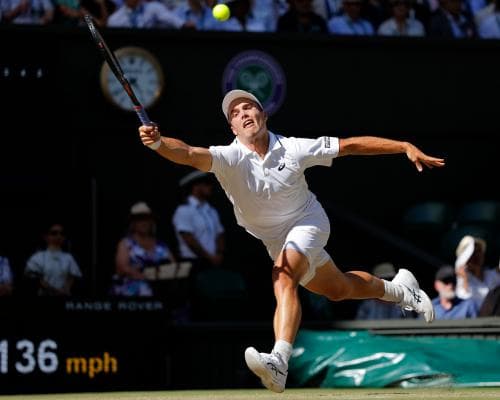
The ATP is proposing to redirect prize money from doubles players to singles players ranked 50–80, a move that would net each beneficiary roughly $550,000—hardly life-changing for millionaire athletes, but devastating for the doubles specialists who earn a fraction of that. It’s a microcosm of a wider wealth-concentration trend in sports and markets: the rich taking from the less rich, not from the system itself.
Billionaire Wealth and Markets: How the World’s Richest Grow and Protect Their Fortunes
Making a billion dollars and keeping it are two very different challenges. The world’s wealthiest people operate in a financial universe most never see — family offices, private markets, alternative assets, and strategies designed as much to preserve capital across generations as to grow it. World Billionaire Day tracks the money itself: where it moves, how it is managed, and what the ultra-wealthy do differently.
Wealth at this scale is less about picking winning stocks than about allocation, structure, and time horizon. The richest investors think in decades, diversify across assets ordinary investors cannot access, and treat risk management and tax efficiency as seriously as returns.
From market intelligence and capital allocation to the strategies that move billionaire fortunes, this is a clear-eyed look at the mechanics of extreme wealth — informational, not advisory, and always grounded in how the money actually behaves.
How the ultra-wealthy manage money differently
The central vehicle is the family office — a private organization that manages a single family’s wealth with the sophistication of an institution. It coordinates investment, tax, estate planning, and philanthropy under one roof, giving the ultra-wealthy access to deals, managers, and strategies that ordinary investors simply cannot reach.
Allocation, not stock-picking, drives outcomes. Great fortunes are diversified across public equities, private companies, real assets, credit, and alternatives, deliberately spread so that no single shock can impair the whole. The priority shifts from maximizing return to compounding steadily while surviving every downturn intact.
Preservation and transfer are the long game. A large share of billionaire financial strategy is aimed at protecting capital from taxes, inflation, and time, and at passing it to the next generation intact — which is why estate structures, trusts, and long horizons matter as much as any single investment decision.
What is a family office and why do billionaires use one?
A family office is a private firm that manages the wealth of a single family, combining investment, tax, estate planning, and philanthropy in one place. It gives the ultra-wealthy institutional-grade sophistication and access to private deals and managers that individual investors cannot reach.
How do the richest investors actually grow their money?
Primarily through disciplined asset allocation and access to private markets — diversifying across public and private equity, real assets, credit, and alternatives, and holding for the long term. The emphasis is on steady compounding and risk control rather than dramatic bets.
Why is preserving wealth as important as growing it?
Because taxes, inflation, poor succession planning, and market shocks can erode a fortune as surely as bad investments. Billionaire strategy devotes enormous effort to protecting capital and transferring it across generations, which is why structures like trusts and estate planning are central. This is general information, not financial advice.
Market Intelligence Dashboard
Key indicators and sector movements.
The ATP’s Doubles Raid: A Tiny Pot of Gold That Reveals Everything Wrong with Tennis Economics
The 600 Drones the FBI Just Confiscated Over the World Cup — And What It Says About the New Frontier of Security Markets
The £5m Mystery: Inside the Shadow Funding Network Behind Nigel Farage’s Political Machine
The Heatwave Heist: Why Scammers Are Targeting the Wealthy (and Winning)
The $20 Million Club: How New South Wales Is Rewriting the Economics of Poker Machines
Andy Burnham’s London Play: The Real Wealth Story Isn’t North vs. South — It’s a Housing Crisis Eating Capital Returns
Andy Burnham’s Coronation: What Labour’s One-Sided Race Tells Us About Political Capital
Bazball's Bust: The Empty Stadium That Exposed a Nihilistic Wealth Machine
Where Smart Money Is Flowing

The Guardian view on private equity in the public sector: children’s services must be freed from debt-fuelled takeovers | Editorial
New analysis by the Guardian has revealed the disturbing extent of these firms’ influence in highly sensitive areas Children’s homes and care placements are not ordinary commodities. Yet Britain has allowed some of its m

A council housebuilding boom is central to Burnham’s vision. Can it be done?
In the third of a series on nationalisation, we look at the huge challenge as 1.5m families wait for social housing ‘Commanding heights of the economy’: the postwar blueprint that inspires Burnham Will Andy Burnham ‘go b

The Quiet Consolidation in Private Markets
As interest rates stabilize, a new wave of mega-funds is quietly rolling up specialized infrastructure and AI-compute assets across Europe and North America.

Ellison's Oracle Wealth Supercharges Real Estate Portfolio
Fueled by Oracle's AI-driven surge, Larry Ellison is accelerating his acquisition of prime ultra-luxury coastal holdings.

Sequoia & Andreessen Double Down on Energy Infrastructure
Recognizing that AI compute is constrained by grid capacity, top venture tiers are pouring billions into next-generation nuclear and grid optimization startups.

The Future of Private Equity: Strategies for the Next Decade 1
In-depth analysis of how institutional capital is navigating the shifting landscape of Private Equity in an era of macroeconomic uncertainty.
Wealth Tracker
Movements and strategies of the world's wealthiest

Donald Trump
Trump’s $2B Crypto Haul Redefines the Presidency as a Personal Hedge Fund
Donald Trump has raked in $2 billion since returning to office, half from cryptocurrencies he promotes, turning the modern executive into a medieval-style revenue machine that blurs state power with personal enrichment. For wealth builders, this signals a new era where political influence directly monetizes markets, creating both opportunities and systemic risk.

Bernard Arnault
Bernard Arnault Maps Out Succession
The LVMH titan has formalized a new holding structure, ensuring generational control while optimizing for upcoming European tax shifts.
Larry Ellison
Ellison's Oracle Wealth Supercharges Real Estate Portfolio
Fueled by Oracle's AI-driven surge, Larry Ellison is accelerating his acquisition of prime ultra-luxury coastal holdings.

Warren Buffett
The Future of Fintech: Strategies for the Next Decade 5
In-depth analysis of how institutional capital is navigating the shifting landscape of Fintech in an era of macroeconomic uncertainty.

Mark Zuckerberg
The Future of Real Estate: Strategies for the Next Decade 12
In-depth analysis of how institutional capital is navigating the shifting landscape of Real Estate in an era of macroeconomic uncertainty.
Strategy & Architecture
Structures shaping generational wealth

Andy Burnham urged to be radical on economy to help Labour win next election
Exclusive: Poll shows policies such as rent control and higher wealth taxes could fend off Reform UK in key seats Andy Burnham is being urged to adopt an “economic populist” approach to combating the cost of living crisi
Family Offices Pivot to Direct Lending
Bypassing traditional funds, ultra-high-net-worth single family offices are creating bespoke debt vehicles to finance middle-market acquisitions.
Bernard Arnault Maps Out Succession
The LVMH titan has formalized a new holding structure, ensuring generational control while optimizing for upcoming European tax shifts.
The Future of Family Offices: Strategies for the Next Decade 3
In-depth analysis of how institutional capital is navigating the shifting landscape of Family Offices in an era of macroeconomic uncertainty.
Capital & Markets
The latest intelligence on wealth and investment


