The ATP’s Doubles Raid: A Tiny Pot of Gold That Reveals Everything Wrong with Tennis Economics
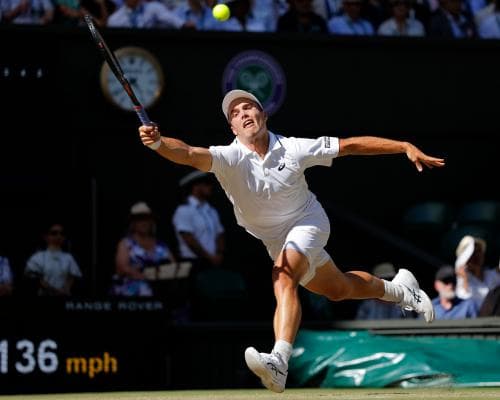
Here’s a number that should stop you cold: Reilly Opelka, ranked 109th in the world in singles, has won six tennis matches this year and made about half a million dollars. And he thinks doubles players earn too much.
That’s the financial logic driving the ATP’s latest proposal: take money from the doubles pot and funnel it to singles players ranked between 50 and 80. The math is simple, if you ignore the humans involved. If you abolished doubles and redistributed the cash, each of those mid-tier singles players would get an extra $550,000 a year. Sounds nice, until you realize they’ve already made close to a million this season—with more tournaments to come. The doubles players, meanwhile, are the ones scratching for a living on a fraction of that.
This isn’t about grassroots growth. It’s not about creating new jobs or expanding the tennis economy. It’s a straight transfer from the poorer players to the slightly-less-poor players. The ATP frames it as a business decision, but the ATP is a governing body, not a corporation. The money involved is minute in the grand scheme of global sports finance—we’re talking about sums that wouldn’t buy a single luxury suite at the U.S. Open. Yet the top 10 singles stars are backing it, calling it a matter of market efficiency.
Let’s zoom out. This is the same playbook we see in public markets, private equity, and even real estate: those with power and voice engineer a redistribution that benefits themselves, cloaked in the language of optimization. The ATP tried this exact move in 2005. Roger Federer and Rafael Nadal walked into the board meeting and killed it. They understood that doubles players are tennis professionals, not charity cases. They earn a fraction of the overall money, and the best singles players are doing just fine. That argument held then. Now, the calculus has shifted—not because the numbers changed dramatically, but because the top players have decided that “it’s a business.”
For wealth builders, this is a parable about the illusion of scarcity. The ATP isn’t trying to grow the pie; it’s fighting over crumbs. The total prize money at Wimbledon this year is around £50 million. Doubles accounts for maybe 10 percent of that. Even if you redistributed every penny to singles players ranked 50–80, each would get a bonus that’s less than what a mid-level hedge fund analyst makes in a good year. But the optics matter. When the top 10 endorse a plan to take from the bottom of the profession, they signal something about how wealth is protected in any ecosystem: the strong don’t just compete; they rewrite the rules.
What’s the market signal here? It’s a warning for anyone investing in sports leagues, entertainment assets, or any talent-driven industry. When the top earners start demanding a larger share of a fixed pot, it often precedes consolidation, strikes, or a loss of talent depth. In tennis, doubles has long been the proving ground for young singles players and the home of specialists who make the sport watchable. Strip that away, and you risk a monoculture where only the top 50 singles players matter—and the product gets thinner.
For now, the proposal is just a proposal. But the fact that it’s being discussed at all tells you something about the direction of travel. The ATP is treating its own players like assets to be reallocated, not people to be developed. And if you’re a wealthy investor looking at tennis as an asset class—whether through media rights, sponsorship, or club ownership—you should ask: what happens when the talent pipeline dries up because the bottom half can’t afford to stay in the game?
This isn’t just a tennis story. It’s a capital story. The same dynamics play out in private equity, where carried interest gets tweaked to favor GPs over LPs. In tech, where platform fees rise while creator payouts shrink. In every market where the people with the loudest voices decide that the people with the smallest checks should be the first to give. The ATP’s doubles raid is a small, almost petty fight over pocket change. But it reveals a big truth about how wealth is concentrated: not by growing the pie, but by redrawing the slices.
More in MONEY