

Billionaire Innovation: How the World’s Wealthiest Build the Future
Innovation is where great fortunes are made and remade. The billionaires who dominate today’s wealth rankings rarely inherited their position — they built it by backing a technology, a platform, or an idea before the rest of the world understood its value. From artificial intelligence and private spaceflight to biotech, clean energy, and quantum computing, the frontier of innovation is also the frontier of extreme wealth.
World Billionaire Day tracks that frontier: the ventures billionaires are funding, the breakthroughs reshaping entire industries, and the strategic bets that could mint the next generation of ten-figure fortunes. This is not speculation for its own sake — it is a map of where capital, talent, and ambition are converging right now.
What separates a durable innovator from a one-hit founder is the ability to compound advantage: to reinvest early wins into research, acquisitions, and the kind of long-horizon bets that public markets punish but private wealth can afford to make. That patience is the quiet engine behind almost every self-made billionaire’s rise.
What drives billionaire-scale innovation
The largest innovation fortunes tend to cluster around three forces. The first is platform leverage — building the rails that other businesses are forced to run on, so that every downstream success pays a toll upward. Software marketplaces, payment networks, cloud infrastructure, and app ecosystems all follow this pattern.
The second is capital intensity as a moat. Spaceflight, semiconductor fabrication, gigafactories, and frontier AI models all cost so much to attempt that only the very wealthy or the very well-funded can even enter the race. That barrier, once crossed, protects the incumbent for years.
The third is timing and conviction. The billionaires who look prescient in hindsight usually made an unfashionable bet — electric vehicles when they were a punchline, online retail when it lost money, large language models before they worked — and held it through the doubt. Innovation wealth rewards the willingness to be early and alone.
Which industries create the most billionaires today?
Technology remains the single largest source of new billionaire wealth — spanning software, semiconductors, artificial intelligence, and consumer internet — followed by finance, industrials tied to energy transition, and biotechnology. The common thread is scalability: businesses whose value grows far faster than their headcount or capital base.
How do billionaires decide which innovations to back?
Most rely on a mix of proprietary deal flow, in-house technical teams, and a tolerance for long payback periods that ordinary investors cannot sustain. They look for defensible moats, founders with unusual conviction, and markets large enough that even a modest share is transformative.
Is innovation wealth sustainable, or does it fade?
It can be either. Fortunes built on a single product often erode as competitors catch up, while those built on platforms, networks, or continual reinvestment tend to compound for decades. The most enduring innovators treat their first success as seed capital for the next.
Industry Intelligence
The latest signal from every frontier

Enterprises lost Claude Fable 5 for a few weeks. New data shows two-thirds had already built their hedge
Latest Insight →
NASA Launches Space Robot to Save ‘Multitool’ Orbital Satellite From a Fiery Death
Latest Insight →
Energy Department Wants Data Centers to Stop Draining the Grid During Brutal Heat Wave
Latest Insight →


Latest Breakthroughs
The newest innovations shaping the world right now
 Fintech
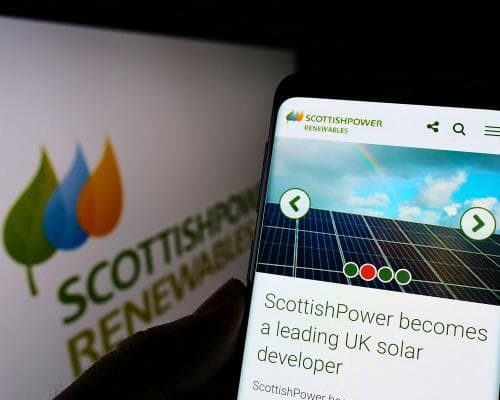
The Solar Payment Black Hole: Why Legacy Utility IT Is Undermining the Energy Transition
ScottishPower's 14-month failure to process a feed-in tariff transfer reveals a critical infrastructure gap: the financial rails for distributed energy payments remain stuck in the 1990s, throttling the very households that bankroll the green grid. This isn't a customer service complaint—it is a systemic risk signal for the entire rooftop solar economy.
 Artificial Intelligence
EU Biometric Border Rollout Hits Turbulence: Half-Empty Planes Signal a Crisis of Capacity, Not Technology
Airlines and airports are urging Brussels to suspend the new EU biometric entry-exit system during peak summer, warning that processing bottlenecks are leaving planes half-full and passengers stranded in five-hour queues. The crisis reveals a critical gap between advanced AI-driven identification systems and the physical infrastructure needed to handle real-world passenger surges.
 INNOVATION
The AI Correction: A Billionaire’s Pause, Not a Panic
For those who navigate the world through the lens of a Bloomberg terminal, the past fortnight has offered a rare moment of suspense—a tremor in the ve...
 Defense Tech
Starmer’s Defence Investment Plan: A Fractional Bet Against a Fracturing World
The UK’s long-overdue Defence Investment Plan (Dip) raises spending to just 2.68% of GDP by 2030, triggering resignations and criticism that it is too little to counter accelerating threats. The plan signals a critical inflection point where bureaucratic inertia clashes with the need for agile, tech-driven defense modernization.
 INNOVATION
The Oura Ring 5: Where Biometric Brilliance Meets Bespoke Minimalism
In the rarefied world of the ultra-wealthy, the ultimate accessory is not the one that shouts—it is the one that disappears. For years, wearable techn...
 INNOVATION
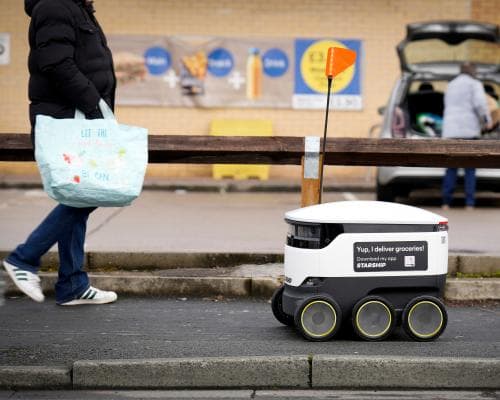
The Autonomous Butler: Why the World’s Elite Are Betting on Pavement-Dominating Robots
For the ultra-wealthy, time is the only currency that cannot be minted. Every minute spent retrieving a forgotten ingredient, a last-minute gift, or a...
Trending Now
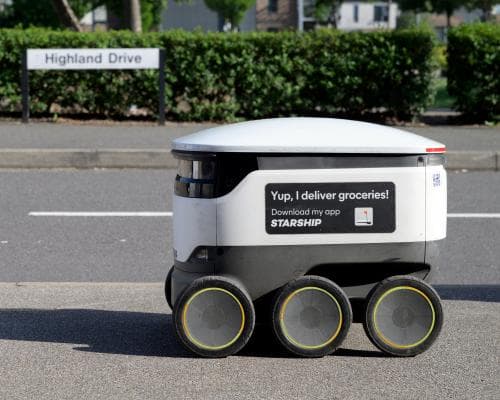
The £600 Courier: Why the World’s Elite Are Watching Milton Keynes’ Autonomous Fleet
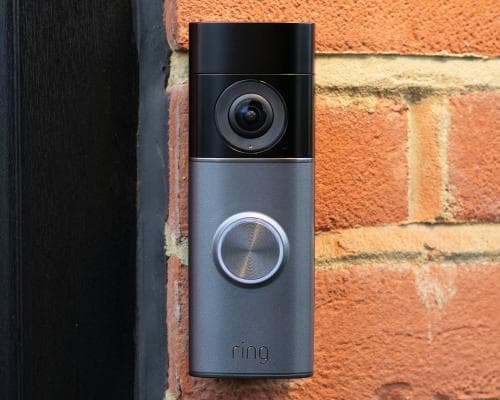
The $250 Door That Sees Everything: Ring’s Pro 3 Rewrites the Rules of Domestic Surveillance

The $1.3 Trillion Exodus: How America’s Community Bankers Are Fighting to Keep Rural Wealth From Vanishing Into Crypto’s Black Hole

The Next Frontier in Crypto Crime: Predatory Seed-Phrase Recovery Scams Signal a Darker Fintech Underbelly

Get Ready for Liftoff: Space Shuttle Endeavour’s New Exhibit Opens to the Public This Year

UK parents warned over posting images of children amid AI sexual abuse fears
Deep Dive Features
Long-form analysis and exclusive reporting

NSW government ‘absolutely thrilled’ to welcome OpenAI ... until someone mentioned the Terminator films
Emails sent between MP Anoulak Chanthivong’s staff take cautious approach to AI giant arriving in Sydney – despite the government’s encouragement Get our breaking news email , free app or daily news podcast The NSW techn
Read Feature
The Download: a smoking “endgame” and a new Elizabeth Bear story
This is today’s edition of The Download, our weekday newsletter that provides a daily dose of what’s going on in the world of technology. The UK’s generational tobacco ban might not work. I’m supporting it anyway. —Jessi
Read Feature
US residents angry at datacenters ‘being shoved down our throats’ are recalling officials
People across the country are pushing for moratoriums, and electeds who approve projects are being punished Lenoxdatacenter.com went live in May, promoting what it called a “proposed advanced technology and data center c
Read Feature
3,000% bonuses but a growing wealth divide: South Korea grapples with its AI chip boom
Powered by chipmakers Samsung Electronics and SK Hynix, South Korea is seeing a surge in wealth, but there are questions over who gets to share in the profits When South Korea’s most high-profile divorce case returned to
Read Feature