Sam Altman's Sovereign AI Play: Why Giving the US Government 5% of OpenAI Could Remake the Industry
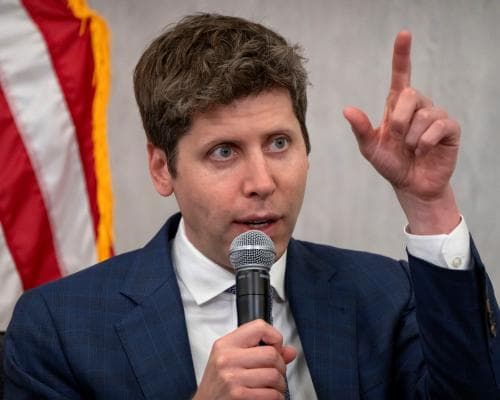
Sam Altman wants to give the American people a piece of the AI future — literally. According to the Financial Times, OpenAI is in early-stage discussions to hand the US government a 5% stake in the company behind ChatGPT. The proposal, still conceptual, would also ask other major AI developers like Anthropic, Google, and Meta to contribute a similar slice of equity. Altman’s argument is disarmingly simple: if AI creates unprecedented wealth, the public should own part of the machine.
This isn’t just a PR move. It’s a strategic gambit that could redefine how deep-tech companies navigate a hostile political landscape. The Trump administration has already flexed its muscles — last month it ordered Anthropic to suspend its newest model over national security concerns, and the industry is bracing for more regulatory heat. By offering Washington a seat at the cap table, Altman is essentially saying: you can regulate us, or you can own us. The latter, he hopes, is far more profitable for everyone.
The mechanics are still fuzzy. The FT reports that the talks are “conceptual” and any deal would likely require an act of Congress. Altman and his team have floated the idea of a vehicle modeled on the Alaska Permanent Fund — the sovereign wealth fund that distributes oil revenue to every Alaskan. In this vision, the government would hold equity in a basket of frontier AI companies, and the dividends would flow back to taxpayers. It’s a neat inversion of the usual Silicon Valley narrative: instead of billionaires hoarding the gains, the public gets a direct stake in the most transformative technology since the internet.
But here’s the rub: not everyone is on board. The FT notes that it’s unclear whether Anthropic, Google, or Meta would agree to such a plan. Meta is already under antitrust scrutiny, Google is fighting its own regulatory battles, and Anthropic just had its model yanked by the government. Trust is thin. And yet, the pressure is mounting. Washington is increasingly viewing AI as a national security asset — not just a commercial one. The 5% stake proposal could be the olive branch that turns adversaries into partners.
What does this mean for the sector? If Altman pulls this off, it signals a new era of “public-private AI” where the line between corporate and state interests blurs. Other frontier labs may feel compelled to follow suit, creating a de facto licensing regime where government equity becomes the price of operating at scale. That could slow down the race to AGI — or accelerate it, by aligning incentives. Either way, the days of AI companies operating as unaccountable private fiefdoms are numbered.
Looking ahead, the real test will be execution. Can Congress actually pass a law creating a national AI trust? Will the public accept that their tax dollars are now shareholders in a company that may one day build superintelligence? And what happens when the government’s 5% stake gives it a voice in boardroom decisions about safety, transparency, and deployment? Altman is betting that shared ownership is better than shared fear. It’s a bold wager — and one that could either stabilize the industry or create the mother of all conflicts of interest.
The future of AI isn’t just about algorithms anymore. It’s about who owns the algorithm. And Sam Altman just offered the US government a front-row seat.