The Silicon Curtain: Why the World’s Elite Are Racing to Own AI’s Infrastructure
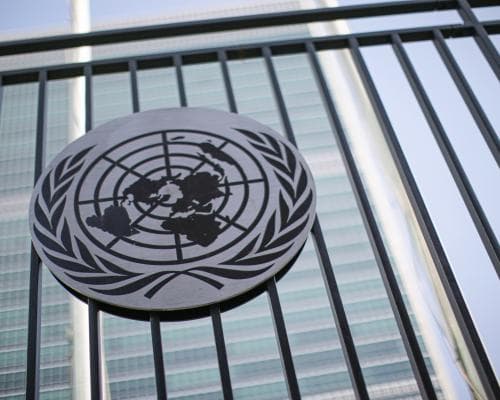
Imagine a private island where the Wi-Fi never drops, but the government can’t see what you search. That’s the fantasy. The reality, according to a new global report, is that artificial intelligence is quietly building a new kind of aristocracy—one where a handful of nations and families control the very fabric of thought. The UN’s independent scientific panel on AI just dropped a warning that reads like a memo to the 0.1%: if you don’t own the pipeline, you don’t own the future.
Here’s the core truth that matters for anyone with a portfolio or a passport: AI’s power isn’t in the code—it’s in the concrete and the current. The report, released days before the world’s first official AI governance summit, notes that the US and China now dominate both the development of frontier AI models and the investment in “compute infrastructure”—the massive data centers, specialized chips, and energy grids that make AI actually run. More than a billion people use AI weekly, but the global south lags far behind. The result? A digital gilded age where access alone doesn’t guarantee benefit. As the report states bluntly, countries that rely on foreign models and cloud infrastructure “may gain access while losing practical control over its standards, safeguards, and local fit.” For the ultra-wealthy, this isn’t a policy paper—it’s a map of where to park capital.
Let’s talk about what this really means for craftsmanship and rarity. The most exclusive asset class of the next decade won’t be a vintage Ferrari or a first-edition Rothko—it will be a data center powered by a dedicated nuclear reactor. The report advises lagging nations to invest heavily in computing and data infrastructure, but it also acknowledges the staggering environmental cost. Each data center consumes water and energy at the scale of a small city. That’s where the status play begins. Owning a private AI-ready data center in a stable jurisdiction with cheap geothermal power? That’s the new superyacht. The heritage isn’t in the algorithm—it’s in the hardware, the real estate, and the sovereign energy contracts. The price tag? Think billions, not millions. And the waitlist is effectively closed unless you’re already in the room.
What does this signal about wealth and taste? The old markers—a watch collection, a wine cellar—are now table stakes. The new signal is control over the means of intelligence. The report warns that “concentration of AI capabilities in a small number of firms and countries could enable authoritarian capture and undermine democratic accountability.” For the discerning investor, that’s not a bug—it’s a feature. The ultra-wealthy are no longer just buying art; they’re buying the infrastructure that decides what art gets seen. They’re funding sovereign data centers in Switzerland, Qatar, and Singapore. They’re placing bets on AI safety institutes as a form of soft power. The message is clear: if you don’t own the server, you’re just renting your influence.
Looking forward, the panel’s co-chair, journalist Maria Ressa, put it succinctly: “The pace is not slowing, the power is concentrating, and control is not guaranteed.” For the reader who values exclusivity, the playbook is already being written. The UN’s proposed toolkit—local data centers, AI literacy in schools, safety institutes, and post-release monitoring—sounds bureaucratic, but for the private sector, it’s a menu of opportunities. The most prescient families are already building their own sovereign AI ecosystems: private cloud stacks, dedicated energy grids, and teams of developers who answer only to them. The rest of the world will be using AI. The truly wealthy will own the room where the AI is born.
The Experience
To explore private AI infrastructure investments or secure a consultation on sovereign data center acquisition, contact our concierge desk for a confidential briefing.