The Autonomous Butler: Why the World’s Elite Are Betting on Pavement-Dominating Robots
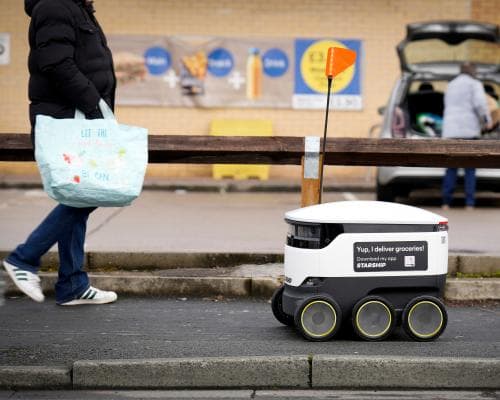
For the ultra-wealthy, time is the only currency that cannot be minted. Every minute spent retrieving a forgotten ingredient, a last-minute gift, or a curated takeaway is a minute stolen from a boardroom, a private gallery, or a yacht deck. Now, a new class of service is emerging to reclaim that time—not through a human concierge, but through a silent, six-wheeled emissary. The white, box-shaped robots from Starship Technologies, already a quiet fixture in Cambridge and Milton Keynes, are on the cusp of a regulatory breakthrough that could see them flood England’s pavements. For those who value discretion and efficiency, this is not a nuisance; it is the next frontier of personal logistics.
The core of this shift lies in a dusty 1835 Highways Act that bans ‘carriages’ from footways—a law written for horse-drawn carts, not autonomous couriers. Ministers are now signaling support to reclassify these low-speed robots alongside e-scooters, effectively legalizing their presence on pavements nationwide. The San Francisco-based Starship, founded by two Skype co-founders, is betting big: they promise a UK manufacturing site and a deployment of over 10,000 units if the law bends. The numbers are staggering—a fleet that could deliver everything from a bottle of Pétrus to a bespoke cashmere throw directly to your door, without a single human hand touching the parcel. This is not about groceries; it is about the privatization of the last mile, the final frontier of convenience.
But the true luxury here is not the robot itself—it is the engineering and exclusivity of the service. Each unit is a marvel of precision: six wheels for stability, a suite of sensors for obstacle avoidance, and a top speed that matches a brisk walk. The craftsmanship lies in the algorithm—a digital butler that learns your schedule, your preferences, and the quietest routes to your doorstep. Starship already claims to ‘own’ robot delivery in Europe’s urban markets, and their new funding round is a direct bet that the elite will pay a premium for zero-interaction delivery. The price of this privilege is not yet public, but for the client who values anonymity and speed, the cost is irrelevant. The real value is the absence of friction—no doorman, no courier signature, no awkward exchange.
What does this signal about wealth and taste? In an era where visible consumption is often gauche, the quiet hum of a delivery robot is the new status marker. It whispers that you have a private fleet at your disposal, that your time is too precious for a trip to the store, and that your neighborhood is wired for a future most cannot see. The backlash from safety campaigners—Living Streets calls it ‘Pavement Overload’—only underscores the divide. For the blind, the elderly, and the mobility-impaired, these robots are a hazard. For the billionaire in a penthouse, they are a convenience. The tension is palpable: a robot that navigates around a guide dog is a triumph of engineering; one that does not is a failure of design. The wealthy will demand the former, and Starship will deliver—literally.
Looking forward, the regulatory shift is inevitable. The Department for Transport is focused on safety, but the economic pressure from a multi-billion-dollar industry is immense. For the ultra-wealthy, the next five years will see these robots become as common as private cars—a silent, tireless workforce that moves goods from boutique to doorstep without a sound. The ultimate expression of this lifestyle is not the robot itself, but the seamless ecosystem it enables: a private server, a dedicated app, and a fleet that answers only to you. For those who can afford it, the pavement is no longer a public thoroughfare; it is an extension of their private domain. The question is not whether the law will change, but whether your address is on the list.
To experience this level of curated convenience, one must first secure a residence in a Starship-enabled postcode—typically the most exclusive enclaves of Cambridge, Bristol, or London’s tech-forward districts. From there, a private concierge can arrange a bespoke delivery subscription, ensuring that every package, from artisanal cheese to rare vinyl, arrives without human contact. It is the quietest luxury of all: absolute control over the last meter.
The Experience
Secure a private consultation with Starship Technologies’ concierge team to arrange a dedicated fleet for your estate, ensuring every delivery arrives with zero human interaction.
More in INNOVATION
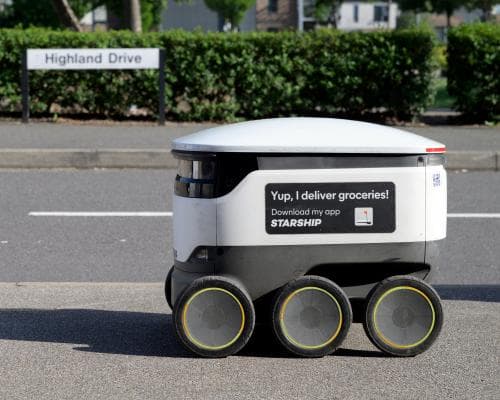
The £600 Courier: Why the World’s Elite Are Watching Milton Keynes’ Autonomous Fleet
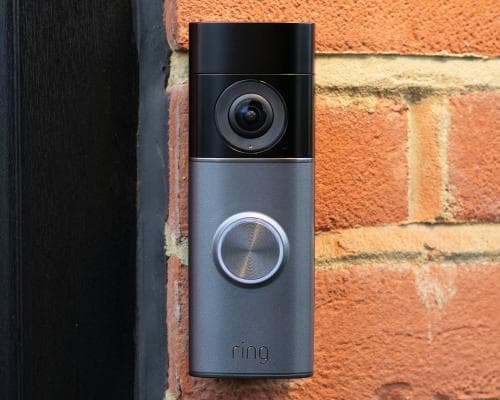
The $250 Door That Sees Everything: Ring’s Pro 3 Rewrites the Rules of Domestic Surveillance

The $1.3 Trillion Exodus: How America’s Community Bankers Are Fighting to Keep Rural Wealth From Vanishing Into Crypto’s Black Hole