The $1.3 Trillion Exodus: How America’s Community Bankers Are Fighting to Keep Rural Wealth From Vanishing Into Crypto’s Black Hole
In the rarefied air where fortunes are built on legacy and trust, the most consequential battle of the year isn’t playing out in a Manhattan boardroom or a Davos suite. It’s unfolding on a sun-drenched Main Street in the American heartland, where a 30-second video—shot with the pastoral intimacy of a luxury brand’s heritage campaign—is quietly detonating a financial war. The Independent Community Bankers of America, representing nearly 4,000 local lenders, has launched a six-figure advertising blitz against the Clarity Act, a bill that would allow crypto companies to reward customers for using stablecoins. For the ultra-wealthy, this isn’t a policy squabble; it’s a seismic shift in where capital flows, who controls it, and whether the $1.3 trillion in deposits that fuel rural America will be siphoned into the digital ether.
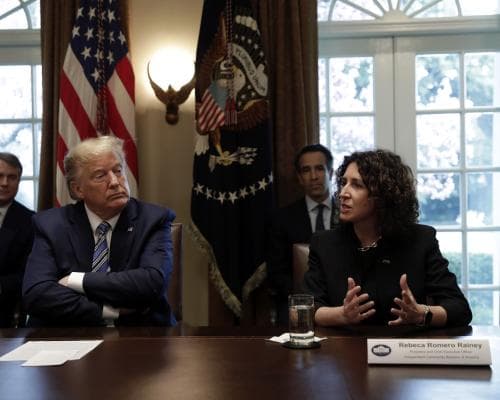
The numbers are staggering. The ICBA warns that the Clarity Act could drain $1.3 trillion from community banks, starving small businesses and agricultural borrowers of $850 billion in loans. These are not abstract figures—they represent the lifeblood of an economy that 60% of small business loans and 80% of agricultural loans depend on. The bill’s sponsors, backed by crypto titans like Coinbase’s billionaire CEO Brian Armstrong, argue that stablecoins—cryptocurrencies pegged to the dollar—are a natural evolution of finance. But ICBA president Rebeca Romero Rainey frames it as a zero-sum game: “When crypto gets a free pass, communities pay the price.” The ad itself is a masterclass in emotional branding—a father teaching his son to drive a tractor, a couple smiling on a tree-lined sidewalk, then grainy cuts of “crypto insiders” in suits. It’s a narrative that pits heritage against disruption, and for families whose wealth is tied to land, livestock, and local credit, the stakes are existential.
Craftsmanship, rarity, and heritage are the currencies of the ultra-wealthy, and here they collide with the cold logic of blockchain. Community banks are not faceless institutions; they are handcrafted engines of local prosperity, often run by families who have served generations of borrowers. Guaranty Bank & Trust’s Troy Richards, a president whose name carries weight in his small town, embodies this ethos. His bank doesn’t trade in algorithms or yield farming—it funds the tractor dealership, the grain elevator, the hardware store. The Clarity Act threatens to commoditize this trust, offering customers incentives to move their cash onto global crypto platforms where the only loyalty is to the transaction. For collectors of fine art, vintage automobiles, or bespoke estates, the lesson is clear: when value is detached from place and history, it becomes a speculative vapor. The ICBA’s campaign is a reminder that true wealth preservation requires tangible roots.
This battle signals a profound shift in what constitutes status and taste in the luxury market. For decades, the ultimate sign of financial sophistication was access to private banking, hedge funds, or a seat on a corporate board. Now, the crypto elite—with their hoodies, decentralized platforms, and promises of frictionless wealth—are challenging that hierarchy. The Clarity Act is a legislative Rorschach test: does one align with the Trump administration’s push to mainstream crypto, or with the rural conservatives who have long been the GOP’s bedrock? The ICBA’s ad campaign is deliberately apolitical, but its imagery—the flag, the tractor, the smiling couple—is a coded appeal to a certain kind of American wealth: land-rich, cash-poor, and deeply suspicious of digital abstraction. For the ultra-wealthy, the choice is not between innovation and tradition, but between two visions of control. One is centralized, personal, and rooted in relationships; the other is decentralized, impersonal, and governed by code. The outcome will define the next decade of portfolio strategy.
Looking forward, the Clarity Act’s fate will be decided in the corridors of Washington and the court of public opinion. But for those who navigate the luxury ecosystem—from private jet owners to vineyard investors—the real question is where to park capital when the rules change. If the bill passes, expect a surge in demand for tangible assets: agricultural land, regional banks, and family offices that specialize in illiquid, high-trust investments. If it fails, the crypto sector will pivot to new regulatory havens, and the community banks will survive another day as custodians of a quieter, more deliberate wealth. For now, the ICBA’s campaign is a masterstroke of influence—a reminder that in the world of billionaires, the most powerful currency is not Bitcoin or dollars, but the trust of a community. And that, as any connoisseur knows, cannot be minted in a smart contract.
The Experience
For a private briefing on how stablecoin regulation could affect your portfolio of rural assets or family-held bank stakes, schedule a confidential consultation with our wealth advisory desk at The Billionaire’s Circle.
Explore