The Silicon Premium: Why the Ultra-Wealthy Are Paying a 20% Tariff on Tomorrow’s Tools
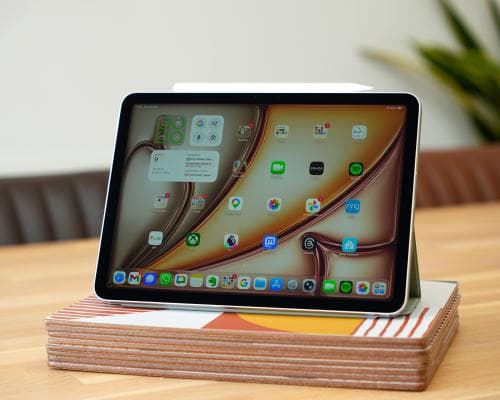
For the connoisseur of the seamless digital life, the news out of Cupertino and Redmond this week is not merely a line-item adjustment—it is a signal. When the world’s most valuable company raises the entry price of its flagship laptop by 20 percent overnight, it is not a whim; it is a recalibration of the global supply chain’s most exclusive currency: silicon. The ultra-wealthy, who have long treated Apple’s ecosystem as a bespoke extension of their personal brand, now face a new calculus. A MacBook Air that was once a casual acquisition now carries a premium that whispers of scarcity, of a world where even the most ubiquitous tools are being reshaped by the voracious appetite of artificial intelligence.
The facts are stark. As of this week, the Australian market—often a bellwether for global pricing trends—saw Apple’s MacBook Air with a 13-inch display leap from A$1,799 to A$2,099. The MacBook Pro 14-inch now commands A$3,199, up from A$2,999. The iPad, that quiet workhorse of the private-jet set, has risen from A$599 to A$749. Even the MacBook Neo, once hailed as Apple’s “most affordable laptop ever” at A$899, now starts at A$1,049. Microsoft followed suit, lifting Xbox console prices by up to A$218, citing storage and memory costs that have nearly tripled. The culprit, both companies state plainly: an AI-driven cost crunch for computer components, a phenomenon that has seen memory chip prices double and threaten to double again by late 2027. Apple’s own share price shed US$250 billion in a single day, a tremor that registered in every portfolio from Monaco to Manhattan.
What the discerning buyer must understand is that this is not a mere inflationary blip. It is a reordering of the very architecture of luxury technology. The components inside these devices—the neural engines, the high-bandwidth memory, the custom silicon—are now the raw materials of a new age. They are the same chips powering the datacenters that train the models reshaping finance, art, and governance. For the collector who values rarity, the price hike signals a shift in what constitutes a truly exclusive device. The MacBook Pro is no longer just a tool; it is a vessel for computational power that was, until recently, reserved for server farms. The iPad Pro, with its M-series chip, becomes a portable supercomputer that few will fully exploit—a status object defined as much by its latent capability as by its aluminum unibody. The craftsmanship remains impeccable, but the heritage now includes a narrative of global scarcity and geopolitical leverage.
This moment also reveals a telling divergence in the luxury market. While the iPhone—the ultimate talisman of modern wealth—remains untouched for now, experts predict its turn will come with the iPhone 18 launch in September. The ultra-wealthy, who upgrade annually as a matter of ritual, will soon face a decision: pay the new premium or signal a lack of awareness. In the world of high-net-worth individuals, where every possession is a statement, the cost of admission to the latest technology is becoming a badge of honor. It separates those who merely consume from those who understand the forces shaping value. The price hike is not a barrier; it is a filter. It ensures that the devices in the hands of the elite are not just newer, but rarer—and thus more coveted.
Looking forward, the trajectory is clear. The era of cheap, disposable computing is ending. For the ultra-wealthy, this is not a burden but an opportunity. The devices that will define the next decade will be those that command the highest premiums, because they embody the most advanced materials and the most constrained supply chains. The MacBook Pro at A$3,199 is not expensive; it is an investment in the infrastructure of a new world. For those who wish to stay ahead, the play is not to wait for prices to fall—they will not—but to acquire now, before the next wave of AI-driven demand pushes the cost of entry even higher. The private client who secures the latest iPad Pro today is not just buying a tablet; they are reserving a seat at the table where the future is being built.
For those who prefer to experience this shift firsthand without the friction of retail queues, a curated approach is essential. Arrange a private viewing at an Apple Flagship store with a dedicated specialist who can configure a bespoke device—custom engraving, preferred storage, and priority delivery. Alternatively, for the truly discerning, a personal technology concierge can source limited-edition configurations and ensure your devices are pre-loaded with the software and security protocols befitting a global lifestyle. The price of entry has risen, but so has the exclusivity of the experience.
The Experience
Arrange a private consultation with a luxury technology concierge to secure priority access to the latest Apple and Microsoft devices, including custom configurations and white-glove setup.
More in INNOVATION

The $1.3 Trillion Exodus: How America’s Community Bankers Are Fighting to Keep Rural Wealth From Vanishing Into Crypto’s Black Hole

The Next Frontier in Crypto Crime: Predatory Seed-Phrase Recovery Scams Signal a Darker Fintech Underbelly

The Sovereign Mind: OpenAI’s GPT 5.6 Sol and the New Geometry of Power