The Sovereign Mind: OpenAI’s GPT 5.6 Sol and the New Geometry of Power
In the rarefied air where capital meets statecraft, the most coveted asset is no longer a superyacht or a vineyard in Bordeaux—it is access. And this week, the gates to the next frontier of artificial intelligence opened not with a fanfare, but with a velvet rope held by the White House. OpenAI, the architect of the cognitive revolution, has bowed to a request from the Trump administration to stagger the release of its GPT 5.6 series, a move that transforms what was once a commodity into a privilege reserved for the few. For those who measure their portfolios in billions and their influence in orbits, this is not a delay. It is a signal—a recalibration of who gets to think ahead of the curve.
At the heart of this release is a three-tiered hierarchy of intelligence: Sol, the sovereign model—OpenAI’s strongest creation to date—followed by Terra, a slightly less potent but more economical variant, and Luna, the entry-level offering for those who merely wish to touch the hem of genius. Sol, the flagship, does not cross what OpenAI internally calls the “cyber critical threshold,” yet it is described as “better at helping people find and fix vulnerabilities than reliably carrying out end-to-end attacks.” In plain terms: Sol is the master locksmith, not the burglar. The companies granted access—all US-based, with foreign partners to follow next week—are vetted customer by customer by the federal government itself, a process OpenAI’s CEO Sam Altman told staff would last “a couple of weeks” before a wider rollout. The parallel with Anthropic’s Mythos is unavoidable: that rival model was first staggered, then pulled entirely after the government ordered a halt to foreign access. OpenAI, for its part, has made clear this is a “short-term” concession, but the message to the ultra-wealthy is unmistakable—the era of unfettered digital power is over, and the new currency is clearance.
The craftsmanship of GPT 5.6 Sol is not in its silicon but in its selectivity. Unlike a limited-edition Patek Philippe, which merely marks time, Sol marks the boundary between those who wait and those who are invited. The model’s three variants—Sol, Terra, Luna—are not mere price tiers; they are castes of cognition. Sol, the strongest, is reserved for a “small group of trusted partners” whose participation has been shared with the government. Terra offers slightly lower performance at a lower cost, and Luna is the most accessible, yet none are publicly available. OpenAI’s blog post, steeped in diplomatic nuance, notes that it previewed the models’ capabilities “ahead of today’s launch” and that the staggered release is “at their request.” The price, for now, is not monetary—it is proximity to power. For the billionaire who has everything, Sol offers something money cannot buy: the first taste of a mind that the state itself has deemed safe to uncork.
This move reshapes the luxury technology market with the precision of a bespoke tailor. For decades, the ultra-wealthy have sought exclusivity in objects—hand-stitched leather, limited-run hypercars, private islands. Now, the ultimate status signal is a model of thought that is regulated at the highest levels of government. The message is clear: owning a GPT 5.6 license is not about utility; it is about belonging to a class of individuals the state trusts with the future. OpenAI’s reluctance—expressed in its statement that “we don’t believe this kind of government access process should become the long-term default”—only heightens the allure. This is not a product launch; it is a geopolitical debut. For the collector of rare experiences, Sol is the intellectual equivalent of a first-edition folio—coveted not because it is the best, but because it is the hardest to obtain.
Looking ahead, the horizon is both luminous and guarded. OpenAI has signaled that broader availability will come “in the coming weeks,” contingent on a vetting framework required under a Trump executive order. But the precedent is set: the most advanced AI will now be subject to a clearance process akin to a nuclear treaty. For the ultra-wealthy, this means that access to Sol, Terra, or Luna will become a dynastic asset—passed down not through inheritance, but through continued alignment with sovereign interests. The smart money is already positioning: hedge funds with geopolitical desks, family offices with government liaisons, and private members’ clubs that offer “approved access” as a membership perk. The age of the unbridled algorithm is over. Welcome to the age of the sanctioned mind.
The Experience
Secure your place among the vanguard by engaging a private AI advisory firm that specializes in government-vetted access programs—your portal to Sol begins with a conversation behind closed doors.
Explore
More in INNOVATION
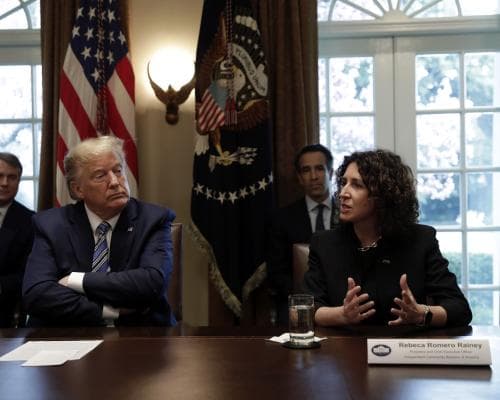
The $1.3 Trillion Exodus: How America’s Community Bankers Are Fighting to Keep Rural Wealth From Vanishing Into Crypto’s Black Hole

The Next Frontier in Crypto Crime: Predatory Seed-Phrase Recovery Scams Signal a Darker Fintech Underbelly
The Silicon Premium: Why the Ultra-Wealthy Are Paying a 20% Tariff on Tomorrow’s Tools