Peter Thiel's Vista Bet Signals Argentina's Shale Moment Has Arrived
Peter Thiel's $76M stake in Argentina's Vista Energy lifts shares, signaling global capital is finally betting on Vaca Muerta's shale boom.
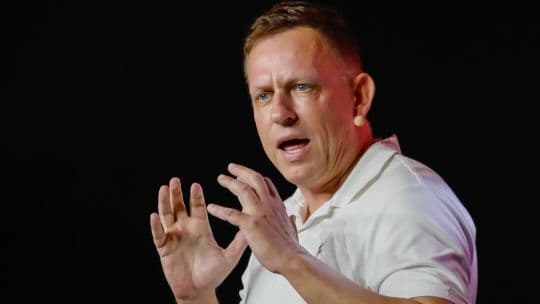
When a Silicon Valley iconoclast known for backing PayPal and Palantir quietly buys into an Argentine oil driller, the market tends to sit up and take notice. That is exactly what happened on Monday, when shares of Vista Energy, Argentina's top oil exporter, jumped in New York after a regulatory filing revealed that Peter Thiel's fund had amassed nearly 1.2 million shares in the company. The stock climbed 4.9 percent to US$71.67, its highest level in two months, while its Mexican listing rose 5.5 percent. For anyone tracking capital flows into South America, this is not just a blip on a trading screen — it is a signal that the region's most controversial energy bet is finally drawing heavyweight global attention.
The numbers behind the move are straightforward, but their implications run deep. Thiel Macro LLC reported owning the Vista stake at the end of the second quarter, valued at roughly US$76 million on June 30. According to the August 14 filing, that position made Vista the fund's second-largest holding after Amazon, and the only non-US company on its list. The timing is telling: Thiel has spent time in Argentina this year, bought a home in Buenos Aires, and met President Javier Milei in April. The two share a libertarian worldview, and Milei has been tearing down decades of state controls in an economy that was heavily regulated for twenty years. Now, with oil price and export controls removed and global markets reopened, the Vaca Muerta shale patch in Patagonia is booming — combined crude and gas output has already surpassed one million barrels a day.
For outsiders, the scale of this shift is hard to overstate. Vaca Muerta is one of the world's largest shale formations, but for years it was a story of potential rather than production, choked by capital controls and government meddling. Vista Energy, spearheading development there, now produces about 160,000 barrels a day, most of it for export, after a series of big acquisitions over the past two years. The company also holds a stake in VMOS, the flagship shale export project involving a pipeline and port that will come online next year. This is not speculative drilling — it is industrial-scale infrastructure being built to move Argentine crude to global buyers, something unthinkable just a few years ago.
The market reaction on Monday went beyond Vista itself. Shares of YPF, the state-controlled oil giant, rose as much as 4.2 percent, suggesting investors see Thiel's move as a broader endorsement of Argentina's shale story. Yet not everyone is convinced the rally has legs. Ezequiel Fernández, an equity analyst at Balanz Capital in Buenos Aires, cautioned that Thiel is not a recognised oil investor and that his stake might not have a structural, long-lasting impact. That is a fair point — tech billionaires dabbling in commodities can be fickle. But the deeper message is that Argentina is no longer a pariah for global capital. Thiel's presence, both in the stock and in person, signals that the country's free-market experiment is being watched closely by people who normally wouldn't glance at a drilling rig.
What this means for South America's wealth landscape is significant. For years, the region's fortunes were tied to copper, soybeans, and the whims of populist governments. Argentina, in particular, was a graveyard for foreign investment, with expropriations and currency controls scaring off all but the most patient capital. Now, a new wave of investors is betting on shale oil as a transformative asset, and Milei's deregulation is making it possible. The Vaca Muerta boom is starting to reshape the economy, creating export revenue and attracting infrastructure spending that could ripple across the region. Whether Thiel's stake is a one-off or the beginning of a larger commitment remains to be seen, but the optics are powerful: a libertarian tech mogul aligning himself with a libertarian president and the country's most dynamic energy play.
Looking ahead, the real test will come next year, when the VMOS pipeline and port start operations and Argentina's shale exports scale up dramatically. If Vista delivers on its output targets, Thiel's bet will look prescient, and other global funds may follow. If not, his stake will be remembered as a curiosity — a tech titan's brief flirtation with Patagonian oil. Either way, the message to international investors is clear: South America's energy frontier is no longer a sideshow. It is a legitimate destination for serious capital, and the names attached to it are starting to read like a who's who of global finance. For those who follow wealth in this region, that is the real story worth watching.