Perth's housing crunch meets the ghost of work-from-home: Limnios sounds the alarm
WA property developer James Limnios says lingering remote work is slowing housing projects, adding fresh pressure to Perth's supply crisis.
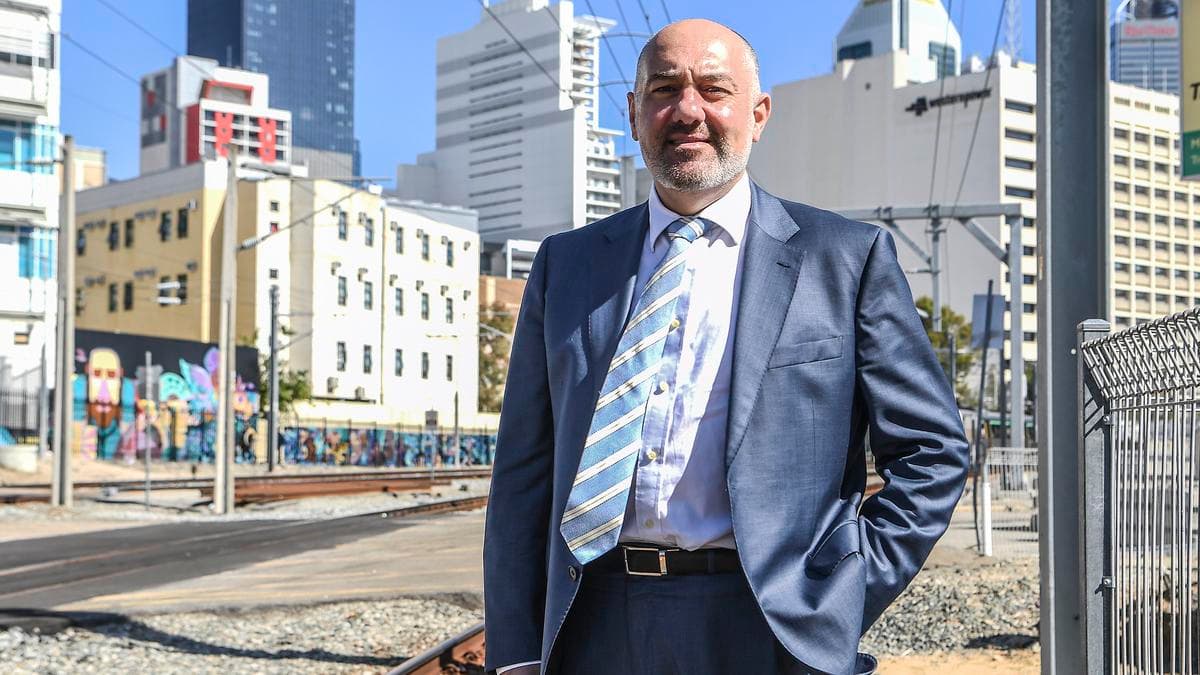
For anyone tracking the pulse of Australian capital, the name James Limnios carries weight well beyond Perth's western suburbs. He is not a household name like the Packers or the Murdochs, but in Western Australia's property game, he is the kind of operator who moves the needle on skyline. So when Limnios speaks about why housing projects are lagging, the country's wealth-watchers tend to listen. His latest diagnosis, delivered to The West Australian, is a curious one: the lingering work-from-home trend is now tangled up in construction delays, a side effect of the pandemic that refuses to fade quietly.
The core claim is straightforward, though its implications ripple far beyond a single crane site. Limnios points to the persistent remote-work culture as a factor adding to housing project delays. The logic is not immediately obvious to an outsider. In most markets, fewer people commuting to offices would seem to ease congestion, not slow the building of homes. But in Perth, the mechanics run in reverse. The work-from-home shift has reshaped what buyers want, how developers plan, and where approvals get stuck. Limnios, a veteran of decades of residential and commercial builds, says these shifting expectations are gumming up timelines that were already fragile.
To understand why this matters, you need a slice of local context. Western Australia is in the grip of a housing shortage that has made it one of the most expensive markets in the country relative to incomes. The state's economy runs on iron ore and liquefied natural gas, and the boom-bust cycle has always kept construction crews busy — until they are not. But the post-COVID era introduced a new variable: a chunk of the white-collar workforce, particularly in mining and professional services, simply stopped coming back to the office five days a week. That has altered the calculus for developers like Limnios, who must now design for home offices, flexible layouts, and community amenities that suit a distributed workforce. Those changes add design time, approval complexity, and construction cost — all of which feed directly into delays.
There is also a subtler, more structural issue at play. Perth's planning system was never built for the pace of change the pandemic forced on it. When developers submit plans for projects that assume a traditional office commute, councils and state agencies now push back with questions about parking ratios, internet infrastructure, and mixed-use zoning. Limnios's comments suggest that the work-from-home trend is not just a lifestyle choice anymore; it has become a regulatory friction point. For an international reader, think of it as the opposite of what happened in Manhattan or London, where empty office towers became a problem. In Perth, the problem is that homes themselves are being reimagined on the fly, and the machinery of approvals has not caught up.
What this signals about wealth and capital in Oceania is worth unpacking. Australia's property sector has long been a store of value for family offices and superannuation funds, and Western Australia is no exception. But the Limnios warning is a reminder that the asset class is no longer a passive bet on population growth. It is now hostage to behavioural shifts that are hard to model — like whether a mining engineer in suburban Perth really needs a fourth bedroom or would rather have a dedicated video-conferencing nook. Developers who adapt quickly will capture the premium; those who do not will watch their margins erode in delay costs. That is a quiet but profound reallocation of risk across the country's wealth landscape.
Looking forward, the question is whether Perth's builders and policymakers can find a middle gear. Limnios is not predicting doom — he is a pragmatist who has survived multiple cycles — but his remarks carry an implicit warning. If the work-from-home trend persists, as most indicators suggest it will, then every new project in Western Australia will carry a hidden tax of complexity. The state government, already under pressure to fast-track housing approvals, may need to rewrite its playbook for a world where the commute is optional but the home office is not. For investors and observers in Oceania, the takeaway is simple: the next great bottleneck in Australian housing is not just land, labour, or interest rates. It is the stubborn ghost of a pandemic habit that refuses to leave the building — even when no one is in the office to see it.
More in MONEY