Optivolt Raises $32M Series A Led by VXI Capital to Scale Panel-Integrated Solar Electronics
Optivolt closed a $32M Series A led by VXI Capital, lifting total funding to $42M, to expand manufacturing of its Power Balancer solar electronics.
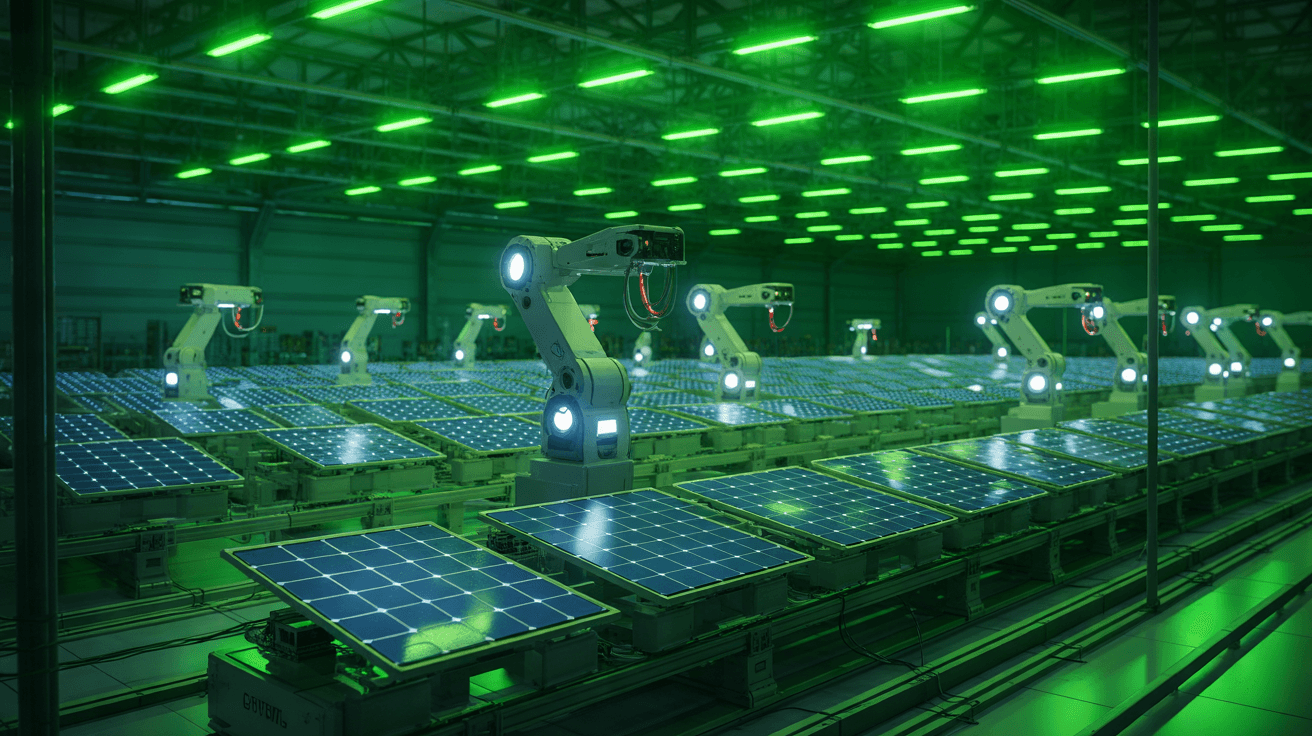
Silicon Valley has spent a decade promising to make solar smarter. The harder question is whether anyone can make it smarter without making it more complicated. Optivolt, a company founded by Rohit Kalyanpur, just raised $32 million in Series A funding to prove it can — and the round, led by VXI Capital with participation from RA Capital, Valo Ventures and Atlas Innovate, brings its total capital raised to $42 million.
The pitch is deceptively simple. Optivolt builds power electronics directly into solar panels through a product it calls the Power Balancer, which manages energy between cell groups in real time. Conventional panels lose output when shade, dirt or uneven degradation knocks out individual cells, and traditional bypass diodes can sideline entire groups rather than recover them. Optivolt says its approach recovers energy that passive panel architecture leaves on the table, and that in its own internal testing, panels fitted with the technology generated as much as six times the power of panels with bolted-on optimisers under certain shading conditions — a figure the company is careful to tie to those specific test conditions. It has shipped more than 20,000 panels incorporating the Power Balancer, holds 19 issued patents with 27 applications pending, and carries three certifications covering its integrated junction-box enclosure, panel-integrated electronics, and rapid shutdown and solar-module safety.
The manufacturing expansion the new money funds is the part that matters commercially. Optivolt wants to move beyond residential rooftops into utility-scale projects, and it is explicitly courting the power-hungry AI data centre market, where electricity reliability has become a board-level concern. Integrating monitoring and rapid shutdown into the panel itself could also cut the need for separate optimisers, microinverters and shutdown devices — fewer components, simpler installation, and potentially a lower balance-of-system cost that installers and project developers actually feel.
The round is a bet on a second-order problem. Solar panels are cheaper than ever, but they rarely perform in the field the way they do in a lab, and much of the world's new solar capacity is being built in hot, dusty, partially shaded environments where that gap is expensive. Investors are increasingly funding the software and electronics layer that squeezes more output from existing hardware rather than the hardware itself. Optivolt's raise fits that pattern, and the presence of RA Capital alongside VXI Capital suggests the thesis is drawing interest beyond pure venture capital.
For a company at this stage, the risks are unglamorous and familiar: scaling manufacturing without eroding margins, proving field performance across climates and installation types, and convincing customers that lifetime generation gains justify the premium. Wider adoption will depend on manufacturing growth and consistent, demonstrable economics rather than a single headline test result.
Still, the direction of travel is clear. As AI infrastructure strains grids and developers hunt for every available kilowatt-hour, technologies that recover lost output from installed panels — rather than simply adding more capacity — will find a hearing. Optivolt now has the capital to test whether that hearing becomes orders.
More in MONEY
Wiluna Mining's Victor Rajasooriar Says He Was 'Not Really' Surprised by Post-Listing Share Price Bloodbath

Woodside CEO Liz Westcott Answers Alex Pearce's Sponsorship Call as Fremantle Captain Pushes Back

Mukesh Ambani's brother Anil sees Reliance Capital creditors recover only 43% as Hinduja bid falls short