Nigeria's cement trio: BUA's explosive margins, Dangote's steady grip, Lafarge's quiet value
Dangote, BUA and Lafarge surge on NGX in 2026, but BUA's 382% profit jump raises valuation questions while Lafarge offers cheaper entry.
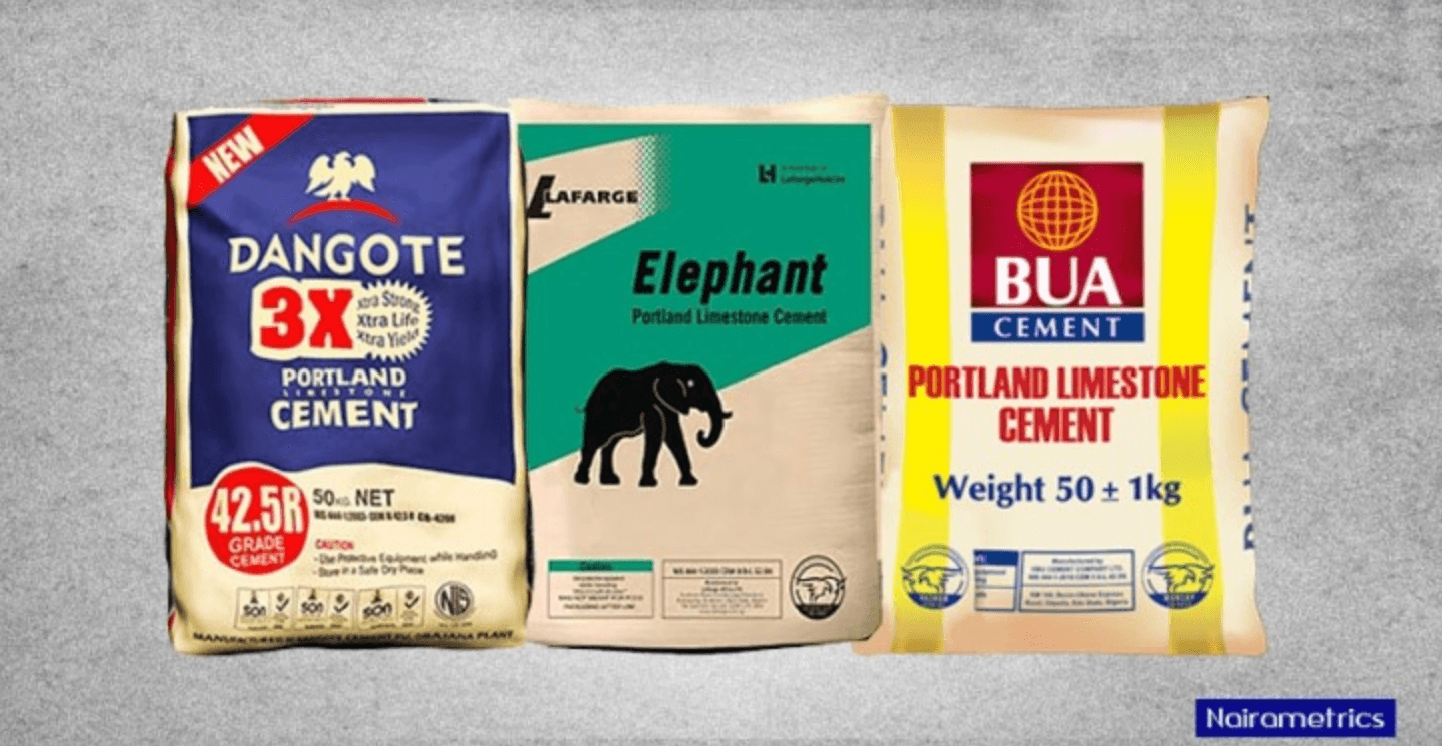
LAGOS — There is a peculiar drama playing out on the Nigerian Exchange these days, and it has nothing to do with oil or fintech. It is cement — grey, dusty, ubiquitous — that has become the unlikely star of the country's capital markets. As of mid-March 2026, BUA Cement is up more than 83% year-to-date, Lafarge Africa has climbed 68%, and Dangote Cement, the sector's heavyweight, has managed a comparatively sleepy 33%. For anyone tracking African wealth, this is not just a stock story. It is a tale of how three very different corporate philosophies are being priced, rewarded, and tested in Africa's most populous economy.
Start with the numbers, because they are genuinely startling. Dangote Cement, the industry's dominant force, pulled in over N13 trillion in revenue between 2021 and 2025, growing at an average of 33% annually. Its profit after tax doubled to N1.01 trillion, with earnings per share jumping from N29.74 to N43.82 — a 47% rise. That is the kind of performance most companies would kill for. But in a market hungry for fireworks, Dangote looks almost boring: dependable, massive, and steady. It is not the fastest horse, but it is the one that rarely stumbles. BUA, by contrast, is pure adrenaline. Revenue grew from N257 billion to N1.18 trillion over the same period — a 46% annual clip — and profit after tax exploded from N73.91 billion to N356.04 billion, a staggering 382% surge in a single year.
The real story, however, is not the topline. It is what BUA did underneath. While revenue shot up 34.6% in 2025, its cost of sales barely moved — hovering around N575 billion, nearly identical to the previous year's N576 billion. That single quirk doubled gross profit from N300 billion to N604 billion, pushing gross margins from roughly 34% to over 50%. Net profit margin tripled from 8.4% to 30.2%, the highest of the three. In plain terms, BUA did not just sell more cement; it discovered how to make vastly more money on every tonne. That is a remarkable operational shift, but it also raises a nagging question: can it last? The market seems to think so, bidding the stock up 49% in just one month and leaving it trading at a price-to-earnings ratio of 31 times — meaning investors are paying N31 for every N1 of earnings. Its PEG ratio of 0.76 suggests the price is not entirely unmoored from growth, but the expectations baked in are enormous.
Lafarge Africa, the oft-overlooked third player, offers a counterpoint. It is smaller than Dangote and less aggressive than BUA, but its 2025 performance was arguably the most complete. Revenue grew 53% in a single year to N1.07 trillion, profit after tax rose 173% to N273.12 billion, and the growth came from multiple levers — better margins, improved efficiency, and sharply lower finance costs. Analysts project production volumes climbing from around 6.3 million tonnes in 2025 to nearly 7 million in 2026, suggesting Lafarge is expanding not just by raising prices but by sharpening its operations. Yet it trades at just 13.35 times earnings, the cheapest of the trio, with a PEG ratio of 0.26 that screams undervaluation to anyone who believes in mean reversion.
For the international reader, this is a window into how Nigerian capital works in 2026. The NGX is no longer just a play on commodities or banking; it is a battleground for consumer and infrastructure stories, and cement sits at the intersection of both. Housing demand, road construction, and government spending on public works all funnel into these three companies. But the divergence in valuations also reveals a deeper truth about the market's mood. It is euphoric about BUA's margin story, willing to pay a premium for explosive growth, while treating Dangote's scale as old news and Lafarge's efficiency as unglamorous. That gap — between what is priced for perfection and what is quietly compounding — is where the real money in African equities often hides.
None of this is a recommendation to buy or sell. But for anyone watching African wealth, the lesson is clear: the cement sector has become a laboratory for how the continent's biggest economy rewards risk, patience, and execution. BUA has momentum, but it must now prove its margin expansion is structural, not a one-off gift from cost controls. Dangote remains the fortress, generating profit without adding risk, though its share price suggests the market wants more spark. Lafarge, meanwhile, sits in the shadows, growing fast, improving operations, and trading at a fraction of its peers' multiples. In a market that loves a story, the quietest one may be the most compelling. The next earnings season will tell us whether BUA's magic is real, whether Dangote's steadiness still commands respect, and whether Lafarge finally gets the attention its numbers deserve. For now, the grey dust of Nigeria's cement wars has never been more colourful.