Armani's Heirs Face 18-Month Deadline to Sell 15% Stake, With LVMH, L'Oréal and EssilorLuxottica in the Frame
Giorgio Armani's will gives heirs 18 months to sell 15% to one or more partners. CEO Marsocci says no decision yet as LVMH, L'Oréal and EssilorLuxottica circle.
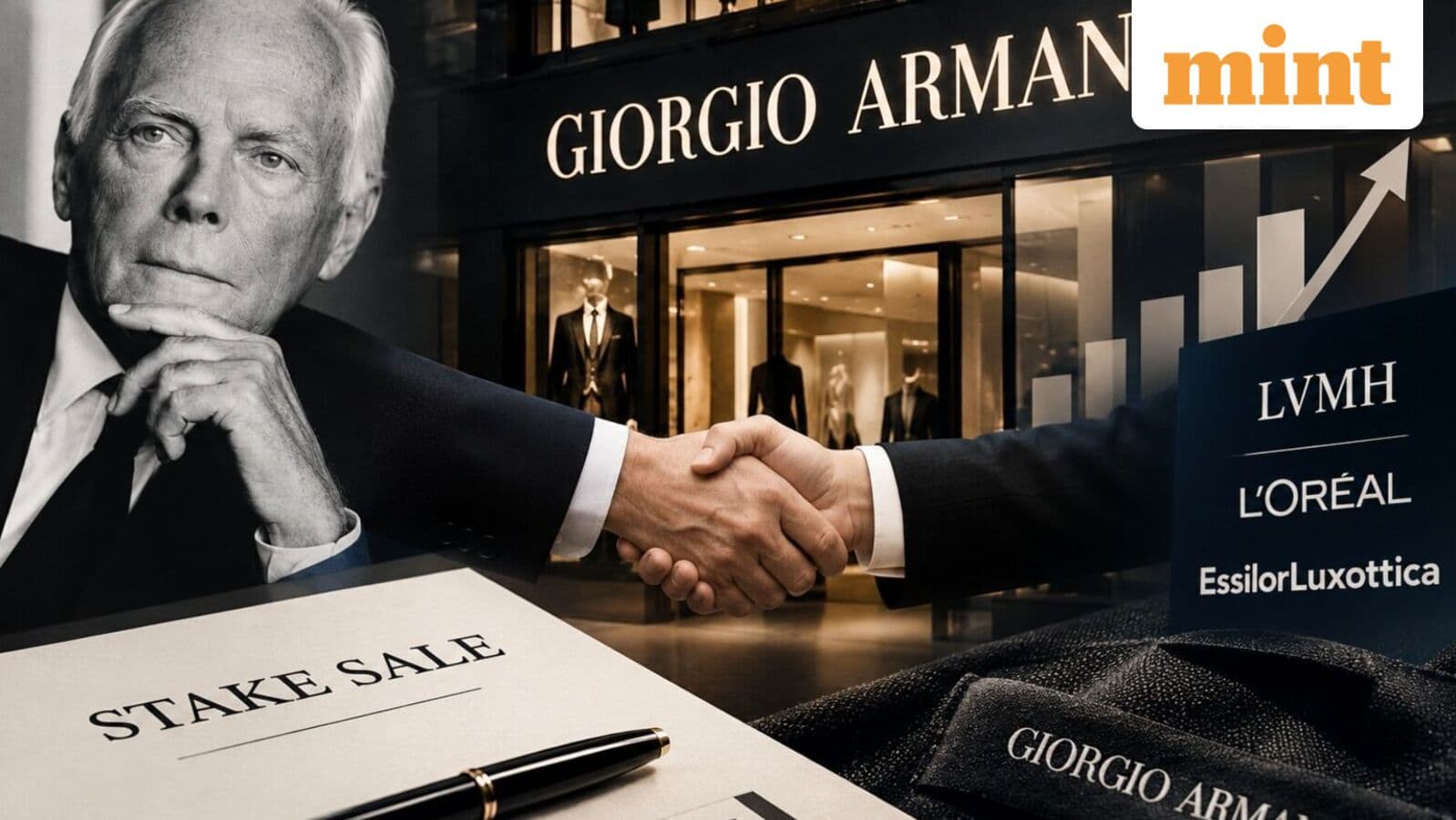
Milan's most guarded inheritance is now on a clock. Eighteen months. That is the window Giorgio Armani's will gives his heirs to sell an initial 15 per cent of the fashion house he built, and the luxury world is watching to see who walks through the door first.
The mechanics matter more than the money. Giuseppe Marsocci, the chief executive who took the helm last October, told reporters on the sidelines of the Giorgio Armani show that the buyer need not be a single investor. "It is not written in stone that it has to be one investor," he said, adding that no decision has been made and that any deal would hinge on agreeing price and details. The founder died in September 2025 at 91, leaving instructions that a strategic partner be sought within 12 to 18 months. Names given priority in the will include LVMH, L'Oréal and eyewear group EssilorLuxottica. Bloomberg has reported the initial stake could climb to roughly 70 per cent within five years.
To understand why this is not a routine succession, you have to know what Armani is in Italy. It is not merely a label; it is one of the last great independent houses in a country whose fashion industry has been steadily absorbed by French conglomerates. Giorgio Armani spent decades resisting that gravity, keeping control through a foundation and a tight circle of loyalists. The will tries to preserve that architecture even as it forces a sale. The Giorgio Armani Foundation, set up in 2016, initially holds a 10 per cent direct stake carrying 30 per cent of voting rights, plus the right to receive other shareholders' stakes after their deaths. Pantaleo "Leo" Dell'Orco, Armani's partner, holds the largest individual stake and 40 per cent of the voting power, giving him control alongside the foundation. Rosanna and Roberta Armani have no voting rights. The remaining shares sit with Dell'Orco, Rosanna, nieces Silvana and Roberta, and nephew Andrea Camerana. Proceeds follow the same split, with the foundation's 10 per cent divided evenly among five members.
If none of the three preferred buyers is chosen, the stake can go to another fashion or luxury company of comparable stature, selected with Dell'Orco's agreement and with preference for existing commercial partners. After the first sale, Dell'Orco keeps 40 per cent of voting rights despite a smaller economic stake, while the foundation's voting power shrinks but retains veto rights over major decisions: statute changes, capital increases, mergers and acquisitions. Within three to five years, heirs must sell another 30 to 55 per cent to the same bidder or list the company, preferably on the Milan bourse. Either way, the foundation keeps at least 30.1 per cent. For an international reader, the subtext is Italian: this is a structure designed to keep a national champion anchored in Milan even as foreign capital takes a larger economic share.
For Asia's wealthy families, the Armani blueprint reads like a case study. Asian conglomerates from Hong Kong to Seoul are entering the same phase, where founders in their seventies and eighties must decide whether to sell, list or hand control to the next generation. Armani's answer is a hybrid: sell a slice, keep the foundation's veto, protect the brand's independence while inviting deep-pocketed partners. Contrast that with the region's more common routes, such as the outright sale of a family jewel or the slow dilution that ends in a foreign takeover. The priority list in the will also says something about where luxury power now sits. LVMH, L'Oréal and EssilorLuxottica are European, but their growth engines are increasingly Asian consumers, and any partner they bring in will be judged on how well it reads Shanghai, Tokyo and Seoul.
The next move belongs to Dell'Orco and the foundation. Marsocci has signalled flexibility on structure, not on timing. Watch for whether the 15 per cent goes to one name or is split, and whether the eventual path is a second sale or a Milan listing. For now, the clock is running, and one of Italy's last independent luxury houses is quietly deciding how much of itself to let go.