Nigeria's cement kings mint record margins, and investors are paying up
Nigeria's top three cement makers hit a combined 32% net margin in Q1 2026, fueling a stock rally that is reshaping the NGX.
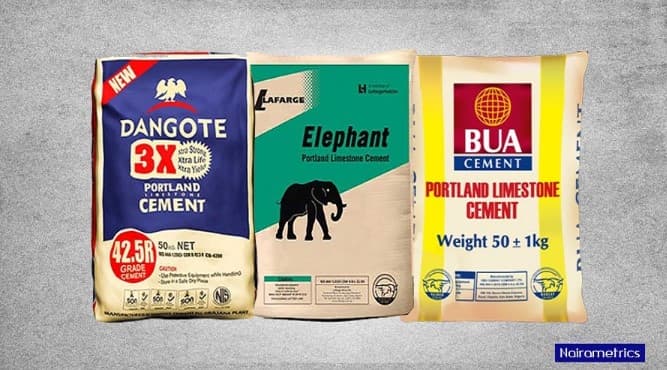
Walk into any Lagos brokerage this month and the chatter is not about oil, not about the naira, but about cement. Nigeria's three biggest producers—Dangote Cement, BUA Cement and Lafarge Africa—just delivered a quarter that has shaken the assumptions of everyone who follows African capital markets. Their combined net profit margin jumped from roughly 22% in Q1 2025 to nearly 32% in Q1 2026. That means for every naira of revenue, these giants kept 32 kobo as profit, up from 22 kobo a year earlier. For a sector often dismissed as mature and slow-moving, this is a wake-up call.
The numbers behind the margin surge are even more striking when you look at the individual players. BUA Cement led the pack with a net margin of 49.69%, a figure that would make most global manufacturers blush. Lafarge Africa followed at 29.25%, while Dangote Cement, the industry heavyweight, posted 26.80%. What makes this remarkable is the context: the quarter was marked by rising crude oil prices and energy costs following the US/Israel-Iran conflict, which pushed up operating expenses across the board. Dangote's haulage bill alone rose to N135.82 billion from N124.48 billion in Q1 2025, and both Lafarge and BUA saw similar jumps in distribution costs. Yet the companies still widened margins, which tells you something crucial about their pricing power in a market where demand for construction materials remains insatiable.
To understand why this matters, you need to know the players. Dangote Cement is the flagship of Aliko Dangote's empire, the continent's most famous industrialist, and its sheer scale—market cap now near N20 trillion—makes it the most valuable stock on the Nigerian Exchange. BUA Cement, controlled by the Abdul Samad Rabiu family, has been the aggressive challenger, expanding capacity and undercutting rivals for years. Lafarge Africa, the local arm of the Swiss giant Holcim, brings global efficiency standards to a market that often rewards local grit over international polish. These are not just companies; they are the backbone of Nigeria's infrastructure ambitions, from highways to housing estates, and their profitability is a barometer for the broader economy's health.
For investors, the margin expansion is translating into a spectacular rally. Lafarge Africa's share price has more than doubled this year, jumping from N134.50 at the start of 2026 to N342 by May 20, a 154% gain that puts it just 3% below its 52-week high. BUA Cement is close behind with a 132% year-to-date rise, trading at N414. Dangote Cement, the laggard in percentage terms, still gained 94% to N1,180. The valuations are getting rich—BUA trades at over 31 times trailing earnings, Lafarge at around 17 times—but the earnings growth is backing up the hype. Lafarge's EPS has compounded at about 52% annually over five years, and its dividend jumped from N1.20 in 2024 to N10 in 2025. BUA's EPS surged 118% year-on-year in Q1 2026 alone, while Dangote cut its debt sharply, slashing finance costs from N129.38 billion to N98.25 billion.
What does this signal for capital and wealth in Africa? First, it shows that Nigerian industrial champions can pass on cost inflation to consumers without losing demand—a rare feat in a price-sensitive market. Second, the stock rally suggests local and international investors are finally pricing in the long-term story of African urbanization, where cement demand tracks population growth and infrastructure spending. The PEG ratios—Lafarge at 0.33, Dangote at 0.60—hint that even after these runs, the market may be underestimating future earnings. But there is a cautionary note: these margins are cyclical, and if energy costs spike again or the naira weakens further, the pricing power could evaporate as quickly as it appeared.
The real test comes in the rest of 2026. Can these companies sustain margins above their full-year 2025 levels, or was Q1 a peak driven by a perfect alignment of pricing and cost discipline? For now, the market is betting on the former, and the shareholders' return outlook—higher EPS, fatter dividends, stronger valuations—looks brighter than it has in years. Cement has become the unlikely star of Nigerian equities, and for anyone tracking wealth on the continent, it is the story to watch. The question is no longer whether these giants can make money, but how long they can keep making it at this pace before the cycle turns.