Naira’s quiet climb: reserves hit $52bn, but stability is a choice, not a miracle
Naira edges up to N1,358/$ as Nigeria’s reserves top $52bn, the highest since 2009.
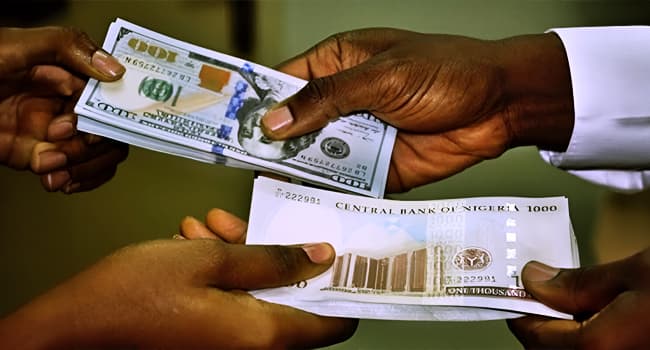
For anyone tracking African currencies, the naira has become a study in controlled breathing. This week, it did not crash, spike, or panic — it simply strengthened, by a marginal N5.75 against the dollar, closing at N1,358.25/$ on Friday at the Nigerian Foreign Exchange Market. That is a 0.42% gain week-on-week, and a 0.20% rise from Monday’s opening. Modest numbers, sure. But in a currency that has spent the last two years lurching between crisis and intervention, a quiet week is news in itself.
The recovery was not linear. The naira actually weakened midweek, touching N1,365/$ on Tuesday, before firming over the final three sessions. The Central Bank of Nigeria’s data shows 137 interbank deals on Friday, with turnover of $119.59 million — a sign that liquidity is present, but not exactly flooding in. Behind this gentle appreciation sits a more important number: Nigeria’s external reserves have climbed to $52.26 billion, up from $52.06 billion the prior week. That is the highest level since January 2009, and it surpasses the CBN’s own projection for the full year. In December, the central bank had forecast reserves of $51.04 billion for 2026. It has already blown past that, with months to spare.
For outsiders, the significance of this may be lost. But in Lagos, Abuja, and the trading floors of Victoria Island, the reserves figure is the single most watched metric after the exchange rate itself. It is the buffer that tells importers, portfolio investors, and diaspora remitters whether the country can defend its currency without resorting to the brutal devaluations of 2023 and 2024. The rise is driven by stronger oil earnings, FX market reforms, and improved external inflows — the same trio the CBN has been touting since December. The fact that reserves crossed $45 billion only in 2025 and are now above $52 billion is a rapid, if fragile, turnaround.
But the week’s data also reveals how volatile the underlying flows remain. Turnover swung wildly: $1.25 billion on August 7, down to $878.55 million on August 6, and $460.14 million on August 5. The August 11 turnover was the lowest since May 25, when it stood at $175.34 million. This is not a market at ease; it is a market that is being managed. The naira is trading within a relatively narrow official band, but the spread between official and parallel rates — the real test for most Nigerians — remains the thing that keeps traders on edge. The CBN’s reforms have narrowed that gap, but they have not closed it.
What does this mean for the wider African wealth picture? Nigeria is the continent’s largest economy and its most populous nation, but for years it has also been its most volatile currency story. When the naira sneezes, investors across West Africa catch a cold. The current stability, however modest, is a signal to foreign capital that the country is slowly rebuilding credibility. The reserves buffer matters not just for importers of fuel and machinery, but for the sovereign’s ability to service debt and attract long-term investment rather than hot money. It also shifts the narrative from crisis management to gradual consolidation — a story that resonates from Nairobi to Johannesburg, where currency stability is increasingly seen as the prerequisite for any serious capital allocation.
The hard question is sustainability. Reserves at $52 billion are a comfort, but they are still relatively thin for a country with Nigeria’s import bill and external obligations. The CBN’s projections assumed a certain oil price and continued reform momentum; both are hostage to global factors beyond Lagos’s control. The naira’s appreciation this week is welcome, but it is the product of policy discipline and favourable external conditions, not a structural transformation. For the international reader, the takeaway is simple: Nigeria is no longer the currency emergency it was two years ago, but it is also not yet the stable, investable market its officials claim. The next test will come when oil prices dip or global rates rise — and then we will see whether this quiet strength is real, or just the calm before another storm.