Musk's AfD Embrace: The New Currency of Billionaire Political Capital
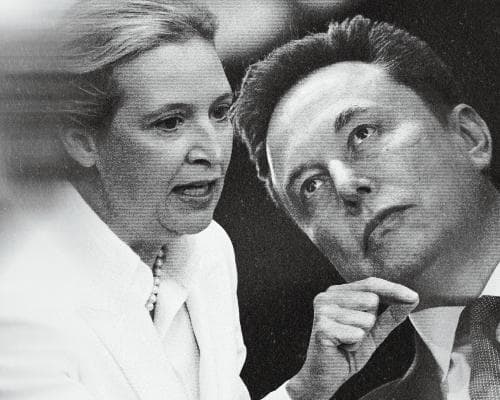
In the gilded circles where billionaires once competed over yacht lengths and private island acquisitions, a new status symbol has emerged: the ability to sway a nation's political destiny. This week, Elon Musk offered a masterclass. After the Alternative für Deutschland (AfD) scored a decisive victory in Germany's Saxony-Anhalt state election—coming within a handful of seats of forming the country's first far-right state government since World War II—Musk didn't just applaud. He posted "Gut gemacht!" to his millions of followers, congratulating AfD leader Alice Weidel. It was one of at least a dozen posts he fired off about the party. In return, AfD's Saxony-Anhalt chief, Ulrich Siegmund, called Musk a "visionary." The exchange wasn't just political. It was a display of raw, unapologetic influence—the kind that makes traditional lobbying look quaint.
For the ultra-wealthy, this is the new frontier. Musk's ties to the AfD didn't happen overnight. They've been building for years, running parallel to his own public rightward drift. His views on immigration, race, and democracy have increasingly mirrored AfD policies. And the party has happily reciprocated, grateful for the spotlight from the world's richest man. The relationship is symbiotic: Musk gets a platform to amplify his ideology, and the AfD gets a global megaphone. Consider the timeline. In 2024, Musk poured over $100 million into Donald Trump's reelection. He shared stages with Argentina's Javier Milei, handed an award to Italy's Giorgia Meloni, and gave a livestreamed speech at a UK rally where he claimed immigration was causing "the destruction of Britain." He personally messaged Naomi Seibt, a 24-year-old German climate skeptic and anti-immigration activist, who then promoted the AfD to him. By late 2024, Musk had written an op-ed for Die Welt arguing that Germany faced "economic and cultural collapse" that only the AfD could solve. This isn't casual engagement. It's a calculated merger of wealth and political power.
What does this signal to the world's billionaires? That political capital is now the ultimate luxury asset. It can't be bought at auction or chartered for a weekend. It must be cultivated, wielded, and displayed. Musk's AfD endorsement isn't just a tweet; it's a statement of intent. He's telling the global elite that money alone no longer commands respect. Influence over governments, elections, and entire populations does. The AfD's Saxony-Anhalt win—a shock to Europe's political establishment—was partly powered by that influence. And for the ultra-wealthy watching from their penthouses, the lesson is clear: if you want to matter in the 21st century, you need more than a diversified portfolio. You need a political portfolio.
The craftsmanship here isn't in a Swiss watch or a bespoke suit. It's in the art of the alliance. Musk didn't just endorse the AfD; he built a relationship. He engaged with its activists, echoed its rhetoric, and amplified its message. The party, in turn, treated him like royalty. Siegmund's praise wasn't just gratitude—it was a signal to other billionaires that their support would be rewarded with loyalty and access. That's the kind of return on investment that no hedge fund can match. And it's happening on a global scale. Musk has become a central figure in the international far-right, backing anti-immigrant activists and illiberal leaders from Buenos Aires to Rome to London. His wealth gives him the freedom to do so without consequence. His platform gives him the reach. His timing—right after a historic election—gives him the narrative.
For the luxury market, this is a wake-up call. The old status symbols—the Ferrari, the private jet, the penthouse—still matter. But they're no longer enough. Today's ultra-wealthy want to shape the world, not just enjoy it. They want to be kingmakers, not just kings. Musk has shown that political influence is the new must-have accessory. It's not for sale, but it can be earned. And for those who can afford it, the price is worth paying. The AfD's victory in Saxony-Anhalt isn't just a German story. It's a preview of a future where billionaires don't just fund campaigns—they become them. Where wealth isn't measured in dollars but in the ability to move nations. Where the ultimate luxury is not a yacht, but a government.
So what comes next? Expect more billionaires to follow Musk's playbook. Expect more parties to court their favor. Expect the line between business and politics to blur further. The ultra-wealthy have always sought power. Now they're not just seeking it—they're seizing it. And the rest of us are watching, wondering where it ends. For the world's elite, the question isn't whether they can afford to play this game. It's whether they can afford not to.
The Experience
To engage with the political and philanthropic circles shaping global policy, consider attending invitation-only summits like the Bilderberg Meeting or private donor retreats hosted by sovereign wealth funds. Access often begins with strategic philanthropy and discreet networking.