Michael Dell Overtakes Larry Page as World's Second-Richest With $273 Billion Fortune
Dell's net worth hits $273.2B as Dell Technologies stock rallies, making him the world's second-richest person behind Elon Musk.
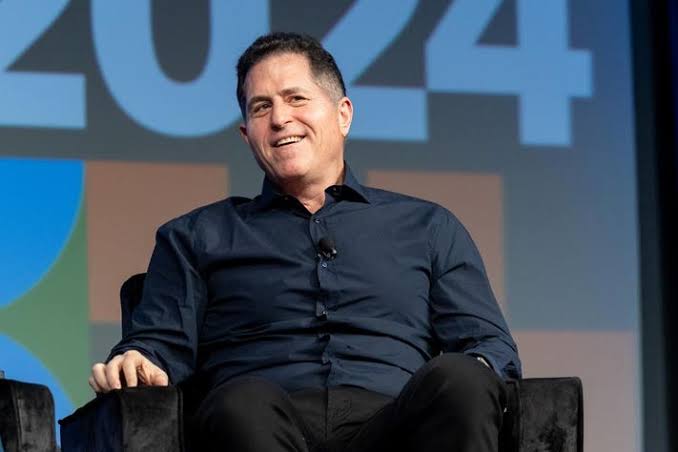
Michael Dell has never been the flashiest name in the billionaire rankings. No space rockets, no electric cars, no social network. Yet on Wednesday, September 9, 2026, the founder and chairman of Dell Technologies quietly slipped past Alphabet co-founder Larry Page to become the world's second-richest person — his highest ranking ever — with a fortune Forbes pegs at $273.2 billion.
The move caps a remarkable run. Dell added roughly $6.3 billion, or 2.36%, on Wednesday alone, a day after a $4.6 billion jump pushed him past Amazon's Jeff Bezos into third place. He now trails only Elon Musk, whose estimated $942 billion fortune keeps him in a league of his own. The scale of Dell's ascent is best measured against January: Forbes put his wealth at about $141 billion at the start of the year, meaning it has roughly doubled — a 94% gain — in under nine months. That is not a story about a man; it is a story about a company, and about what the artificial-intelligence buildout is doing to the balance sheets of the hardware firms that supply it.
For readers who know Dell mainly as the box under a desk, the local context matters. Michael Dell founded the company in 1984, at 19, assembling personal computers out of a University of Texas dorm room. Over four decades he turned it into a global enterprise, and the pivot that counts now is away from consumer PCs and into enterprise hardware and infrastructure — servers, storage and data-centre kit. That is precisely the plumbing AI runs on. When hyperscalers and governments race to build compute capacity, orders flow to a handful of suppliers, and Dell Technologies has positioned itself as one of them. The stock's surge reflects investors pricing in that demand, not a sudden affection for laptops.
This is also a very American wealth story with an African readership angle. Dell's rise is a reminder that the AI trade is not confined to chip designers and software platforms; it has lifted the older, less glamorous infrastructure layer too. For African investors and policymakers watching where global capital concentrates, the lesson is uncomfortable but useful: the continent remains largely a consumer of this infrastructure, not a producer of it. Data centres are being built in Johannesburg, Lagos, Nairobi and Cape Town, but the servers inside them, and the shareholders who profit from them, are overwhelmingly foreign. Dell's fortune is a proxy for that asymmetry.
There is a philanthropic footnote that rarely makes the ranking headlines. Michael and Susan Dell have donated an estimated $3.3 billion over their lifetimes, according to Forbes' 2026 ranking of America's most generous philanthropists. That figure is modest relative to a $273 billion fortune, but it places the couple among the world's significant givers — a contrast worth noting as African governments increasingly court diaspora and foreign philanthropy for health, education and climate financing.
What happens next depends less on Michael Dell than on the AI capital-expenditure cycle. If the buildout continues, Dell Technologies remains a direct beneficiary and its founder's ranking could climb further; if spending cools, the same leverage that doubled his wealth in nine months can work in reverse. For now, the man who started with PCs sits second on the planet, behind only Musk — a reminder that in this cycle, the picks-and-shovels merchants are getting very rich indeed.