Mamaearth's parent bets on a new scent of growth as profits double
Honasa's Q1 profit doubles as younger brands like The Derma Co surge; fragrance launch FIKN targets young men.
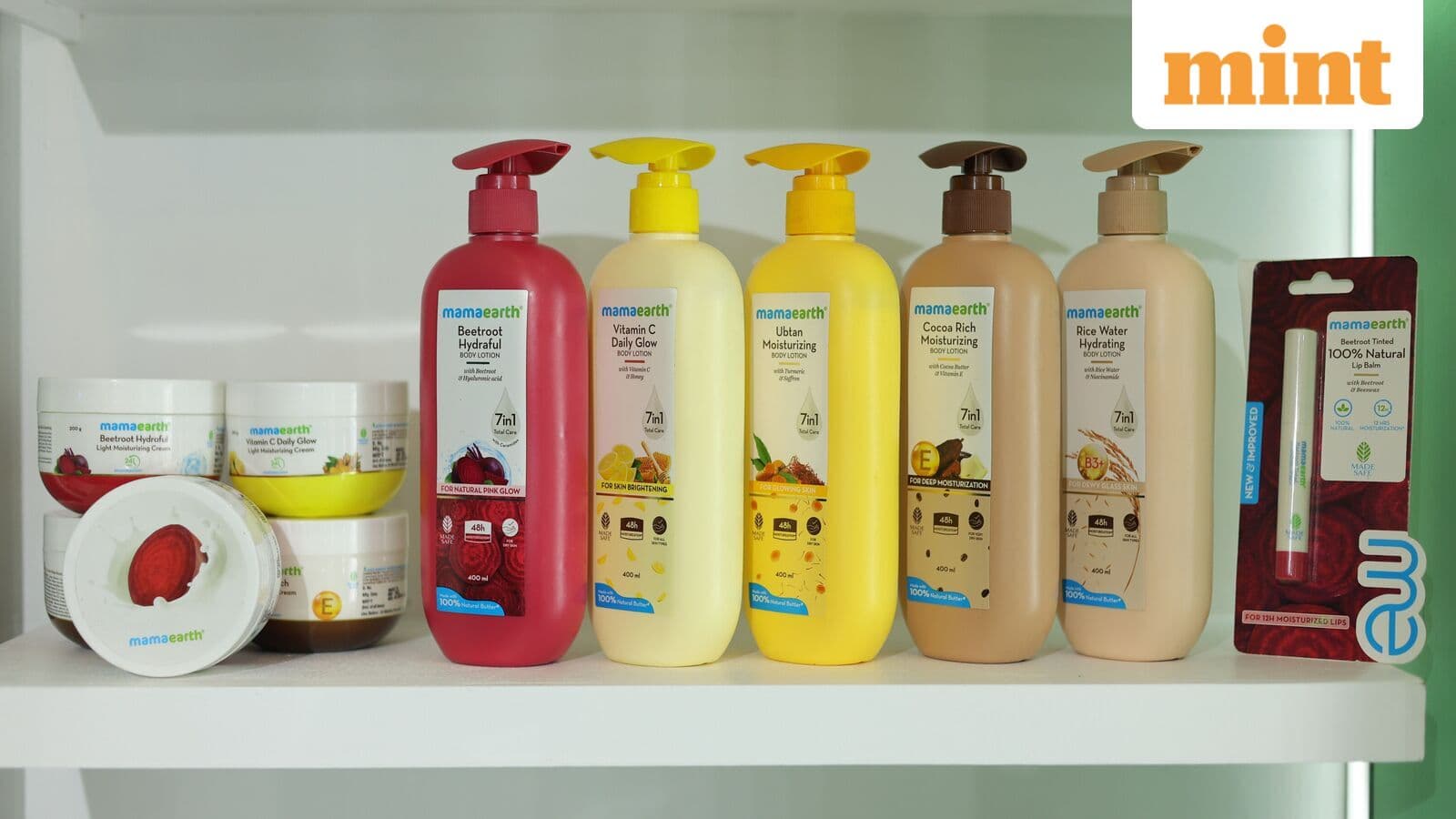
For anyone tracking how Indian consumer capital is moving, the numbers out of Honasa Consumer this week are a quiet signal that the country's beauty economy is no longer just about legacy giants. The Gurugram-based parent of Mamaearth, The Derma Co and Aqualogica reported a 119% jump in net profit for the April-June quarter, to ₹90.4 crore, with revenue up 27% to ₹756 crore. But the more interesting story is what the company is doing with that momentum: pushing its younger labels into the spotlight and taking its first serious swing at the fragrance market, a category that has long been dominated by global names.
The core of Honasa's strategy is now a portfolio play. While Mamaearth remains the flagship, it was the second-tier brands that stole the show this quarter, collectively growing more than 40%. The Derma Co, in particular, hit a ₹1,000-crore annualized net sales run rate — a milestone that puts it in a different league from most Indian direct-to-consumer beauty startups. Face cleansers alone crossed a ₹200-crore run rate, joining serums and sunscreens as categories above that threshold. CEO Varun Alagh told analysts he expects face wash and sunscreen to help several brands become ₹100-crore franchises within two to three years. That is not idle talk; it reflects a deliberate shift from single-brand dependence to a multi-brand house model.
What an outsider might miss is the context. Honasa emerged from the direct-to-consumer boom of the late 2010s, when a wave of Indian founders tried to build digital-first consumer brands. Most fizzled. Honasa survived by scaling Mamaearth into a household name, listing on the stock exchange in 2023, and then quietly building a stable of specialized labels. The Derma Co targets clinical skincare, Aqualogica focuses on hydration, Dr. Sheth's on ayurvedic-inspired formulations. This quarter's results show the bet is working: younger brands are now a key growth engine, and the company's focus categories — shampoo, baby care, suncare — account for more than 85% of the business, up 450 basis points year-on-year. The improved profitability also came with better offline distribution, a sign that these brands are moving beyond their e-commerce origins.
The fragrance launch, FIKN, is the boldest move yet. Positioned as India's first elixir brand, it targets men aged 20 to 35 in metros and tier-1 cities with a premium, lifestyle-oriented pitch. Alagh estimates the Indian perfume market at over ₹7,000 crore in 2026, growing at 15% annually. That is a compelling opportunity, but also a crowded one — international houses, legacy Indian players and a host of niche startups are all chasing the same young male consumer. Honasa's edge, if it works, is distribution and data: it already knows where its existing customers shop and what they search for. The company says brand searches for The Derma Co rose 34% year-on-year to record levels, and its rice-based face cleanser has become its number-one product in that category. That kind of consumer intelligence is hard for traditional players to match.
For the wider Asia wealth narrative, Honasa's trajectory is instructive. It shows that Indian consumer companies can build scale without waiting for foreign capital or global partnerships. The company is expanding into new categories — serums, sunscreens, now fragrance — while being careful not to overreach. Co-founder Ghazal Alagh said the company remains selective, sticking to focus categories unless a trend proves itself. That discipline, combined with the profitability uptick, is exactly what investors in Asia's emerging markets want to see: growth that is not subsidized by endless losses.
Looking ahead, the question is whether Honasa can repeat its Mamaearth magic with FIKN and its younger labels. The company has already shown it can incubate brands and scale them quickly; The Derma Co's run-rate milestone is proof. If FIKN captures even a sliver of India's fast-growing fragrance market, it could open a new revenue stream that diversifies the business beyond skincare. For now, Honasa is playing a smart game — building a house of brands that can each stand alone, while using the parent's muscle to push into new territory. For anyone watching Indian consumer capital, this is a name to keep tracking, not just for its quarterly numbers but for what it says about the ambition of the country's new generation of brand builders.