Lagos's little stocks are beating the giants — and that's the point
Nigeria's NGX low-cap stocks power a 29.11% YtD rally, outpacing big caps. But chasing momentum without fundamentals is risky.
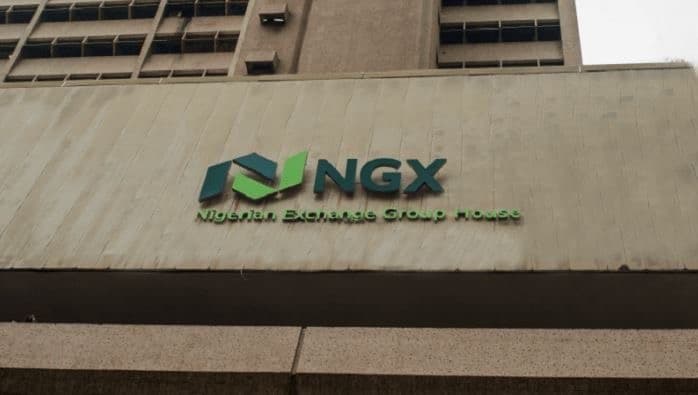
Follow the money in Lagos right now and you'll find it in the unlikeliest places: paint makers, old textile traders, micro-finance lenders. Not the usual suspects — not the Dangotes or the telecom giants that normally hog the headlines on the Nigerian Exchange. As of March 27th, the NGX had climbed 29.11% year-to-date, a blistering pace that dwarfs the 2.66% recorded at the same point last year and already clears more than half of the 51.19% total return posted in all of 2025. But the real story isn't the index — it's who's driving it. The rally has been led, decisively, by low-cap stocks, the small fry of the market, which are outperforming their mid- and large-cap cousins in pure price appreciation.
Here's the twist. The mega-caps, the so-called SWOOTs (stocks worth over one trillion naira), about 24 of them, have averaged a respectable 32% gain this year, with oil play Aradel leading the pack at 88%. But the percentage champions are the small-caps: names like Zichis Agro Allied, John Holt, Premier Paints, NCR, and Infinity Trust Mortgage. These are companies most international investors have never heard of, and for good reason — many have spent years in the wilderness, struggling with weak earnings and thin trading volumes. Now they're the darlings of a market hungry for returns, and several are already trading at or near their 52-week highs. That's a warning sign dressed up as a victory lap.
For outsiders, it's worth understanding the context. Nigeria's exchange is a peculiar beast: a frontier market with deep liquidity pockets, where retail investors often move in herds and institutional money follows trends more than fundamentals. The current rally is being fueled by strong liquidity and heavy participation, but it's increasingly sentiment and momentum doing the heavy lifting. That's not inherently bad — every bull market needs a little froth — but it means the risk calculus has shifted. The key question for anyone with capital in play is whether to chase the high percentage returns of small-caps or anchor to the fundamentally stronger mid- and large-cap names that offer less sizzle but more steak.
The data suggests caution. While some low-caps like Zichis, NCR, Infinity Trust, and SCOA have posted genuine earnings growth, others — Fortis Global Insurance, John Holt, Premier Paints, DEAP Capital, and RT Briscoe — continue to bleed red ink. Valuation metrics are even more concerning: several of these hot stocks are trading at negative price-to-book ratios, while others show extreme price-to-sales levels. In plain terms, investors are paying premium prices for companies that are either losing money or barely breaking even. That's not investing; that's gambling with a spreadsheet. The fact that these stocks are at their peaks means the easy money has likely already been made, and the upside from here is limited unless fundamentals catch up to prices.
What does this say about capital and wealth in Africa's largest economy? First, it signals a hunger for yield that's pushing investors down the risk curve. With inflation still elevated and traditional safe havens offering little, retail and institutional players alike are willing to take chances on speculative names. Second, it reveals a market that's still maturing — one where information asymmetry is high and price discovery is often driven by momentum rather than analysis. That's not a criticism; it's an opportunity. The investors who will win this cycle are those who can separate the Zichis of the world — companies with real earnings growth — from the John Holts, whose share price gains are built on sand.
Looking ahead, the rally's sustainability hinges on whether the small-cap surge can broaden into the mid-cap space and whether earnings can catch up to valuations. Nigeria's economy is showing signs of resilience, with currency reforms and oil production recovering, but corporate profitability remains uneven. For the savvy observer, the takeaway is simple: the NGX is telling you something about the risk appetite in Africa's biggest market — it's hot, it's speculative, and it's not for the faint-hearted. But for those willing to do the homework, the divergence between price and value is where the real money will be made. Just remember: in a market where paint makers outperform banks, the fundamentals matter more than ever, not less.