Inside the State Dinner That Turned Silicon Valley's Titans Into Diplomatic Props
Forget the red carpets of Cannes or the yacht parties of Monaco. The most exclusive invitation this week wasn't to a fashion gala or a private island retreat. It was to a state dinner at the White House, where the guest list included Jeff Bezos, Elon Musk, Tim Cook, Jensen Huang, Sam Altman, Mark Zuckerberg, and Sundar Pichai. If you wanted to measure the true currency of the ultra-wealthy in 2025, it wasn't stock options or square footage. It was a seat at a table where geopolitics and market-moving decisions are served alongside the main course.
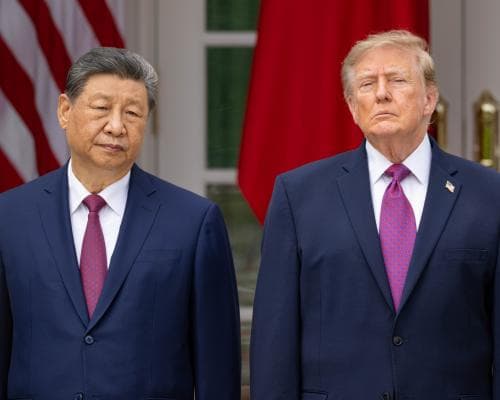
The day began with a bilateral meeting between President Donald Trump and Chinese President Xi Jinping. Trump later called it a "great meeting," but the subtext was anything but simple. According to Chinese state media, Xi urged the US to oppose "Taiwan independence" and to handle the Taiwan question with prudence. The White House offered no immediate readout, leaving the public to parse the silence. What we do know: Xi had been expected to press Trump on halting arms sales to Taiwan, and Trump had already suspended a $14 billion arms package to Taipei earlier this year, calling it a "very good negotiating chip." That move rattled allies in Asia and even some Republicans, who worried that Washington's support for Taipei could be softened in exchange for economic wins with Beijing. Taiwan, a democratically governed island that relies on US power to counter Beijing's threats, has long been a flashpoint. The US has traditionally avoided taking an official stance on its independence. But this week, the conversation happened behind closed doors, with the world's most powerful tech CEOs waiting in the wings.
Then came the evening. Xi left the White House after the meeting, but returned for a state dinner that felt less like a diplomatic formality and more like a summit of the global elite. The guest list was a who's who of American innovation: Bezos, Pichai, Altman, Cook, Musk, Zuckerberg, Huang. These are the people who control the cloud, the chips, the algorithms, and the electric grids. They don't need another invitation to Davos. But they showed up for this. Why? Because access is the ultimate luxury. You can buy a Gulfstream, a Picasso, a vineyard in Tuscany. You cannot buy a seat at the table where the future of trade, technology, and Taiwan is discussed. That kind of proximity is earned, not purchased. And it signals something profound about the new hierarchy of wealth: the billionaires who shape policy are the ones who get to shape the room.
There's also the matter of where Xi stayed. Not Blair House, the traditional guest quarters for visiting heads of state. Instead, he chose the Waldorf Astoria, the former Trump hotel in Washington. That detail is small but telling. It's a reminder that even diplomacy has a brand, and that the lines between business, politics, and hospitality are increasingly blurred. For the ultra-wealthy, this is the world they navigate: a world where a hotel choice can be a statement, where a dinner invitation can be a signal, and where the most valuable asset isn't a stock portfolio but a relationship with the people who write the rules. The state dinner wasn't just a meal. It was a live demonstration of soft power, and the tech titans were both guests and exhibits.
What does this mean for the luxury market? It means that the ultimate status symbol is no longer the thing you own. It's the room you're in. The watch on your wrist, the car in your garage, the jet on the tarmac—these are still markers of wealth. But they're table stakes. The new aspiration is influence. It's being the person whose presence at a dinner can shift a negotiation, open a market, or protect a supply chain. That's why the world's richest people spent their evening at the White House instead of on a superyacht. They understand that in the current landscape, proximity to power is the rarest commodity of all. And it's not for sale.
As the night ended and the motorcades pulled away, one thing was clear. The relationship between Washington and Beijing is as complicated as ever. Taiwan remains a delicate issue. Arms sales and trade deals are still on the table. But for a few hours, the conversation was lubricated by the presence of the people who build the future. If you want to understand where wealth is heading, don't look at the stock tickers. Look at the guest list. The billionaires are no longer just buying influence. They're sitting at the table, and the menu is geopolitics.
The Experience
To experience this level of access, you don't just need a private jet—you need a seat at the table where decisions are made. Start by building relationships that matter, not just assets.