Hong Kong's IPO machine revs again as China's tech stars seek global exits
HKEX CEO Bonnie Chan says mainland tech firms increasingly pick Hong Kong to tap global capital, customers and partners as they expand overseas.

For anyone tracking where China's next generation of tech fortunes will be minted, the message from Hong Kong's exchange boss this week was a quiet but deliberate signal: the city is not just back, it is repositioned. Bonnie Chan Yiting, chief executive of Hong Kong Exchanges and Clearing, told a conference in Shanghai that the pipeline for initial public offerings remains robust, driven by mainland Chinese start-ups that see the former British colony not merely as a fundraising venue but as a launchpad for their global ambitions.
Chan's comments, delivered at the HKEX China Conference on Tuesday, carry weight beyond the usual corporate cheerleading. She described a shift in how mainland founders now view Hong Kong: they come for capital, yes, but also for something harder to quantify — access to international customers, business partners and the kind of credibility that a listing on a globally recognised exchange confers. More mainland firms, she said, are choosing Hong Kong as an important platform for international development, a phrase that hints at a strategic pivot as China's domestic economy matures and its tech champions look outward.
To understand why this matters, consider the structural quirk that outsiders often miss. Mainland China's own stock exchanges in Shanghai and Shenzhen remain largely sealed off from foreign investors, a consequence of the country's capital controls. That means a Chinese tech company seeking global shareholders has few practical routes: it can list in New York, where political tensions have made life difficult for Chinese issuers, or it can go to Hong Kong, which operates its own legal and financial system while sitting at the edge of the mainland. For years, that made Hong Kong a bridge; now it is increasingly the only bridge that does not require navigating geopolitical minefields.
The companies lining up are not legacy manufacturers or state-backed utilities. They are the scrappy, venture-backed software firms, artificial intelligence start-ups and consumer platform players that have powered China's digital economy over the past decade. Many have reached the stage where domestic growth alone is no longer enough — they need overseas revenue, overseas brand recognition and, crucially, overseas investors who can help them acquire or partner with foreign firms. Hong Kong offers all three, plus the advantage of being a jurisdiction where international accounting standards and corporate governance rules apply, making due diligence easier for global funds.
For the wider Asian wealth ecosystem, this is a significant development. Hong Kong's stock exchange has long been a bellwether for regional capital flows, and a strong IPO pipeline means more liquidity for the city's banks, brokerages and family offices. It also signals that despite the noise about Singapore challenging Hong Kong's status as Asia's financial hub, the exchange still holds a unique trump card: proximity to China's most dynamic private companies. Singapore can court wealth, but it cannot offer the same direct pipeline to mainland tech talent and ambition.
Looking ahead, the question is whether this momentum can hold. Global investors remain cautious about China risk, and the regulatory environment at home can shift quickly. But Chan's tone suggested confidence, not defensiveness. If the trend continues, Hong Kong will cement its role not as a mere gateway but as the primary arena where China's tech founders meet the world's capital — and where the next wave of Asian billionaires gets its first public valuation. For readers of this column, that is worth watching closely, because the companies listing in Hong Kong today will shape the region's wealth maps for decades to come.
More in MONEY

Swipejobs founder Katrina Leslie wins EY Entrepreneur of the Year as AI hiring platform hits $1.3bn revenue
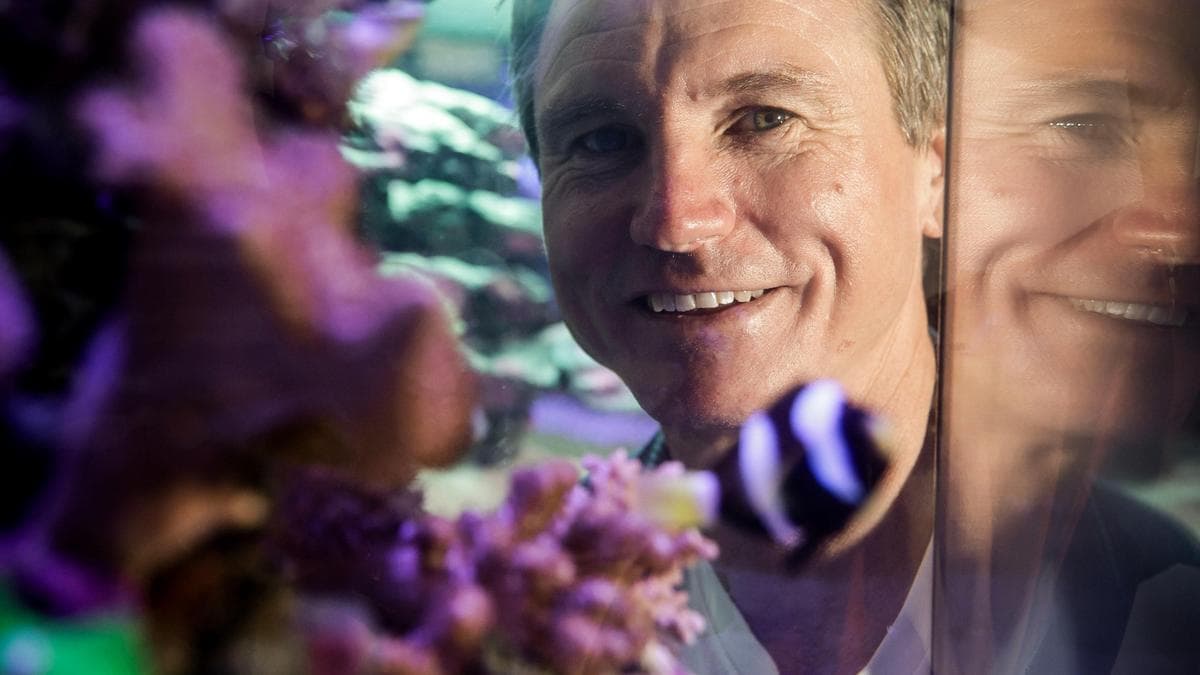
Ben Brayford, the Perth 'aquarium geek' chasing $4m to build Living Oceans into a billion-dollar venture

Zuckerberg Drawn Into Brazil's Election Fight as Sanders and Democrats Demand Answers on Meta's Treatment of Lula and Bolsonaro