Headingley's Test Drought Is a Warning Sign for Cricket's Financial Future
Yorkshire's loss of men's Test cricket for two years exposes the financial fragility of traditional formats, even as franchise sales like the Hundred inject cash. The ECB's scheduling priorities signal a shift toward short-form revenue, with long-term implications for the sport's cultural and economic ecosystem.
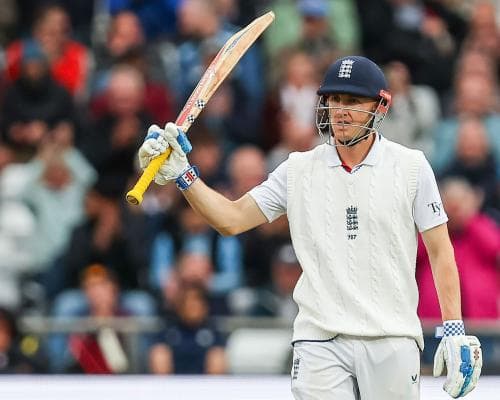
The roar of a Headingley crowd is one of cricket's most intoxicating sounds. It is the noise of history being made—Ben Stokes's miracle at Leeds in 2019, the white-hot tension of an Ashes chase, the sight of Harry Brook, the local boy, finally raising his bat to all four corners. But that sound will fall silent for men's Test cricket over the next two years. The ground, a cathedral of the game's longest format, has been dropped from the England and Wales Cricket Board's allocation for the 2027 Ashes, with no men's Test until 2031. The reason is as unromantic as it is revealing: money, and the gravitational pull of franchise cricket.
Yorkshire's chief executive, Sanjay Patel, called the absence "devastating," and the club's annual report spells out the math: every year without a men's Test costs £2m–£3m. That is the stark reality of a sport where the red ball still pays the bills, even as the Hundred's glitzy, short-form circus dominates the summer calendar. The club sold its Northern Superchargers franchise for £52.1m, clearing debts and transforming its balance sheet, yet the need for Test cricket remains existential. This is not a Yorkshire problem; it is a structural one. The ECB's scheduling decisions are a quiet admission that the traditional format is no longer the commercial anchor it once was, but rather a loss-making obligation to be distributed sparingly, like rationed luxury.
The tension is palpable. On one side, the ECB is betting big on the Hundred, with private investors circling franchises and valuations skyrocketing. On the other, the county game—the bedrock of English cricket—is being starved of its biggest revenue generator. The irony is that Test cricket, particularly in venues like Headingley, produces the moments that define the sport's cultural legacy. The 2017 West Indies victory, Shai Hope's twin hundreds, the Bazball chases against New Zealand—these are the stories that fill stadiums and living rooms, not just spreadsheets. Yet the ECB's allocation for 2027, which includes no northern Ashes Test, suggests a strategic pivot: prioritize the formats that attract broadcasters and investors, even if it means eroding the grassroots and regional identity that make cricket feel like a national sport, not just a product.
This is not a uniquely English dilemma. Across the world, cricket is wrestling with the same forces. The IPL's dominance, the rise of T20 leagues in every corner of the globe, and the growing influence of private capital are reshaping the sport's economics. Test cricket, once the gold standard, is now being treated as a heritage asset—valuable but not scalable, essential for tradition but not for growth. The ECB's decision to sideline Headingley is a microcosm of this broader shift. It reflects a belief that the future lies in shorter, faster, more commercially viable formats, even if that means sacrificing the very matches that create the sport's most enduring legends.
But there is a counterargument, and it is one that Yorkshire's accountants understand all too well. Test cricket is not just a revenue stream; it is a loss leader that subsidizes the entire ecosystem. The £2m–£3m annual loss from missing a men's Test is not an abstract figure—it translates into less investment in youth academies, fewer coaching resources, and a weaker talent pipeline. The Hundred's cash influx, while welcome, is a one-off. Test cricket is the recurring revenue that keeps the lights on. The ECB may be betting that franchise cricket can fill the gap, but the data suggests otherwise. Even with the Superchargers sale, Yorkshire's financial outlook remains precarious without Test matches. The sport is walking a tightrope, and the next few years will determine whether it can balance commercial ambition with cultural preservation.
The deeper question is what this signals for the sport's future. If the ECB is willing to sacrifice a historic venue like Headingley for the sake of a more streamlined calendar, what does that mean for the next generation of fans? Test cricket's appeal lies in its narrative arc—the five-day battle, the ebb and flow, the possibility of a draw turning into a thriller. It is a format that rewards patience and nuance, qualities that are increasingly rare in a world of instant gratification. By marginalizing it, cricket risks alienating its core constituency: the traditionalists who fill grounds on grey afternoons, the families who see Test matches as rites of passage, the children who dream of emulating their heroes over five days, not five overs.
Yet there is also a hopeful reading. The ECB's decision is not a death knell but a recalibration. It may be an acknowledgment that Test cricket cannot survive on nostalgia alone; it needs innovation—better scheduling, more competitive balance, and a global structure that gives it meaning. The rise of the World Test Championship is a step in that direction, but it remains a work in progress. Headingley's absence could be a catalyst for change, forcing administrators to rethink how the format is packaged and sold. The challenge is to do so without losing the soul of the game. As Yorkshire counts the cost of a silent summer, the sport faces a choice: adapt or wither. The next two years will be a test of whether cricket can evolve without erasing the very things that make it worth watching.