HDFC Bank's $115 Billion Succession: Anup Bagchi Emerges as Frontrunner to Succeed Sashidhar Jagdishan
ICICI Prudential Life CEO Anup Bagchi is a top candidate to lead HDFC Bank as Sashidhar Jagdishan's term ends in October.
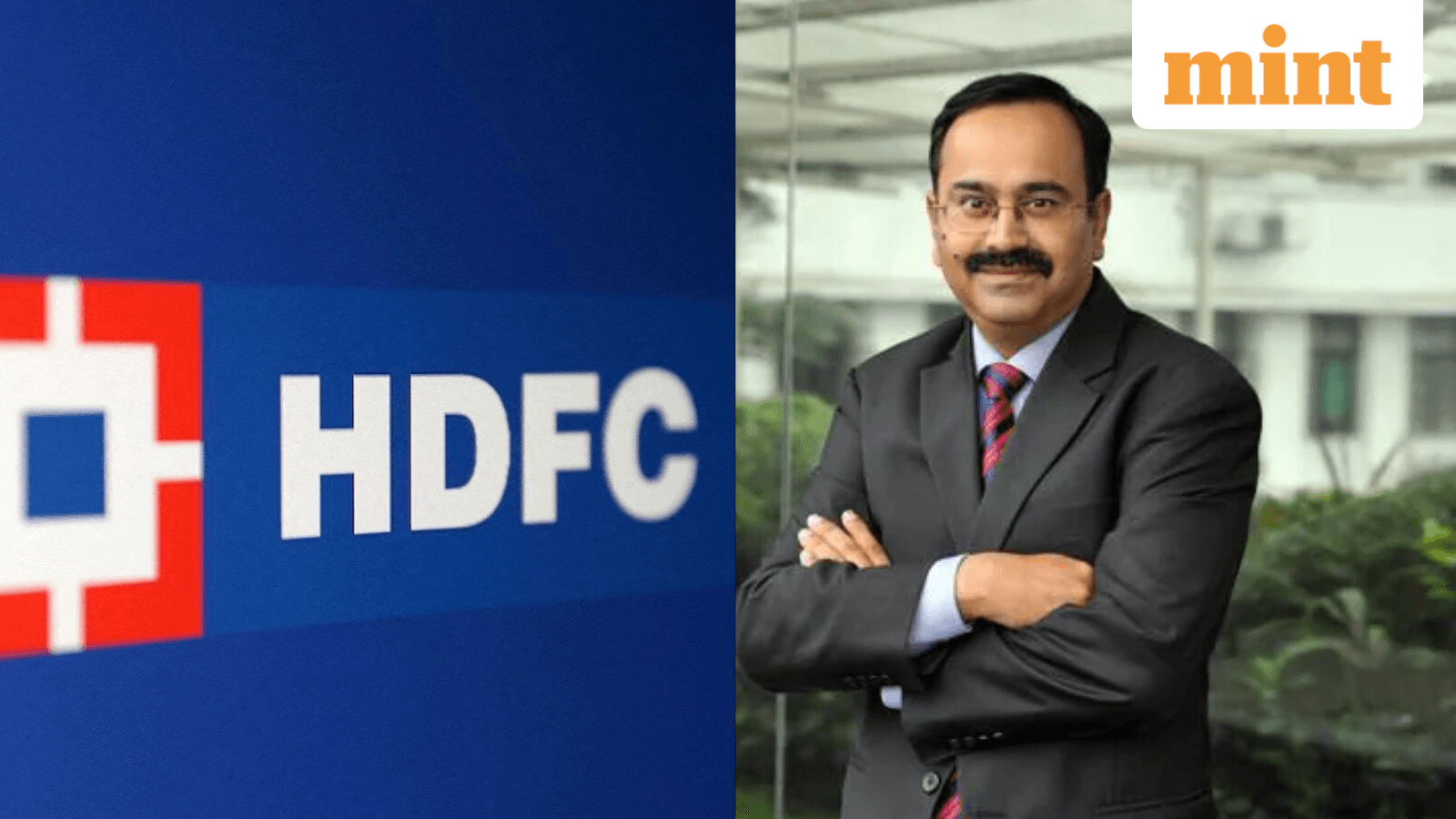
When a $115 billion bank changes its captain, the ripples reach every corner of India's capital markets. HDFC Bank, the country's largest private lender by market capitalisation, is in the thick of deciding who takes the wheel next — and the shortlist has narrowed to a name that will surprise few who track the ICICI Group's talent pipeline.
Anup Bagchi, currently CEO of ICICI Prudential Life Insurance, has emerged as a frontrunner to succeed Sashidhar Jagdishan as HDFC Bank's Managing Director and Chief Executive Officer, according to multiple media reports. Jagdishan, 61, is serving his second three-year term and is set to step down in October. The bank has submitted two names, along with a preferred order and remuneration details, to the Reserve Bank of India, PTI reported. The RBI does not merely rubber-stamp such appointments; it reviews candidates against its 'fit and proper' criteria and must approve the final choice. Kaizad Bharucha is also reportedly in the running. No final decision has been taken.
For outsiders, the mechanics matter as much as the names. HDFC Bank's board has forwarded the two recommendations from its governance, nomination and remuneration committee. That committee's shortlist reflects a careful balancing act: the RBI wants seasoned bankers with clean regulatory records, while the bank needs a leader who can navigate an economy where credit growth is cooling and digital competition is intensifying. Bagchi fits the template. He has spent more than 30 years inside the ICICI Group, with stints across retail banking, small business lending, corporate banking, treasury and data analytics. He previously served as MD and CEO of ICICI Securities and as an Executive Director on ICICI Bank's board. That breadth — banking, capital markets, insurance — is precisely the profile HDFC Bank's board appears to be shopping for.
To understand why this matters, you need local context. HDFC Bank was born from a merger of a housing finance giant and a commercial bank, and it has long been the bellwether for India's private banking sector. Its every leadership move is parsed by investors from Singapore to London because the bank's balance sheet is a proxy for India's consumption story. Jagdishan took charge in October 2020, in the thick of the pandemic, and steered the lender through a period of aggressive deposit mobilisation and digital expansion. His successor will inherit a different set of pressures: tighter liquidity, a regulator that has repeatedly signalled its preference for conservative risk-taking, and a fintech ecosystem that is nibbling at traditional banking margins.
Alongside the CEO succession, HDFC Bank's board approved the reappointment of V Srinivasa Rangan as a Whole-time Director, designated as Executive Director, for a one-year term running from November 23, 2026, to November 22, 2027. It also approved the appointment of Jimmy Tata as a Whole-time Director, designated as Executive Director, for three years from the date of RBI approval. These are not headline-grabbing moves, but they matter: they signal continuity in the bank's senior ranks even as the top job changes hands. For a lender of HDFC Bank's size, institutional memory is an asset, and the RBI prefers a steady hand over a dramatic reset.
The wider signal for Asia's wealth landscape is subtle but real. India's private banks are no longer just domestic champions; they are competing for global capital, and their leadership choices are watched as indicators of governance quality. A smooth, RBI-approved succession at HDFC Bank would reinforce the narrative that India's financial sector is institutionalising, not personalising, its power. A messy or delayed process would do the opposite. The fact that the bank has already sent two names to the regulator suggests the board wants to avoid a vacuum — a lesson learned from other Asian financial institutions where succession dramas have dented investor confidence.
For Bagchi, the move would cap a career that has touched nearly every corner of ICICI's empire. For HDFC Bank, it would bring in an outsider with deep institutional pedigree — a leader who knows how to run a bank, a brokerage and an insurer. The RBI's approval is the final gate, and until that clears, the race remains open. But the shortlist itself tells you something: India's largest private bank is looking for a known quantity, not a gamble. In a year when global capital is skittish about emerging markets, that instinct may be exactly what the doctor ordered.