Dangote Says Smuggling, Not Refining, Sets Nigeria's Petrol Price
Aliko Dangote blames petrol smuggling to neighbours paying 30-50% more for Nigeria's stubborn pump prices, as his refinery raises its gantry rate.
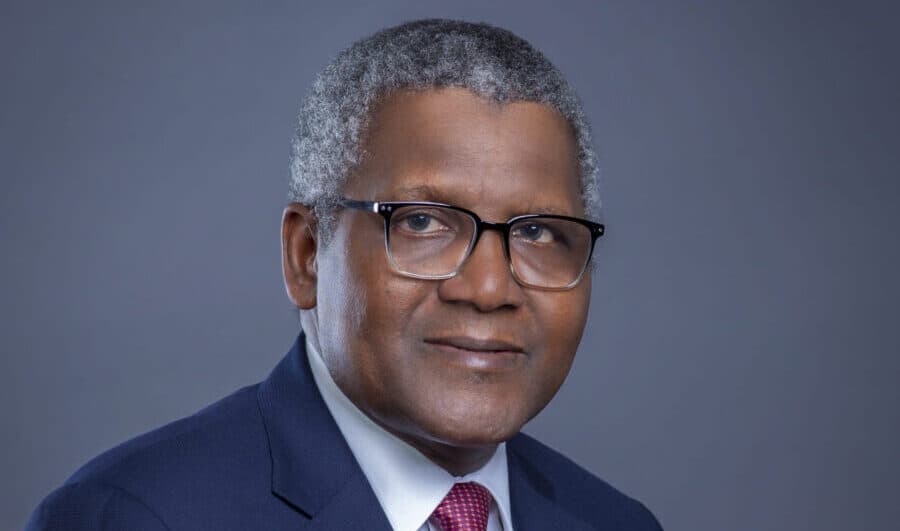
Nigeria produces crude by the million barrels and now refines a serious share of its own petrol. So why does a litre still sting at the pump? Aliko Dangote has a blunt answer: the fuel is leaving the country faster than it can cheapen at home.
Speaking to Arise Television on Tuesday, September 15, 2026, the President and Chief Executive of Dangote Industries Limited tied Nigeria's stubborn petrol prices to smuggling across its land borders. His argument rests on a simple arbitrage: petrol that sells for ₦1,350 a litre in Nigeria fetches 30% to 50% more in neighbouring markets. In Niger, he said, the price runs roughly 20% to 25% above Nigeria's. That gap is an instant return for anyone willing to move product across the frontier. His illustration was vivid — a tanker ostensibly bound for Sokoto that instead slips across to Ilela and sells there. The comments followed Dangote Petroleum Refinery's decision to lift its gantry price from ₦1,265 to ₦1,350 per litre effective September 12, a move it attributed to elevated international crude and petroleum product prices.
For readers outside the region, the name Dangote carries a weight that is hard to overstate. Aliko Dangote built his fortune on cement, sugar and flour, and his refinery project on the outskirts of Lagos was pitched as the answer to a paradox that has embarrassed Africa's largest oil producer for decades: a country that exports crude but imports refined fuel, exposing its citizens to foreign exchange swings and global product prices. A functioning mega-refinery was supposed to break that cycle. The gantry price, the wholesale rate at which the refinery sells to marketers, is now a benchmark the whole downstream market watches.
The smuggling problem is older than the refinery. Nigeria has long been the cheapest petrol pool in West Africa because of its fuel subsidy regime, and porous borders turned that subsidy into an export business. Even after subsidy reform pushed prices up, Nigerian fuel has remained competitive against neighbours, so the incentive never fully died. Dangote's framing matters because it shifts blame away from his refinery and toward enforcement — customs, border policing, and the political economy of a region where fuel is both a commodity and a livelihood.
There is a wider signal here about capital in Africa. Dangote has staked billions on import substitution, betting that domestic processing can capture value that used to flow to European refiners and traders. But that bet only pays if the product stays home. When a manufacturer's output leaks across borders to capture a price premium elsewhere, the refinery's economics and the country's energy security both suffer. It is a reminder that industrial policy in Africa rarely fails on engineering alone; it fails on the last mile — regulation, logistics and the informal networks that move goods.
The coming months will test whether Nigerian authorities can tighten the border without strangling legitimate trade, and whether the refinery's pricing can stabilise as global crude markets cool. For Dangote, the refinery remains a legacy project and a listed ambition. For Nigeria, it is a live experiment in whether a private billionaire can succeed where decades of state policy did not. The answer will not be settled at the gantry. It will be settled at the border.