Factory's $5B Valuation Triples in Five Months as Blackstone and Sequoia Back AI Software Factories
Factory raises $200M at $5B valuation, tripling its April worth as Blackstone, Sequoia and Khosla bet on AI that builds enterprise software.
San Francisco's Factory just did in five months what most enterprise software companies take years to accomplish. The AI software development platform raised $200 million at a $5 billion valuation, more than tripling the $1.5 billion price tag it carried in April. For anyone tracking where global venture capital is placing its chips, the speed is the story. The investors writing these cheques — Blackstone, Sequoia Capital, Khosla Ventures, with Insight Partners, Evantic Capital, Sound Ventures, NEA, Mantis VC and Clearlake also participating — are not chasing a niche coding tool. They are betting on a fundamental reorganisation of how the world's largest companies build software.
Factory was founded in 2023 by Matan Grinberg and Eno Reyes, and it has now pulled in more than $400 million in total funding. The company's platform is used by hundreds of thousands of developers, according to its own figures, with customers including Nvidia, Blackstone, Royal Bank of Canada, Palo Alto Networks and Adobe. Angel investors in the round include Formula One champion Nico Rosberg, Brad Gerstner and Marc Benioff. Those names matter because they signal a particular kind of conviction: this is not a seed-stage gamble but a late-stage wager that Factory can become infrastructure for enterprise engineering teams.
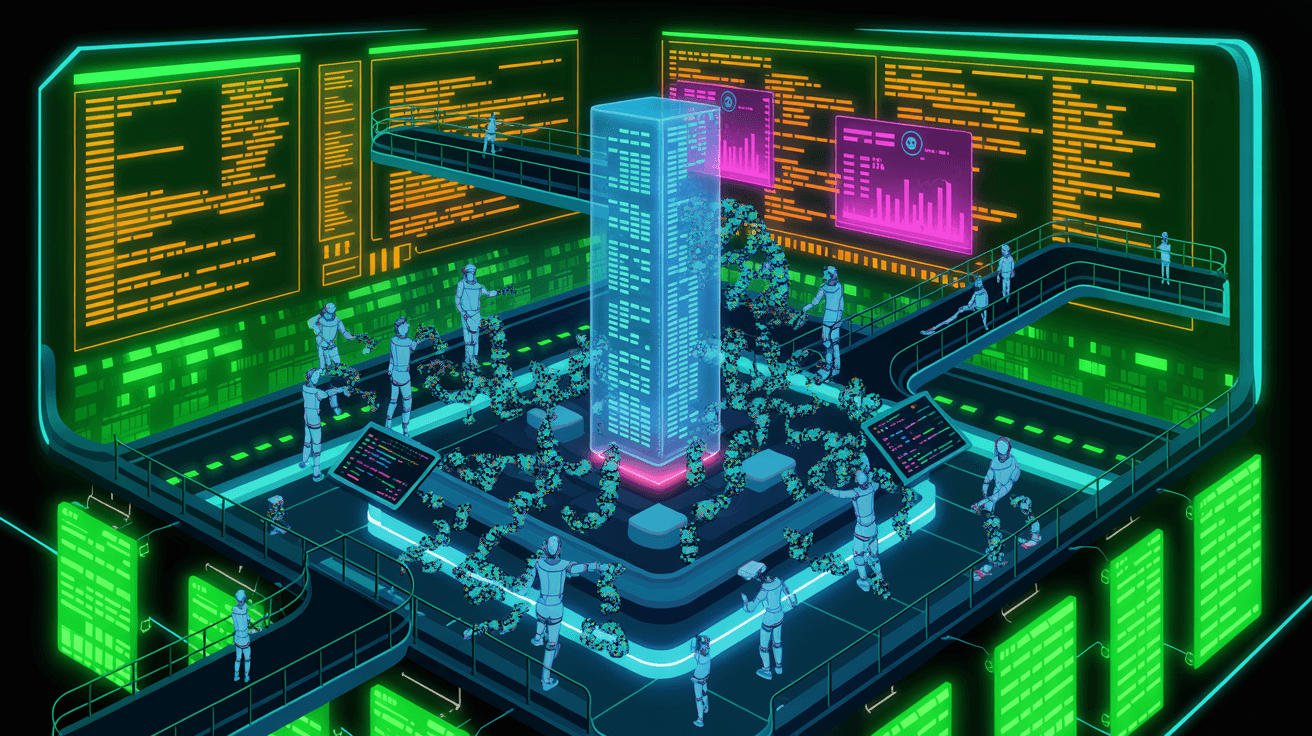
The distinction Factory draws is between individual coding assistants and what it calls autonomous software factories. Most AI coding tools on the market today help a single developer write a function or debug a file. Factory's pitch is broader: a single system that manages the entire software development lifecycle, from building to testing to maintaining code, using AI agents that operate continuously under human oversight. Crucially, enterprises can control how the system learns, which models it uses and where it runs — whether on Factory's managed cloud, on-premises or in fully air-gapped environments. That last option is not a technical footnote. For banks, defence contractors and anyone handling regulated data, air-gapped deployment is often the difference between adopting AI and being legally unable to.
Grinberg's own framing is that the world's largest enterprises are moving from individual coding agents to software factories. It is a claim worth taking seriously precisely because the customers listed — Nvidia, RBC, Adobe — are not experimental startups. They are companies with sprawling engineering organisations and decades of accumulated code. If Factory can sell them on a unified system for managing AI-assisted development, the market is not the roughly $20-a-month coding assistant subscription. It is the enterprise software budget itself. The company says it will use the new capital to expand its platform and drive enterprise adoption.
For Africa, the deal lands at an interesting moment. The continent's tech ecosystem has spent the past decade building fintech, logistics and payments champions, but enterprise software infrastructure remains thin. African banks, telcos and insurers are among the largest employers of software engineers on the continent, yet they buy their development tooling from abroad. If autonomous software factories become the standard for how large organisations build and maintain code, African enterprises will be consumers of that shift, not producers of it. The capital formation happening in San Francisco right now — $150 million in April, another $200 million months later, at a valuation that tripled — is a reminder of how quickly the gap widens when a platform becomes category infrastructure.
The broader signal is about velocity. Factory went from founding to a $5 billion valuation in roughly two years, and from $1.5 billion to $5 billion in five months. That is not normal. It reflects a market that has decided autonomous software development is not a feature but a layer. Whether Factory becomes the layer, or one of several, is the open question. What is already clear is that the capital is moving fast, the customers are real, and the enterprises that adopt earliest will set the terms for everyone else.