Dangote Refinery's record $13.9bn half-year sales set the stage for Africa's biggest IPO
Dangote Refinery posts record N19.13trn H1 revenue, doubling profit, as it prepares a $2.15trn IPO — Africa's largest ever listing.
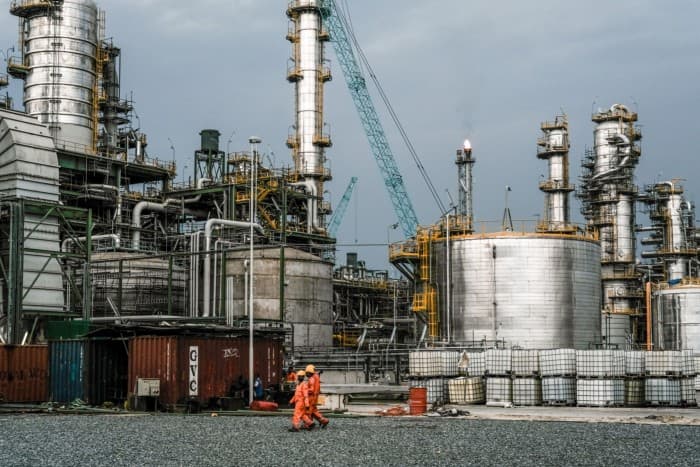
For anyone who has watched Africa's industrial ambitions stall against the hard math of infrastructure deficits and policy wobbles, the numbers coming out of Lagos this week are not just impressive — they are a statement of intent. Dangote Petroleum Refinery, the sprawling single-train complex that has consumed billions in investment and years of construction drama, has reported a record N19.13 trillion ($13.91 billion) in first-half revenue. That is more than double the N8.64 trillion it posted a year earlier, and it lands just as the company gears up to launch what could be the largest stock market offering Africa has ever seen.
The refinery is not merely selling a story of future potential anymore. Between March and June, it moved into stable, full-capacity production, with throughput climbing to as much as 700,000 barrels a day during performance tests. The result: gross profit jumped to N3.43 trillion from N225.2 billion a year earlier, net profit reached $1.82 billion, and EBITDA hit $2.60 billion. Revenue gains came from both volume and price — petrol sales nearly doubled to 6.06 million metric tons, automotive gas oil rose to 2.86 million tons, and jet fuel climbed to 3.02 million tons, with realised prices up sharply across all products. This is the kind of earnings traction that turns sceptics into subscribers.
For outsiders, it helps to understand what this refinery means to Nigeria. For decades, the country exported crude and imported refined fuel, bleeding foreign exchange and subsidising consumption while its own refineries rotted. Aliko Dangote, Africa's richest man and a man who has built fortunes in cement, sugar and fertiliser, decided to fix that with a $20 billion bet on a 650,000-barrel-per-day facility on the outskirts of Lagos. It was a project plagued by delays, financing headaches and regulatory friction, but it has now become the world's largest single-train refinery. The company is preparing to offer 4.1 billion ordinary shares at N525 each, aiming to raise N2.15 trillion between September 14 and October 13. If completed, the listing would dwarf every previous equity offering on the Nigerian Exchange and hand the market its biggest new pool of investable assets in years.
The share sale is not just about raising cash; it is about widening ownership of a national champion. Dangote Oil Refining Company currently holds 65.83 percent of the refinery's 120.13 billion shares, with Dangote Industries owning another 14.90 percent. NNPC, the state oil company, holds 8.19 billion shares, and other investors, including Greenview International, hold the rest. The IPO would give ordinary Nigerians and international funds a direct stake in a business that has already proven it can generate serious profit. Analysts at Futureview Research say the offer is intended to broaden public ownership and support long-term growth through expanded refining and petrochemical capacity. The pre-listing market capitalisation is N63.07 trillion, and at the offer price, the post-listing valuation would rise to N65.22 trillion — adding roughly N2.15 trillion to the NGX's total value.
This is a pivotal moment for African capital markets, which have long struggled to attract large, liquid listings. The NGX has been pushing reforms to deepen participation, and the return of Nigeria to the FTSE Russell Frontier Market index this month adds further momentum. Temi Popoola, CEO of NGX Group, has talked about the market's capacity to mobilise long-term capital at scale — and this IPO is the ultimate stress test of that claim. If the Dangote Refinery listing succeeds, it will send a signal far beyond Lagos: that African industrial assets can command global valuations and that local exchanges can absorb them. If it stumbles, it will reinforce the old narrative that the continent's biggest opportunities always end up listed in London or New York.
The stakes, however, go beyond the exchange. The refinery's targeted valuation of $40 billion to $50 billion is now backed by hard numbers, not just projections. The company is no longer asking investors to fund a dream; it is inviting them to buy into a machine that is already humming. For a continent that imports billions of dollars in refined petroleum products each year, a successful Dangote IPO could catalyse a wave of downstream industrial investment across Africa. It would also cement Dangote's legacy as the man who industrialised Nigeria's energy sector — and open the door for other family-held conglomerates to consider public listings as a way to unlock value and spread risk. The offer window closes in October, and the world's capital allocators will be watching closely. If this works, the conversation about African wealth will shift from extractive exports to industrial equity — and that is a shift worth betting on.
More in MONEY