Court-Side Power Plays: What the US Open’s Opening Day Reveals About Winning at the Highest Stakes
There is a moment in every great match when the script tears, and the underdog suddenly writes their own lines. On day one at Flushing Meadows, that moment arrived with a cheeky serve-and-volley from a Hong Kong qualifier named Coleman Wong, who looked less like a lucky draw and more like a man who had studied the geometry of the court the way a jeweler studies a flawless stone. Wong didn’t just pressure Tommy Paul—he dismantled the American’s rhythm with a series of audacious net approaches, turning the opening set into a private masterclass in risk and reward. For those of us who measure life in net worth, there’s a lesson here: composure under fire is the rarest currency, and it doesn’t come with a price tag.
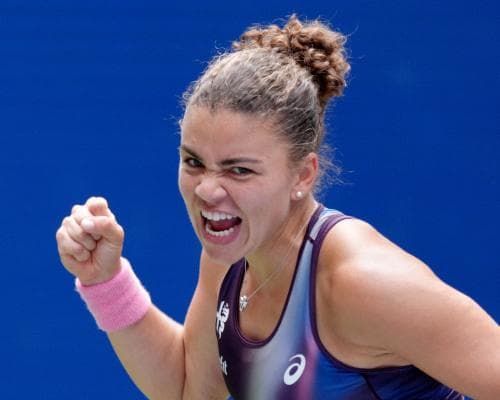
The scene was set on the grandest stage of American tennis, where the 2026 US Open kicked off with a parade of power and precision. Jessica Pegula, the third seed, moved through her first-round match against Romania’s Elena-Gabriela Ruse like a CEO closing a merger—efficient, ruthless, and utterly unflappable. She won 6-2, 4-6, 6-3, but the scoreline flatters Ruse; Pegula saved three match points with a serve that could fund a small country’s GDP, then sealed the deal with a net cord that felt almost poetic. Meanwhile, Cameron Norrie, the 29th seed, warmed up in the wings, a quiet reminder that British grit still has a seat at the table. But the real story was Wong, who broke Paul’s serve three times in the opener, leveling at 5-5 after a double fault that echoed through Louis Armstrong Stadium like a champagne glass shattering on marble.
This is where the luxury lens comes into focus. Tennis, at this level, is not a sport—it’s a study in craftsmanship. Wong’s serve-and-volley is a dying art, like hand-stitched leather or bespoke tailoring; it requires a precision that can’t be mass-produced. Paul’s forehand, a massive down-the-line rocket, is the kind of tool you’d expect to see in a collector’s vault—rare, powerful, and devastating when unleashed. But what sets these players apart from the weekend warrior is the mental game: the ability to erase a double fault with three unreturnable serves, to turn a shanked return into a point won, to hold your nerve when the crowd’s roar feels like a physical weight. That’s not training; that’s heritage. It’s the same instinct that drives a connoisseur to choose a 1963 Château Latour over a newer vintage—because the depth of character can’t be rushed.
For the ultra-wealthy, the US Open is more than a sporting event; it’s a barometer of taste. The opening day’s matches—Pegula’s clinical dismantling of Ruse, Wong’s fearless assault on Paul—offer a masterclass in how to handle pressure with grace. Pegula, who won all eight points behind her first serve in a critical stretch, only to double fault on the ninth, then recovered with a crushing open-stance backhand that left Ruse flat-footed, is a study in resilience. Wong, who fought through deuce games and break points with a smile that suggested he was enjoying the chaos, reminded us that true luxury is the ability to stay unbothered while the world watches. This is the same poise you’d want in a private banker during a market crash or a captain navigating a superyacht through a squall—it’s not about avoiding the storm; it’s about steering through it with style.
Looking ahead, the tournament’s early hours signal a shift in the sport’s power dynamics. The old guard—the Norries and Pauls—are being tested by a new wave of qualifiers and wildcards who play without fear, because they have nothing to lose and everything to prove. For collectors and connoisseurs, this is the most exciting part of the draw: the discovery of a new name, a new style, a new story. Wong’s performance, in particular, is a reminder that the next great thing often arrives unannounced, like a rare vintage that surfaces at auction. The question isn’t whether he’ll win the title—it’s whether you were there to see him try. And for those who crave the ultimate access, the real prize isn’t the trophy; it’s the seat in the players’ box, the private suite overlooking center court, the chance to say you witnessed the moment before the world knew its name.
As the sun set over Queens, the first day’s matches closed with a sense of anticipation that only the US Open can deliver. Pegula’s win was expected, but Wong’s defiance was a gift—a reminder that in tennis, as in life, the most valuable assets are often the ones you don’t see coming. So, whether you’re courtside in a linen blazer or watching from a penthouse in Manhattan, keep your eyes on the qualifiers. They’re the ones who know that every point is a negotiation, every set a deal, and every match a chance to rewrite the rules of the game.
The Experience
Secure a private box at Arthur Ashe Stadium for the 2026 US Open, or book a behind-the-scenes tour with a former pro to see the game from the players’ perspective.