Chile's Enerlink charges up with $3.1M to wire Latin America for EVs
Chilean EV charging startup Enerlink raises $3.1M led by Kayyak and Dalus to expand across 8 Latin American countries.
Santiago's streets are still dotted with far more gasoline stations than plug-in points, but a quiet revolution is underway — and it just got a jolt of capital. Enerlink, a Chilean startup that builds the software and hardware backbone for electric vehicle charging, has raised US$3.1 million in a round co-led by Kayyak Ventures and Dalus Capital, with participation from Inder, the family office of businessman José Luis del Río. For anyone tracking where South American wealth is flowing, this is a signal that the region's energy transition is no longer a pilot project but a scalable business.
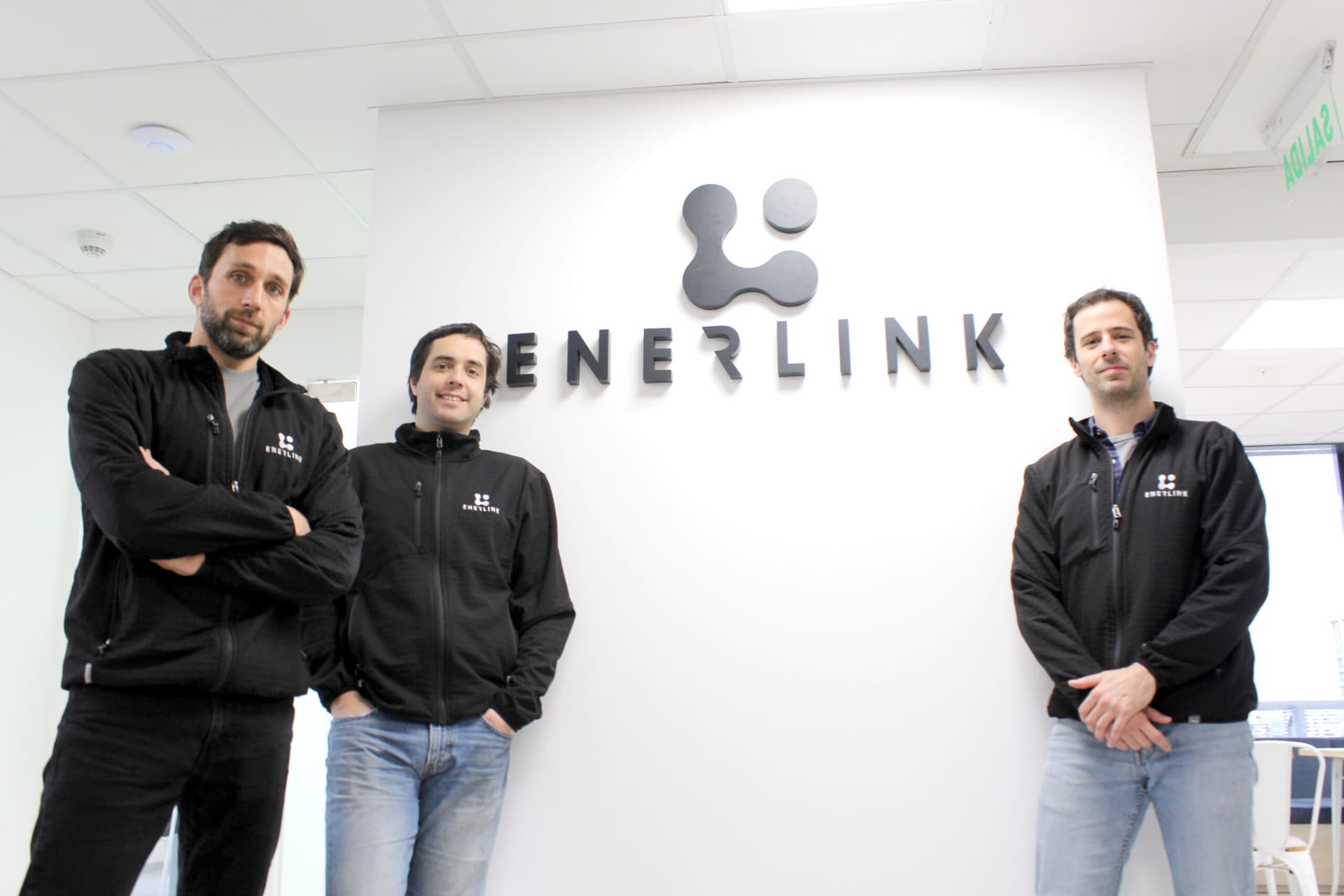
Founded in 2017 by Sebastián Luque, José Ignacio Dusaillant, and Alberto Cárdenas, Enerlink has grown from a local charger operator into a regional platform. The company now operates in eight countries — Chile, Colombia, Peru, Mexico, Ecuador, Uruguay, Costa Rica, and Saint Lucia — and boasts more than 3,000 electric vehicle charging points, including one of the largest public networks in Chile. Its software manages everything from charging schedules to power balancing and emissions measurement, and in 2025 the platform processed over 2 million charging transactions. With a workforce of more than 50 employees, it's a lean operation with outsized reach.
The fresh capital will accelerate international expansion and deepen its technological stack, particularly for fleet operators and public charging station owners. The client list reads like a who's who of Latin American commerce: Walmart, Mercado Libre, Cencosud, Pepsico, and Metrobús are among 180 customers using Enerlink to optimize electric fleets and squeeze more profit from public chargers. That mix of retail giants and municipal transit systems tells you the market isn't just early adopters — it's mainstream infrastructure.
What makes this deal noteworthy for South American capital watchers is the investor lineup. Kayyak Ventures and Dalus Capital are both regional players with deep roots in Latin American tech, and the inclusion of Inder — the family office of José Luis del Río — signals that old-money conglomerates are starting to park funds in the energy transition. Del Río's involvement is particularly telling: family offices in Chile and Peru have traditionally favored real estate, mining, and agribusiness, but the shift toward clean-tech startups suggests a generational change in how the region's wealthy think about legacy assets.
The broader context is that Latin America is a paradox: rich in lithium, copper, and solar potential, yet painfully slow in adopting electric mobility. Charging infrastructure remains patchy, and range anxiety is a real barrier for consumers and logistics companies alike. Enerlink's bet is that software — not just hardware — will unlock the market. By integrating data from chargers, vehicles, and grids in real time, the company helps clients avoid peak demand charges, balance loads, and measure emissions, turning what could be a cost center into a strategic advantage. That's a value proposition that resonates far beyond Santiago.
CEO Sebastián Luque frames it plainly: electromobility is the only technologically and economically viable path to a sustainable transport system, and it's caught in a virtuous cycle of falling prices, better vehicles, and improving user experience. Diego Serebrisky, managing partner at Dalus Capital, echoes that sentiment, arguing that smart infrastructure is the missing link. For a region that often imports technology rather than building it, Enerlink's Chilean roots and regional footprint offer a rare homegrown play in a global trend.
Looking ahead, the $3.1 million is modest by global standards, but it's a down payment on a much larger thesis. If Enerlink can consolidate its eight-country presence and prove that its model scales, it becomes an attractive acquisition target for global charging giants or a candidate for a larger Series B. For South American investors, the takeaway is clear: the next wave of wealth creation won't come from extracting resources — it'll come from electrifying the systems that move people and goods. And in that race, Chile just moved a few steps ahead.