AurumCore's Mexican roots reshape fintech from Mexico City to Madrid
AurumCore, led by fintech veteran Ernesto García, builds core banking infrastructure for Mexico and Europe, targeting unbanked LatAm and Silver Economy niches.
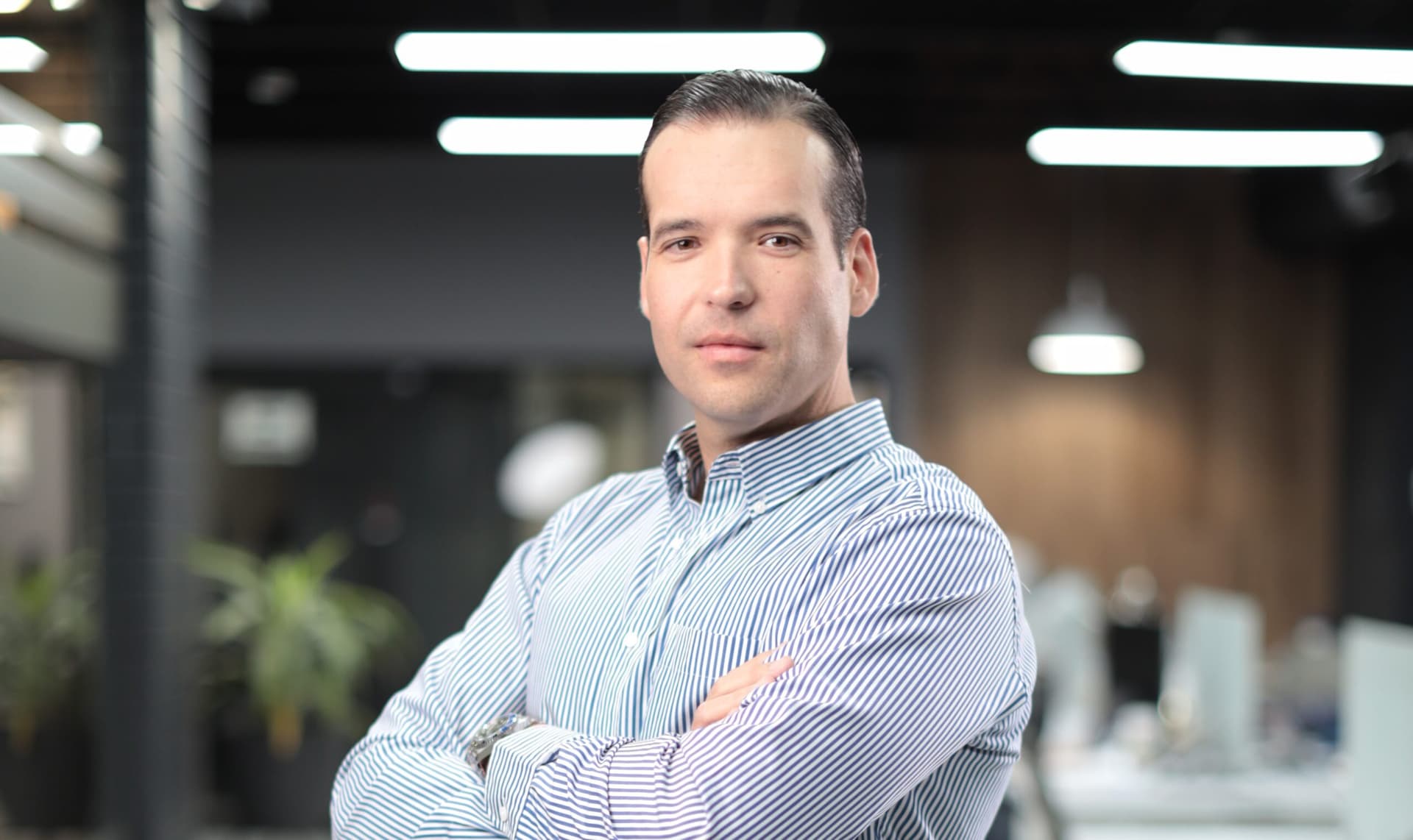
For anyone tracking where Latin American capital is actually heading, the most interesting move right now isn't a flashy unicorn raise or a luxury real estate flip. It's a quiet infrastructure play out of Mexico, where a company called AurumCore is selling the digital plumbing that lets smaller fintechs survive — and it's doing so on two continents at once. The firm, led by CEO Ernesto García, is pushing a core banking platform designed for next-generation financial institutions, with an eye on both Mexico's vast unbanked population and Europe's saturated but innovation-hungry markets.
García is not a newcomer to mass-scale finance. He previously led Transfer, the joint venture between Banamex, Inbursa and América Móvil, working on it through CITI, a technology provider to the venture. Transfer taught him how digital financial products can explode in scale — think OXXO's Saldazo, the cash-in/cash-out account that blew past 12 million users. That experience is the backbone of AurumCore's pitch: a core banking system built on more than three decades of handling massive transactional loads, now repackaged as modular, compliant infrastructure for younger fintechs. The company's own words frame it as infrastructure for next-generation institutions, and the subtext is clear — most fintechs fail not because they lack ideas, but because their technological base can't handle growth or regulatory pressure.
The local context matters here. In Latin America, over half the population remains unbanked, which sounds like an opportunity until you realize how expensive it is to serve those customers profitably. Traditional banks have never cracked that code, and many fintechs have burned through investor cash chasing user acquisition while ignoring unit economics. AurumCore's bet is that by stripping out invisible operating costs and simplifying compliance, it can make serving the unbanked actually viable. That's a different conversation from the usual hype about financial inclusion — it's about making the math work, not just the mission statement.
Across the Atlantic, the playbook flips. In Europe, where more than 90% of people already have bank accounts, the problem isn't access — it's differentiation. AurumCore is positioning itself there as a partner for specialized niches, including the so-called Silver Economy, the growing segment of older adults who need financial services designed with their needs in mind, not as an afterthought. The company recently opened a private sandbox in Madrid alongside Madrid Capital Fintech and Ecofin, giving European startups a controlled environment to test new products and speed up market entry. That's a savvy move: it puts AurumCore at the center of an ecosystem rather than just selling software to it.
What does this signal about where Latin American wealth is going? For one, the region's most sophisticated fintech talent is no longer just building consumer apps — it's building the rails underneath them. That's a maturation sign. It also shows that Mexican companies can operate credibly in Europe without losing their home-market edge. And the roadmap points further south: AurumCore plans to expand into Colombia and launch a productive sandbox in Mexico under the Fingo Club concept, letting local fintechs test real solutions in a controlled setting. On top of that, the company is integrating AI engines into its core banking, allowing non-technical staff to design products, adjust rates or launch loans through simple commands.
The takeaway for anyone watching capital flows in Latin America is this: the next wave of fintech value won't come from another wallet app. It'll come from the infrastructure that makes those apps profitable, compliant and scalable. AurumCore's trajectory — from Mexican retail payments to Madrid sandboxes — is a case study in how regional expertise can travel, and how the real money in fintech is increasingly found in the boring, essential layer that everyone else depends on. The question now is whether more Latin American firms can pull off the same trick, or whether the region's best infrastructure minds will keep selling their work to foreign buyers.
<p><em>Correction, 20 August 2026: an earlier version of this article described Ernesto García as a former Banamex executive. Banamex was one of three backers of Transfer, the joint venture he led, and García worked on it through CITI, a technology provider to the venture. An earlier version also referred to Mexico as South America.</em></p>