At 71, He Found the Richest Work of His Life: Stocking Broccoli and Dandelion Greens
After a pandemic side gig turned into a calling, Robert Solomon, 71, left his nonprofit tech job to become a produce buyer at an independent New York market. He now champions the dignity of ordinary work, proving that purpose and philanthropy can bloom in the humblest aisles.
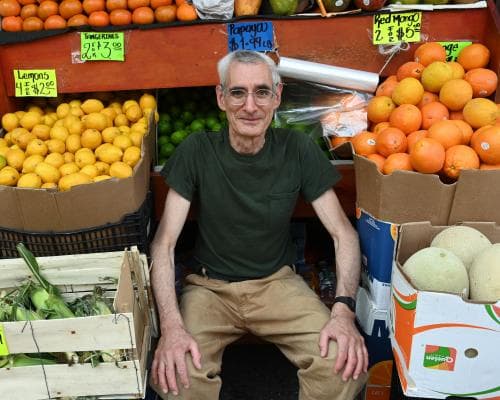
At 5:30 on a New York morning, while the city still yawns, Robert Solomon is already elbow-deep in a bucket of water, swishing dandelion greens headfirst until they perk up like they’ve had their coffee. To most of us, dandelions are lawn invaders. To Solomon, they’re a reason to get out of bed. “I like fussing up the dandelion greens,” he says, a quiet smile in his voice. This is the man who, at 71, traded a career in building management and tech support for the produce aisle of an independent market—and found, in the most ordinary job imaginable, an extraordinary sense of purpose.
Solomon’s path to this second act wasn’t a grand epiphany. It was a pandemic pinch. When his hours at a nonprofit were cut, he took a side gig stocking shelves at a food cooperative. It was, he recalls, “the most ordinary job,” but it cracked something open in him. When the pandemic wound down, the side gig ended—but Solomon didn’t. In 2022, he left the nonprofit for good and went hunting for grocery work. Now, as assistant buyer in produce, he spends his days building “seas of broccoli” and reviving leafy greens, working harder than he has since his 30s. “And I love it,” he says. No irony. No hedge.
What makes this story sing isn’t the scale of his operation—it’s the philosophy. Solomon calls his job “low-fantasy.” No daydreaming about fame or the next promotion. Instead, he says, “I spend most of my time working, not fantasising about what a wonderful job I’m doing.” That’s a radical stance in a culture that worships hustle and status. His political belief, as he puts it, is simple: “All work is important.” And he’s living it, one crate of broccoli at a time.
But here’s the philanthropic twist: Solomon isn’t just feeding himself. He’s feeding a neighborhood. At his market, he’s the gatekeeper of freshness, the guy who ensures the dandelion greens aren’t wilted and the broccoli stands in glossy rows. He’s part of a larger ecosystem of independent grocers who keep fresh produce accessible in a city where food deserts are still a scandal. His attention to detail—swishing greens, restocking broccoli multiple times a day—isn’t fussiness; it’s a form of care that translates directly into better food for hundreds of shoppers daily.
The mechanics of his work are deceptively simple: he starts before dawn, lays out rugs, rolls carts into the yard, and begins stocking. But the impact is profound. In an era of warehouse clubs and algorithm-driven supply chains, Solomon represents the human touch—the person who notices when a leaf is tired and gives it a drink. He’s part of a movement, however small, that values craft over convenience, and community over scale. His story echoes a larger shift in philanthropy: the idea that giving isn’t just writing checks, but showing up, with your hands, to make something better.
For Solomon, the reward is visceral. “I feel stronger physically and quieter mentally,” he says. That quiet isn’t emptiness; it’s the hum of a mind fully occupied. He’s not trying to save the world—he’s trying to save the dandelion greens, and in doing so, he’s reminding us that dignity lives in the details. His morning ritual isn’t a chore; it’s a meditation. And his example is a gift to anyone who’s ever felt trapped by a job that didn’t matter. He proves that meaning can be found at 71, in a bucket of water, in the cool of a market before the rush.
What does this mean for the culture of giving? It expands the definition. Philanthropy isn’t only about billions or breakthroughs; it’s about attention. Solomon’s attention—to a leaf, to a shelf, to a customer who might not notice but will taste the difference—is a form of generosity. He’s not a billionaire, but he’s rich in the ways that count. And in a world that often equates impact with scale, his story is a quiet revolution: a reminder that the most ordinary work, done with love, can be the most extraordinary gift of all.