A Legacy of Light: Wladimir Klitschko’s Tender Tribute to Hayden Panettiere
In a rare and deeply personal statement, the former heavyweight champion honors the late actor’s brilliance and the quiet dignity of their shared parenthood. It is a meditation on memory, resilience, and the art of raising a child in the shadow of loss.
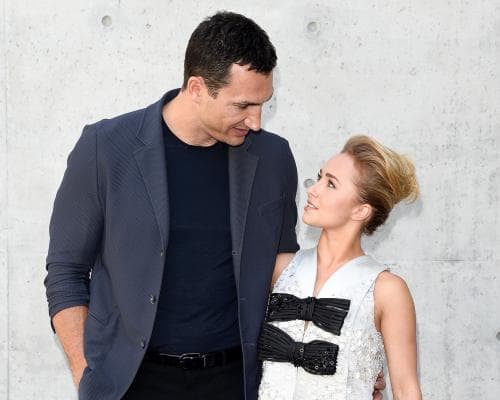
There are moments when the polished surface of celebrity life cracks, and something raw and achingly human slips through. This week, that moment arrived not on a red carpet or a yacht deck, but in a black-and-white photograph shared to Instagram: Wladimir Klitschko, the former lineal heavyweight champion, standing on a sunlit beach with Hayden Panettiere, their daughter Kaya perched on her mother’s shoulders. The image is candid, unguarded—the kind of frame you’d keep in a leather album, not in a gallery. And yet, it now carries the weight of an elegy.
Klitschko’s tribute, posted on Tuesday, is the first public word from the family since Panettiere’s death was reported on Sunday in Greenville, South Carolina. No cause has been given, and the silence around the details only deepens the sorrow. But what the former boxing icon chose to share is not a chronology of tragedy. It is a portrait of grace. “She left this world far too soon,” he wrote, before adding that Panettiere, though no longer his partner, remained “an important part of my life and the mother of our daughter, Kaya.” The words are measured, almost architectural—fitting for a man who built a career on precision and power.
For those who follow the quieter corners of wealth and fame, this story resonates beyond the tabloid headlines. Klitschko, who has long moved between Kyiv’s corridors of power and the world’s most exclusive private residences, has raised Kaya since 2018, when Panettiere ceded full custody to confront her battles with alcoholism, depression, and substance abuse. The arrangement was never publicized with fanfare—no joint statements, no tell-all interviews. Instead, there was a quiet, steadfast commitment that speaks to a certain kind of old-world honor: the idea that a parent’s first duty is not to their own narrative, but to the child’s future.
In his post, Klitschko acknowledged the “darker sides of a very demanding industry” that Panettiere faced from a young age—a nod to the brutal toll of child stardom, which has claimed too many bright lights before their time. He praised her “immense talent” and “incredible career,” but the most striking line is his promise to Kaya: “I will always speak of her mother with respect and make sure she remembers the person she was.” It is a pledge that transcends grief, becoming a form of curation—not of objects, but of memory itself. In a world where the ultra-wealthy collect yachts, vintage wines, and first-edition books, this is the rarest acquisition of all: a daughter’s untainted love for a mother she will never fully know.
The reaction from the public and the couple’s inner circle has been swift and tender. Panettiere’s parents, friends, and fans have been met with Klitschko’s condolences, offered with the same deliberate calm he once brought to the ring. “Young and talented people like Hayden should not leave this world so soon,” he wrote. “I ask everyone to please respect our family’s feelings.” The request is not a demand for privacy in the celebrity sense—it is a plea for the space to mourn without spectacle, a luxury that few in the public eye ever truly enjoy.
What does this moment signal about the shifting tastes of the ultra-wealthy? Perhaps it is a quiet correction to the culture of performative grief that fills our feeds. Klitschko’s tribute is not a product launch or a brand campaign. It is a man, a father, choosing his words like he once chose his punches—with intent, with restraint, and with an eye on what endures. In an era of curated lives, this is the most authentic curation there is: deciding what to keep, what to honor, and what to let go.
As the sun sets on this story—and it will, as all stories do—what remains is not the cause of death or the legal details, but the image of a family on a beach, laughing, unburdened. Klitschko’s promise to Kaya is a forward-looking close, a quiet vow that her mother’s light will not be extinguished by tragedy. In the rarefied world of private jets and oceanfront estates, that is the true inheritance: not the assets, but the memory of a woman who smiled with her whole face, and the father who refuses to let that smile fade.