A Filmmaker's Venice Lament: Art, Sanctions, and the Cost of Looking Away
On the eve of the Venice Film Festival, Ukrainian director Sergei Loznitsa delivers a searing critique of the EU's decision to defund the Biennale over Russia's pavilion, calling it a child's punishment in a world of unenforced sanctions. His words reframe the controversy as a question of moral clarity, not cultural diplomacy.
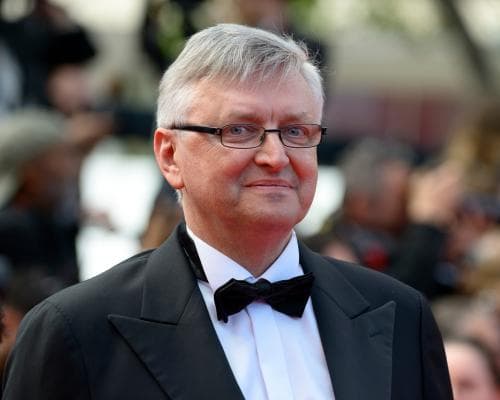
There is a particular kind of silence that falls over the Lido in late August—the hush before the cinematic storm of the Venice Film Festival. But this year, that quiet is charged with something sharper than anticipation. Sergei Loznitsa, Ukraine's most unflinching cinematic chronicler, has arrived not with a velvet-tongued tribute to the art of film, but with a scalpel. The European Commission has cut funding to the Venice Biennale over the reopening of Russia's pavilion, and Loznitsa—whose documentary Maidan captured the 2014 revolution with unbearable intimacy—calls the move 'a punishment in kindergarten.'
The object of his ire is not the art itself, but the theater of it all. Russia's pavilion, with its exhibition The Tree is Rooted in the Sky, was open only during the vernissage's private previews, then shuttered to the public. A symbolic gesture, perhaps, but one that cost the Biennale its European funding. Loznitsa, who is showing his new film Imperium out of competition on the Lido, asks the question that lingers like sea fog: 'Can the existence of this Russian pavilion stop this war or not?' His answer is a quiet, devastating no—while European companies import Russian liquefied gas at unprecedented levels, the money flowing into Moscow's war chest is not a metaphor. It is literal. It buys the bombs that fall on Ukraine.
To understand Loznitsa's frustration is to understand the gulf between symbolic posturing and substantive action. The EU's cut to the Biennale is a gesture, a cultural scold that costs Brussels nothing but its credibility. Meanwhile, according to the Agency for the Cooperation of Energy Regulators, European imports of Russian liquefied fossil gas rose 17% in the second quarter of this year compared to the same period in 2025—before a full EU-wide ban on Russian gas takes effect in 2027. Loznitsa's math is brutal and simple: every tanker of gas is a down payment on more destruction. He calls the funding cut 'a punishment in kindergarten,' and the phrase lands with the weight of a man who has spent his career documenting the adult consequences of childish decisions.
This is not a man who defends the Russian pavilion. He says he would 'never ever' visit it, and his films—from Maidan to Two Prosecutors, his Soviet-set drama that earned international acclaim—are acts of historical excavation, unearthing the lies that authoritarianism builds upon. His new film Imperium, screened out of competition, continues that project, a meditation on power and its corrosive allure. For Loznitsa, the pavilion's presence is not an outrage to be managed by cutting funds; it is a mirror held up to Europe's own moral compromises. The Biennale, with its centuries of patronage and its position as the world's most prestigious cultural gathering, becomes a stage for a more uncomfortable performance: the West's selective memory.
The collector's instinct—whether for art, for rare objects, for the perfect glass of Barolo on a terrace overlooking the Grand Canal—is often about curation. What you choose to display, and what you choose to exclude, defines your world. But Loznitsa suggests that the true luxury of our age is not the ability to curate reality, but the courage to face it unedited. The EU's decision to defund the Biennale is, in his eyes, an act of curation that avoids the messier work of enforcing sanctions, of weaning Europe off Russian energy, of confronting the uncomfortable interdependence that funds war. It is the cultural equivalent of rearranging deck chairs on a sinking ship, while the ship's owners quietly sell the lifeboats.
What does this mean for the discerning traveler, the cultural connoisseur who plans their autumn around the Venice film festival? It means that the art you see here is never just art. The Biennale, with its glittering premieres and its whispered deals, is a barometer of the world's moral weather. Loznitsa's critique is not a call to boycott—he is here, after all, screening his film—but a call to look closer. The Russian pavilion may be closed, but the questions it raises are not. And as the festival unfolds, with its red carpets and its champagne toasts, Loznitsa's voice offers a counterpoint: a reminder that the most valuable thing we can collect is not a masterpiece, but a clear-eyed view of the world as it is.
As the sun sets over the lagoon, and the first screenings begin, Loznitsa's words hang in the air like a challenge. He is not asking for a moral purity that none of us can claim; he is asking for consistency. If Europe is serious about opposing the war, it must do more than close a pavilion—it must close the loopholes that fund it. The Biennale will survive its funding cut; art always finds a way. But the question Loznitsa poses is whether Europe's conscience can survive its own contradictions. In the end, the most radical act of curation is not what you choose to show, but what you refuse to ignore.