A Daughter's Long-Distance Love: How Tulshi Patel Turned a TikTok Video Into a Beacon of Hope in Nepal's Flood Crisis
When 33 British nationals vanished in Nepal's catastrophic flash floods, pharmacist Tulshi Patel refused to wait for official word — she traced her missing mother and aunt to a border crossing via a tour guide's TikTok video, embodying a new kind of grassroots humanitarian grit.
The last time Tulshi Patel heard her mother's voice, it was a Monday phone call full of the easy excitement of a long-awaited adventure. By Wednesday, the world had turned to water. A catastrophic flash flood had roared through Nepal's mountain valleys, sweeping away entire villages and leaving a trail of mud, debris, and silence. Among the more than 3,000 people still unaccounted for were 33 British nationals — including Tulshi's mother, Hemangini Jitendra Patel, and her aunt, Hema Sunil Amin. But while rescue teams scrambled and governments issued statements, Tulshi, a pharmacist from Milton Keynes, did something remarkable: she went looking for her family herself, armed with nothing but a phone, a hunch, and a TikTok video.
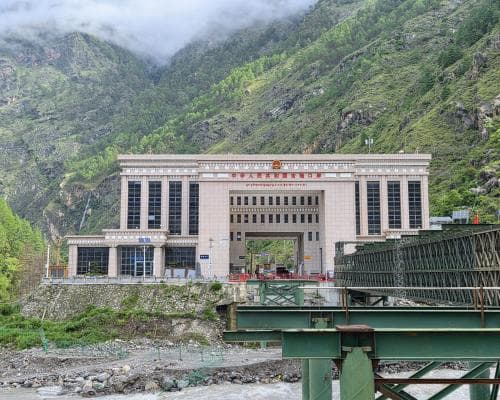
Tulshi is not a professional rescuer or a seasoned aid worker. She is a daughter, a working woman, and a self-described 'ordinary person' who found herself thrust into the unthinkable. Her mother and aunt, both in their sixties, had been planning this pilgrimage for months. It was 'on their bucket list,' Tulshi told LBC's Matt Frei — a spiritual journey that would take them from Nepal into Tibet, across the Friendship Bridge that spans the border between the two countries. They had sent a photo on Tuesday, smiling, full of faith. Then, nothing. No calls, no texts, no signal. Just a GPS ping from the tour group's last known location: the Friendship Bridge, at the Nepal-China border, hours before the flood hit.
What happened next is a masterclass in modern, DIY philanthropy — not the kind that writes cheques, but the kind that refuses to sit still. Tulshi and her family began their own 'deep-dive research,' as she put it. They scoured social media, cross-referenced travel forums, and followed digital breadcrumbs. Then they found it: a TikTok video posted by a local Nepali tour guide, filmed at the border crossing on Wednesday morning, just before 6 a.m. Nepal time. In the grainy footage, Tulshi spotted her mother, her aunt, and three other members of the tour group, waiting to cross. They had been delayed by weather on Tuesday, the guide explained — so they crossed on Wednesday, the very morning the flood struck. That video became the family's last visual proof of life, and their only clue.
Tulshi's story is not just a personal tragedy; it is a testament to how ordinary people are becoming first responders in an age of climate-driven disasters. The flood, triggered by a magnitude 5.2 seismic event near the border, has killed at least 675 people across Nepal and Tibet. The British government has dispatched a team to Kathmandu, but for families like Tulshi's, official processes move too slowly. So she has taken on the role of investigator, advocate, and emotional anchor. She has been in contact with other families of the missing, sharing information, and pleading for public attention. Her TikTok discovery has not only given her a sliver of hope but has also helped authorities narrow their search — a small but vital contribution to a rescue effort that is racing against time.
What does this mean for the culture of giving? It redefines it. Philanthropy is often framed as money, but Tulshi's gift is her relentless, unpaid labour — the hours spent scrolling through social media, the sleepless nights, the courage to speak publicly while her heart is breaking. She is part of a new wave of 'citizen humanitarians' who use digital tools to fill gaps left by institutions. Her story has resonated far beyond her own family, sparking a global outpouring of support and prayers. It reminds us that the most impactful giving is not always measured in millions, but in the willingness to search for a face in a stranger's video, to hold onto hope when the world says otherwise.
For Tulshi, there is no grand strategy, no foundation, no press release. There is only the fierce, unglamorous work of love. As rescue teams continue to dig through the mud, she keeps returning to that TikTok clip, watching her mother and aunt smile at the border, frozen in a moment before the water came. 'They were so happy,' she says. 'They were on their dream trip.' Her fight is not just for answers — it is for the dignity of the missing, for the families left behind, and for a world where no one has to search for a loved one in a social media feed. That is philanthropy in its rawest, most human form: giving everything you have, even when you have nothing left to give.