When Cancer Became the Muse: How John D Edwards Turned Illness into Art and a Blueprint for Healing
The late artist John D Edwards, who died at 74, spent his final decades transforming his cancer treatment into a powerful creative practice, arguing that art can be a fundamental tool for physical and mental recovery. His 2007 book 'How Cancer Saved My Life' and his hospital talks prefigured today's growing interest in art therapy and the neuroscience of creative healing.
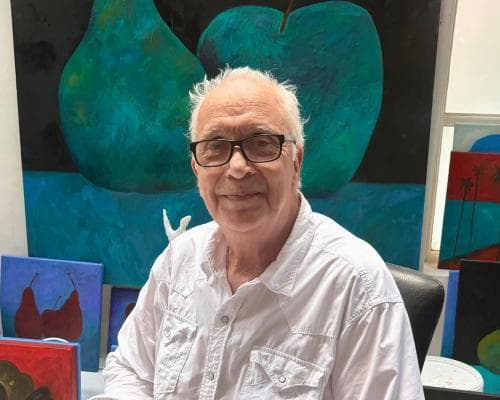
John D Edwards was not a billionaire, nor did he command a lab of CRISPR engineers. But in 1996, when a cancer diagnosis slammed into his life, he did something that the architects of tomorrow's medicine are only now catching up with: he treated his own body as a research project, his studio as a clinical trial, and paint as a therapeutic molecule. His story, which ended with his death at 74 from heart disease, is not a tale of a tech mogul's moonshot — it's a quieter, more radical bet on the idea that creation itself is a form of healing. And it's a bet that's finally paying dividends in the corridors of medical science.
Edwards was no stranger to the upper echelons of the art world. Born in Hillingdon to a physicist father and a librarian mother, he trained at Central School of Arts and spent the 1970s rubbing shoulders with the likes of Jim Dine, John Hoyland, Patrick Caulfield, and Howard Hodgkin at London's Waddington Gallery. His one-man show at Odette Gilbert Gallery launched a career that stretched from London to New York, Chicago, and Tokyo. But it was the cancer diagnosis that redefined his work — and his life. The treatment was brutal, but Edwards kept painting, producing works he later described as 'a fundamental part of my healing and physical and mental recovery.' He didn't just survive; he documented the process, publishing 'How Cancer Saved My Life' in 2007, with a foreword by his friend Sir Peter Blake.
What Edwards stumbled upon, through intuition and necessity, is now a rigorous field of inquiry. Neuroscientists are mapping how creative expression activates the brain's reward circuitry, reduces cortisol, and even modulates immune response. Studies at institutions like Johns Hopkins and the University of California have shown that art therapy can reduce anxiety and depression in cancer patients, and some trials are exploring whether creative engagement might influence biomarkers like inflammatory cytokines. Edwards was ahead of the curve, but his approach wasn't clinical — it was existential. He externalized the experience of illness, turning the internal chaos of treatment into something tangible, something he could look at and shape. That act of externalization, psychologists now argue, is key to processing trauma and regaining agency.
The medical establishment is finally listening. Hospitals across the UK and beyond now incorporate art programs into oncology care, and the global art therapy market is projected to grow at a steady clip, driven by a broader wellness movement that is increasingly merging mental and physical health. But the deeper signal is more profound: the recognition that healing is not just a biological process but a narrative one. Edwards's book and his talks at cancer charities were not mere self-help; they were a blueprint for a patient-led approach that complements — and sometimes challenges — the pharmacological orthodoxy. In an era of precision medicine and AI-driven drug discovery, the human element — the need to make meaning out of suffering — remains the hardest and most important variable.
Edwards's legacy is not in a patent or a startup valuation. It's in the hospitals that now have art rooms, in the patients who pick up a brush after their first chemo session, and in the growing body of evidence that creativity can be a therapeutic tool as potent as any drug. The art world, too, lost a figure who bridged the gap between aesthetic excellence and raw human vulnerability. His paintings from the cancer years are not just documents of illness; they are testaments to the resilience of the creative spirit.
As we look forward, the convergence of biotechnology and the arts is an untapped frontier. Imagine a future where your treatment plan includes a prescription for a creative practice, where AI analyzes your paintings for signs of psychological recovery, where hospitals are designed as much for expression as for intervention. Edwards didn't live to see that future, but he helped sketch its blueprint. His life's work — and the work of his final decades — suggests that the next great breakthrough in medicine might not come from a lab, but from the human need to create. That's a bet worth taking, even if it doesn't come with a venture capital check attached.