Victoria's Anti-Corruption Gambit: Rewiring the State's Integrity Architecture Before the Bell
Victoria is moving to expand IBAC's definition of corruption and introduce follow-the-dollar powers before the November election, a reform that could reshape how public money is audited and set a national precedent for integrity enforcement.
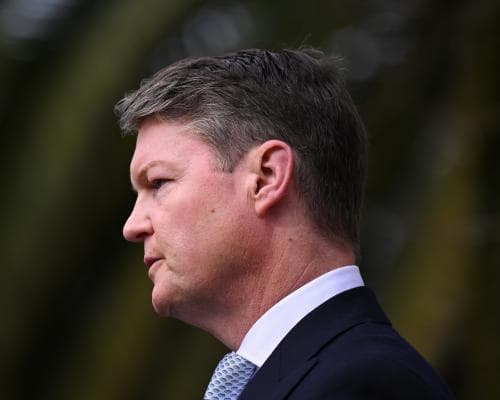
In the final sprint before Victoria's November election, Premier Ben Carroll has thrown a political curveball that could outlast any campaign promise: a legally binding expansion of what counts as corruption. The move, announced Tuesday, would hand the Independent Broad-based Anti-corruption Commission (IBAC) new powers to trace public funds through private contractors and subcontractors — a 'follow-the-dollar' mandate that former anti-corruption chief Robert Redlich says could have ensnared senior government figures had it existed earlier. This isn't a tweak; it's a re-engineering of the state's integrity architecture, delivered with the urgency of a government racing the caretaker clock.
Carroll's timing is deliberate. With parliament set to sit extra days before entering caretaker mode, the legislation is being fast-tracked alongside a parallel royal commission into the construction sector — an industry where opaque supply chains and political donations have long blurred the line between legitimate lobbying and quid pro quo. The premier's language is telling: he wants to 'shine a light on what occurred' and ensure 'lasting change' via a special prosecutor's office. This is not just about punishing past sins; it's about building a deterrent framework for future administrations, a signal that Victoria intends to be the testbed for a more muscular form of public accountability.
The technical core is the expansion of 'corrupt conduct' beyond bribery and secret commissions to include systematic misuse of public funds by private actors. IBAC would gain the ability to audit spending downstream, following taxpayer dollars as they flow from government coffers into construction giants, consultancies, and subcontractors. This is a data-heavy, forensic approach to governance — one that mirrors the 'follow the money' logic of financial crime units, but applied to the public purse. The special prosecutor, working in parallel with the royal commission, suggests a coordinated legal assault, not a standalone inquiry. It's an acknowledgment that corruption in modern states is often institutionalized, not individual.
Capital and power in Victoria's construction sector are a high-stakes arena. The state's infrastructure pipeline — from Suburban Rail Loop to major road projects — has made it a magnet for developers and unions alike. The royal commission's terms of reference, expected within days, could expose a web of kickbacks, phoenix companies, and political donations that have fueled a decade of scandal. For the elite investors and billionaires eyeing Victoria's megaprojects, this is a seismic shift: the risk calculus of doing business with the state is about to change. Transparency, once a compliance checkbox, is becoming a competitive weapon.
Nationally, this is a bellwether. No other Australian state has moved to redefine corruption so explicitly, nor to empower an anti-corruption body with such sweeping financial jurisdiction. If Carroll succeeds, he will have created a template that other jurisdictions — and even federal bodies — may be forced to adopt. The political risk is equally high: expanding IBAC's mandate could expose Labor's own backers, a fact the opposition is already weaponizing. But Carroll's bet is that voters value integrity over convenience, especially after years of scandals that have eroded trust in both major parties.
What comes next is a race against the November deadline. The legislation must pass both houses, the royal commission must be staffed, and the special prosecutor must be appointed — all before the government goes into caretaker mode. If it slips, the reforms could die with the election. But if it lands, Victoria will have written a new chapter in Australian governance, one where the state's most powerful contractors know that every dollar carries a digital fingerprint. For the rest of the country, the message is clear: the era of opaque public spending is ending, and the tools to enforce it are being forged in Melbourne. The question is not whether other states will follow, but how soon.