Venezuela's Rivals Find Common Ground Over London Gold and a Court Reset
Caracas talks yield rare pact: opposition and government unite to reclaim Bank of England gold and rebuild the Supreme Court.
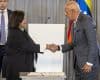
For anyone tracking the strange afterlife of Venezuelan wealth, the scene in Caracas this week was a small earthquake. The government of acting president Delcy Rodríguez and a faction of the opposition sat down for the first round of negotiations and walked away with two handshakes: a promise to restart the renewal of the country's Supreme Court from zero, and a joint mission to pry Venezuela's gold reserves loose from the Bank of England. In a country where politics usually means mutual annihilation, this is not a headline — it's a signal flare.
The core facts are deceptively simple. The two sides closed Wednesday's talks with agreements on two fronts. First, they will scrap the existing process to renew the Supreme Court and begin again, an acknowledgment that the judiciary has been a battleground for years. Second, they will act together to recover the gold reserves sitting in London. That gold — billions of dollars' worth of bullion frozen since 2018 — has become a symbol of Venezuela's financial exile. The Bank of England has refused to release it, citing competing claims between Nicolás Maduro's government and Juan Guaidó's now-dissolved interim administration. Now, with Delcy Rodríguez holding the acting presidency and a slice of the opposition willing to deal, the two sides are betting that a united front can unlock the vault.
To understand why this matters, outsiders need to know who Delcy Rodríguez is. She is not just Maduro's stand-in; she is the regime's economic brain, the architect of its survival through sanctions and hyperinflation. Her willingness to negotiate with a section of the opposition — not the hardline wing, but a pragmatic bloc — marks a shift from the zero-sum posture that defined Caracas since 2015. The Supreme Court piece is equally loaded: for years, the court has been a rubber stamp for the ruling party, and the opposition's demand for a fresh start was once a non-negotiable. That both sides now agree to scrap the old process suggests a quiet trade-off — court credibility in exchange for gold recovery. The gold, after all, is not just treasure; it is the key to re-entering international financial markets, paying off creditors, and restoring a sliver of state legitimacy.
This deal fits a broader pattern across South America, where weakened governments and desperate oppositions are learning that frozen assets are the new battlefield. From Argentine bonds to Ecuadorian oil, the region's wealth is increasingly held abroad, and whoever controls the legal narrative controls the money. Venezuela's gold at the Bank of England is the largest single such prize — a hoard that could fund imports, stabilize the bolívar, or simply prove that the state can still act. The fact that Rodríguez and the opposition are cooperating on this, rather than fighting over it, tells you that both sides have calculated the cost of continued deadlock: it is higher than the cost of a handshake.
For the international reader who follows capital flows, the deeper signal is about pragmatism replacing ideology. The opposition faction that signed this agreement has effectively recognized the Rodríguez government as a negotiating partner, not a usurper. That is a quiet revolution in Venezuelan politics. It also puts pressure on London: if both claimants agree, the Bank of England's legal cover for holding the gold weakens dramatically. The gold may finally move, not through a court victory but through a political compromise — a rarity in this hemisphere.
The road ahead is treacherous. The Supreme Court renewal could still collapse under the weight of old grudges, and the gold transfer will face legal challenges from creditors holding Venezuelan debt. But the fact that these talks happened at all, and produced a joint statement, is the kind of news that makes wealth managers in Miami and São Paulo sit up. Venezuela is no longer just a story of collapse; it is a story of assets in limbo, and this week, someone finally tried to bring them home. For a country that has been economically comatose for a decade, that is not just a headline — it is a pulse.