Vambe's $14M Series A bets on AI agents that sell, not just chat
Vambe raises $14M led by Monashees to scale AI conversational commerce in Chile, Mexico, and Brazil by 2026.
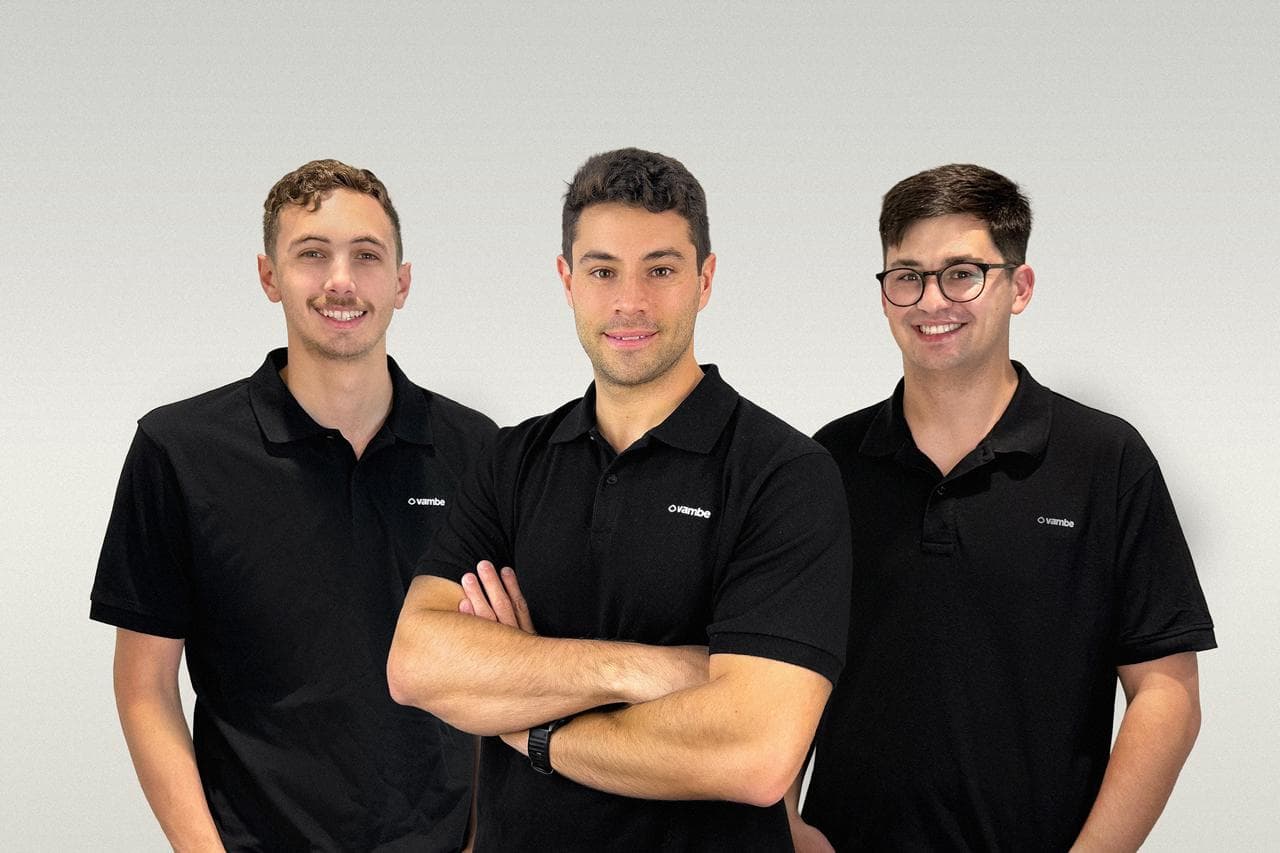
There is a moment in every regional tech boom when the money stops chasing apps and starts chasing infrastructure. For Latin America's crowded field of chatbots and customer-service automations, that moment arrived this week. Vambe, a Santiago-born platform that uses artificial intelligence to run entire sales cycles for B2C companies, closed a US$14 million Series A that reads less like a funding round and more like a coronation. The message to every founder in the corridor between Mexico City and Buenos Aires is simple: conversational commerce has left the experimental phase, and the investors who missed the last wave are not about to miss this one.
The round was led by Monashees, the Brazilian powerhouse that has backed some of the region's most iconic startups, with participation from Cathay Latam, Atlantico, and Tekton Ventures. Existing backers including Chile Ventures, SkyDeck Berkeley, Nazca, and M13 also doubled down. More telling than the check itself is who now sits in the boardroom. Simon Borrero, co-founder and CEO of Rappi, joined as a director, flanked by strategic advisors Jaime Arrieta of Buk, Guillermo Gomez of Flash, and Ignacio Canals of Galgo. For anyone who tracks Latin American capital, this is the equivalent of the old guard formally handing the keys to the new machine.
Vambe is not a novelty in the region's tech scene. It is a company that has been quietly compounding for almost two years, operating in Chile and Mexico with more than 1,700 active implementations across sectors. Its pitch is brutal in its efficiency: automate the entire sales funnel, from first touch to close, retention, and support, running 24/7 without adding human headcount. The company reports average monthly growth of 17%, a figure that would make most SaaS founders in Silicon Valley wince with envy. CEO Nicolás Camhi framed the round as a validation of the team's work and a ticket to the next level, but the subtext is sharper: Vambe believes it can own conversational commerce in Latin America before anyone else even figures out what that means.
The strategic play here matters beyond the numbers. Vambe will use the capital to triple its customer-facing teams in Chile and Mexico, launch in Brazil in the first half of 2026, and build what it calls an agent-to-agent advertising recommendations engine. That last piece is the real tell. The company wants AI agents from different businesses to talk to each other, creating a network effect where one company's bot recommends another's product. It is an ambitious bet that turns every client into both a node and a distributor. For a region where commerce has historically run on personal relationships and WhatsApp groups, this is a quiet revolution in how trust and transactions are mediated.
The broader signal for South American wealth is unmistakable. Capital is no longer flowing only into fintechs or marketplaces; it is flowing into the picks-and-shovels of AI-enabled commerce. Monashees leading this round is significant because it signals that sophisticated Brazilian capital sees Chile and Mexico as launchpads, not endpoints. Brazil remains the prize, and Vambe's stated timeline to enter that market in 2026 suggests the company knows exactly where the largest addressable market sits. The fact that Borrero, the man who built Rappi into a regional behemoth, is joining the board only reinforces the narrative: the people who scaled the last generation of Latin American tech are betting on the next one.
What happens next will be watched closely. Vambe's claim that its architecture can scale to millions of daily interactions without quality loss is a bold one, and the region's notoriously fragmented infrastructure will test it. But the company is also building integrated payments and voice calling, which suggests it wants to own the entire transactional stack, not just the conversational layer. If that works, Vambe could become the default operating system for how Latin American companies sell online. If it stumbles, the failure will be instructive for the dozens of smaller AI startups now chasing the same dream. Either way, the capital has been deployed, the board is set, and the clock is ticking toward Brazil. The next 18 months will determine whether Vambe is a footnote or the foundation of a new commercial order.