Rinehart's iron ore arm holds firm as prices soften
Gina Rinehart's iron ore business has delivered a healthy profit even as steel-making commodity prices weaken, underscoring the resilience of her Pilbara-based wealth.
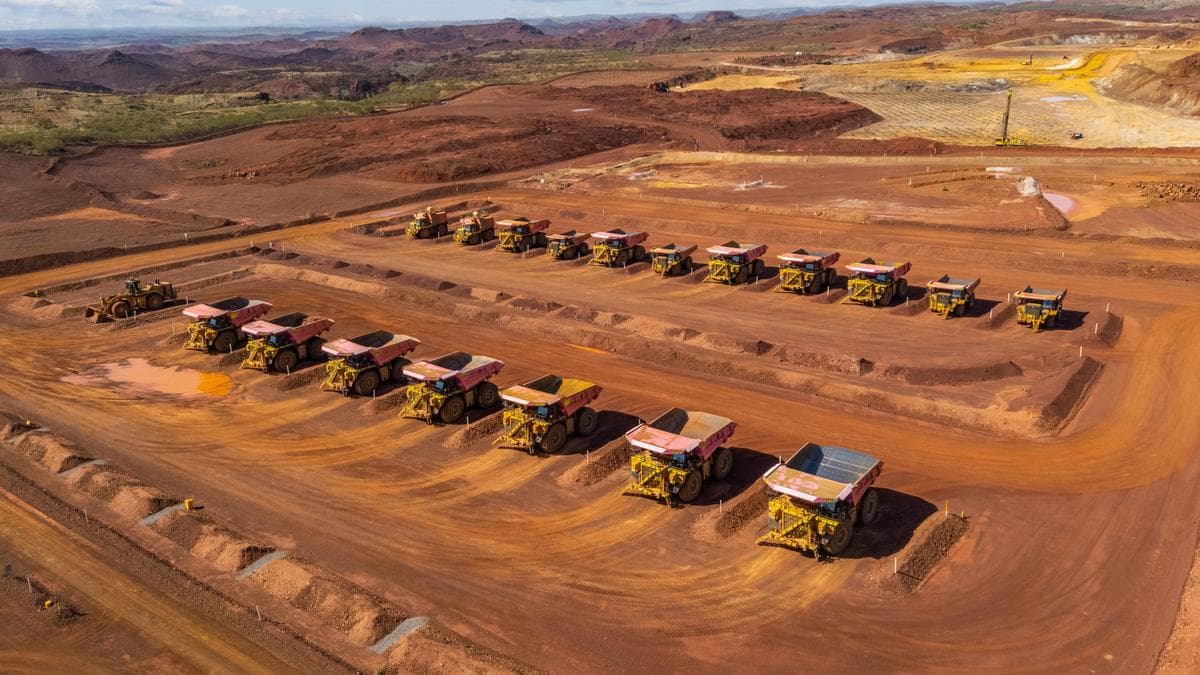
For anyone tracking where Australian fortunes are made, the answer rarely changes: iron ore, dug out of the red dirt of the Pilbara and shipped to steel mills across Asia. And the most consequential private player in that trade remains Gina Rinehart, whose iron ore arm has just posted a healthy profit even as prices for the steel-making commodity softened. That combination — solid earnings against a weakening price backdrop — is the detail that matters to the capital crowd watching Oceania.
The result, reported by The West Australian, confirms that Rinehart's mining business continues to generate robust returns despite the commodity cycle turning less friendly. The report does not disclose a specific profit figure, so the headline number stays with the company. What is clear is the direction of travel: prices for iron ore have been easing, yet the operation has kept its margins healthy. For a business built on volume, logistics and long-term offtake, that is the kind of performance that separates a disciplined operator from a lucky one.
Rinehart is Australia's most prominent mining billionaire and the force behind Hancock Prospecting, the private vehicle through which her family's iron ore interests are held. Her story is unusual in global wealth terms: a privately held resources empire, largely unlisted, controlled by one family, with its centre of gravity in Western Australia. The Pilbara is the engine room — a remote, iron-rich region that supplies a large share of the seaborne iron ore traded worldwide, with China's steel industry as the dominant customer. When the Pilbara sneezes, the Australian budget and the Australian dollar tend to notice.
That is why a single profit line from a private company resonates well beyond Perth. Iron ore is Australia's largest export earner, and the health of the big producers — from the listed majors to Rinehart's private arm — feeds directly into royalties, employment and the federal tax base. A healthy result in a softer price environment signals that the low-cost, high-volume model still works. It also reinforces the concentration of Australian wealth in resources: a handful of families and firms hold assets that anchor the national economy, and their private balance sheets are watched as proxies for the sector's stamina.
For international readers, the local nuance is this: Rinehart's empire is not a listed stock you can buy. It is a private fiefdom, and its results surface only when the company or its press chooses to disclose them. That opacity makes each reported figure more closely read, not less. The takeaway from this result is not a number but a signal — that even as the steel-making commodity loses some of its pricing power, the best-positioned private operators can still deliver.
The forward question is how long that resilience holds. Iron ore prices are cyclical, and the demand picture from China's steel sector remains the swing factor for every producer in the Pilbara. Rinehart's business has weathered downturns before and emerged stronger; the current result suggests that pattern is intact. For the wealth watchers of Oceania, the message is simple: the iron ore fortune at the heart of the continent's richest family is not fading quietly, even as the commodity does.