Ukraine's Battlefield AI Is Coming to a Fence Near You
The UK is partnering with Ukraine to use its vast battlefield data trove to train AI systems that detect intruders at defense sites, airports, and energy plants. This marks the first time a Western nation will leverage live conflict data to build civilian security infrastructure, raising both strategic and privacy stakes.
The same AI that learns to spot Russian drones over Kharkiv may soon be watching for trespassers at a British airbase. In a first-of-its-kind deal, London and Kyiv are teaming up to train machine-learning models on Ukraine's Avengers AI lab—a vast archive of real-world conflict data—to guard UK defense sites, railways, and energy plants. It's a striking transfer of wartime innovation into civilian life, and it's happening faster than most people realize.
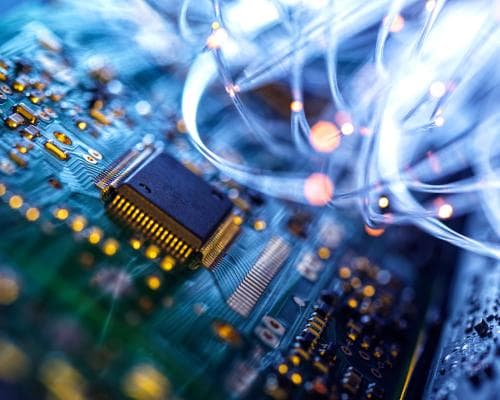
The agreement, announced this week, will let private companies access Ukraine's battlefield data through a secure Ministry of Defence platform, once approved. Three British AI firms—Sintela, Mind Foundry, and Skyral—have already signed on for pilot projects. The first test will be at a UK defense site, where AI-optimized sensors in buried fiber-optic cables will learn to distinguish a protester from a hostile-state operative, a jogger from a saboteur. If it works, the government says the same system could be rolled out at airports, prisons, and critical energy infrastructure.
The urgency is real. Last June, activists from Palestine Action breached RAF Brize Norton on scooters, spray-painted two military aircraft, and escaped without being detained—a security lapse that embarrassed the military and triggered a controversial crackdown on the group. The incident underscored a blind spot: static cameras and human guards are no match for determined intruders. But fiber-optic cables, already buried along perimeters, can act as a distributed vibration sensor, detecting footsteps, vehicles, and even digging. The challenge is making sense of that signal—and that's where Ukraine's data comes in.
Ukraine's Avengers AI lab has spent months cataloguing the acoustic and seismic signatures of war: the rumble of tanks, the thud of artillery, the quiet creep of saboteurs. That data is messy, noisy, and brutally real—exactly what machine-learning models need to become robust. Unlike synthetic simulations, it captures the chaos of actual conflict, with weather, terrain, and human unpredictability baked in. For a UK system designed to stop hostile-state attacks, this is a treasure trove no Western ally can match.
The commercial angle is significant. Sintela, a Bristol-based fiber-optic sensing specialist, recently struck a $35 million deal with the Trump administration to provide surveillance along the US-Mexico border. That contract signals a growing market for perimeter intelligence, where AI turns ordinary infrastructure into a security net. Mind Foundry, an Oxford spin-off, brings heavy-duty machine-learning expertise, while Skyral adds geospatial analytics. Together, they're building the backbone of what could become a global export: British AI security systems trained on Ukrainian resilience.
But the deal is not without critics. Privacy campaigners are alarmed by the prospect of AI models that can identify individuals by their gait or vehicle, deployed at airports and prisons where civil liberties already hang in the balance. The MoD insists data will be anonymized and access controlled, but the precedent is set: battlefield surveillance is becoming domestic surveillance. The line between protecting a base and monitoring a citizen is thinner than it looks.
For the sector, this is a turning point. It's the first time a Western government has openly embraced conflict-derived data to train civilian security AI, and it could ignite a new arms race in perimeter defense. Countries from Australia to Japan are watching. If the pilot succeeds, expect a flood of deals—and a flood of ethical debate. The technology is moving faster than the rules, and the real test isn't whether it works, but whether we're ready for what it sees.