The Ultimate Souvenir: Owning a Piece of the Barbican's Botanical Crown
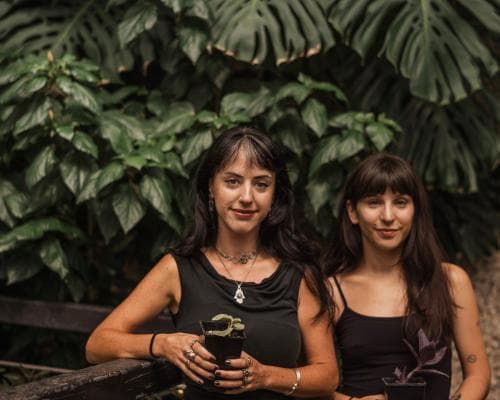
There’s a certain thrill that comes with owning something that can’t be bought. Not a limited-edition Birkin or a Patek Philippe — those are just transactions. I’m talking about the rush of possessing a living, breathing fragment of a place that has quietly defined urban sophistication for half a century. This week, that thrill belonged to 500 Londoners who queued up at the Barbican Centre, not for a gallery opening or a private viewing, but for a leaf. A cutting. A piece of the legendary conservatory that has served as the city’s verdant, glassy pulse since 1982.
The scene was part heist, part garden party. The conservatory — a lush, four-story jungle of monstera, hibiscus, and rare tropical specimens perched above the brutalist estate — is closing for three years. The reason? A net now hangs beneath the ceiling to catch falling panes of glass, a rather unglamorous necessity that has forced a full, top-to-bottom refurbishment. But before the scaffolding goes up, head gardener Marta Lowcewicz decided to do something unprecedented: give away cuttings from the collection to the public. The first of three adoption events sold out its free online tickets in a blink. On Wednesday, 500 people filed in, each clutching an “adoption form” as if they were taking home a puppy, not a potted plant. The energy was electric, the queue a cross-section of the city’s plant-obsessed elite.
This is not your average gardening giveaway. The Barbican conservatory is a botanical treasure trove, a living archive of species from across the globe, carefully curated to soften the estate’s iconic, unyielding concrete. The plants are characters in their own right — the Swedish ivy with its silvery shimmer, the white velvet plant that reminds a former Mexico City resident of home, the peperomia with its tactile, almost suede-like leaves. Each cutting is a piece of living heritage, a genetic snapshot of a collection that has been nurtured for over four decades. And the demand speaks to a deeper truth: in an age of mass-produced everything, rarity is the ultimate luxury. These cuttings aren’t for sale; they’re gifts, which makes them infinitely more valuable. As one Barbican resident, a tech worker named Lydia, put it, “Having a piece of the conservatory in my flat will be incredible.” She lives in the estate, her bedroom overlooking the green lung she’s about to lose. For her, this isn’t just a plant — it’s a memory, a connection, a piece of home.
But there’s a fascinating subplot here, one that speaks to the changing climate and the evolution of taste. Lowcewicz is using this closure to rethink the entire collection. The climate has shifted dramatically since the 1960s, when the Barbican was conceived. Many plants that once required tropical indoor conditions are now thriving outdoors in London’s warmer, more volatile weather. The conservatory’s climate control system, outdated and strained by five consecutive heatwaves, is being replaced with something far more sophisticated — new irrigation, new climate systems, a complete overhaul. Lowcewicz is selecting new plants with “big, bold leaves” to match the building’s striking, monumental architecture. The goal isn’t just restoration; it’s evolution. The conservatory will emerge from its three-year hibernation as a more resilient, more intentional collection — a testament to how true luxury adapts to its environment rather than merely surviving it.
For the ultra-wealthy, this moment is a masterclass in what money can’t buy: patience, provenance, and the quiet satisfaction of stewardship. While the world chases limited drops and NFT bragging rights, the Barbican’s cuttings offer something far more profound — a piece of a place, a story, a legacy. The people who walked out with those leaves aren’t just plant owners; they’re custodians of a narrative. They’ll watch their Swedish ivy climb and their peperomia spread, and they’ll tell the story of the day they saved a piece of London’s most iconic green space. And when the conservatory reopens in three years, glowing under new glass and climate control, those cuttings will have grown into living proof of resilience — a reminder that the best things in life are never truly owned, only borrowed and passed on.
So, what’s the takeaway for those who missed the ticket window? The Barbican’s next two adoption events are still to come, and the waitlist is already buzzing. But beyond that, this is a signal to the luxury market: the most coveted items are no longer just objects — they’re experiences, memories, and living connections to places that matter. Whether it’s a conservatory cutting, a vintage wine from a legendary estate, or a hand-crafted timepiece, the value lies in the story. The Barbican is giving away leaves, but what it’s really offering is a chance to own a slice of cultural history. And in a world of fleeting trends, that’s the ultimate status symbol.
The Experience
For the next adoption event, set a calendar alert and be online the moment tickets drop — or better yet, commission a private horticulturalist to source a rare cutting from a London conservatory for your own collection.