The SUV Takeover: How the Family Car Became a Luxury Asset—and What It Means for Your Money
SUVs now dominate new car sales in wealthy nations, reshaping everything from household budgets to automotive investment strategies. For wealth builders, the shift signals where capital is flowing—and where it's being trapped in depreciating assets.
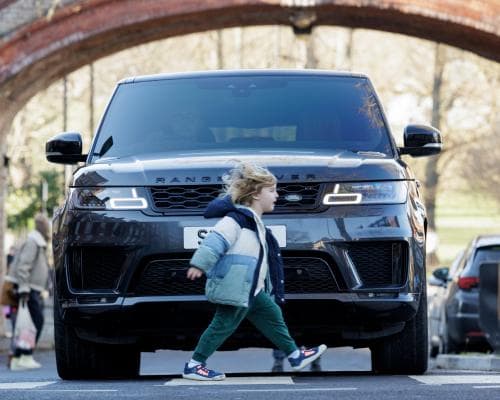
You either die a hero, or live long enough to see yourself become the villain. That line from The Dark Knight isn't just about Batman's rogue's gallery—it's the story of the modern family car. I recently spent weeks trudging from showroom to showroom, hunting for a used car that could fit my growing clan without requiring a mortgage. What did I find? A parade of SUVs. Everywhere. It's not just my bad luck. These behemoths now make up 30% of all cars on the road, and in 2023 they accounted for half of all new car sales in rich countries. The family car, once a humble hatchback or a sensible estate, has morphed into a rolling fortress. And if you're trying to buy something under ten years old that'll last another five, your options are essentially 'tank' or 'tank-ette.'
Let's talk about the money, because this isn't just a style shift—it's a capital migration. Automakers have been quietly killing off sedans, hatchbacks, and estates, redirecting billions in R&D and factory retooling toward SUV platforms. Volvo, the quintessential family car brand, now sells only SUVs in the UK. That's not a coincidence; it's a strategic response to margins. An SUV can command a 20% to 30% price premium over a comparable sedan, and buyers have proven willing to pay it. For the industry, it's a goldmine. For the consumer, it's a trap. SUVs guzzle more fuel, cost more to insure, and depreciate faster than their smaller counterparts. In a world where every pound and dollar counts, that's a serious drag on household wealth.
The mechanics of this shift are brutal. SUVs have been getting wider by about half a centimeter each year—a slow creep that has turned narrow streets into obstacle courses and forced parking lines to be redrawn. The branding is pure military theater: Jeep Commander, Land Rover Defender, 'built to conquer.' But what does an SUV actually conquer? The school run. The roundabout. The occasional muddy lane. Meanwhile, the humble hatchback—the car I've driven for nearly a decade—has become the road's unsung hero. It's cheap to run, clean-air-zone-compliant, and so easy to park that a tight spot is barely a worry. Its horn is a pipsqueak, more 'toodles' than threat. On a windy motorway, it might feel like it could take flight, but it's reliable, humble, and honest. That's more than I can say for the flashy warhorse that intimidates pedestrians and causes chaos on narrow roads.
For the wealthy, this trend is a double-edged sword. On one hand, SUVs have become status symbols—luxury tanks that signal success. On the other, they're terrible investments. A new SUV can lose 40% of its value in the first three years, and that's before you factor in the fuel and maintenance costs. The smart money is moving elsewhere: toward electric vehicles, which are finally seeing their resale values stabilize, or toward classic cars, which have outperformed the S&P 500 over the past decade. The SUV boom is a classic case of marketing triumphing over logic—and it's a reminder that the most expensive asset you'll ever buy (after your home) should be chosen with your head, not your ego.
What does this mean for markets? The automotive sector is shifting its weight toward SUVs and crossovers, and that's where the profits are. But there's a counter-current: regulators are cracking down on emissions, and cities are starting to penalize oversized vehicles. Paris tripled parking fees for SUVs in 2024, and other cities are watching. This is a signal for investors: the SUV gravy train might be hitting a speed bump. Automakers that diversify into smaller EVs or subscription models could be the winners of the next decade, while those that double down on gas-guzzling behemoths may find themselves on the wrong side of history.
So what's a wealth builder to do? First, if you're in the market for a family car, don't be seduced by the tank. A used hatchback or estate will save you thousands upfront and thousands more in running costs. Second, think about the second-order effects: the rise of SUVs is reshaping cities, from parking to safety to infrastructure. That creates opportunities in urban planning, EV charging, and even insurance tech. Finally, remember that the market is cyclical. The SUV tyranny won't last forever—it can't. At some point, the costs will outweigh the ego boost, and the humble car will make a comeback. When it does, the smart money will already be positioned. For now, I'm holding onto my little donkey, and I'm not letting go without a fight.