The Sussex Return: Why Harry and Meghan's Security Bill Is a Private Wealth Play
The Duke and Duchess of Sussex are moving back to the UK, but their security funding remains a private matter—a costly signal of how non-working royals must now self-fund protection in a high-risk environment. For wealth builders, it underscores the growing expense and complexity of personal security for high-net-worth families.
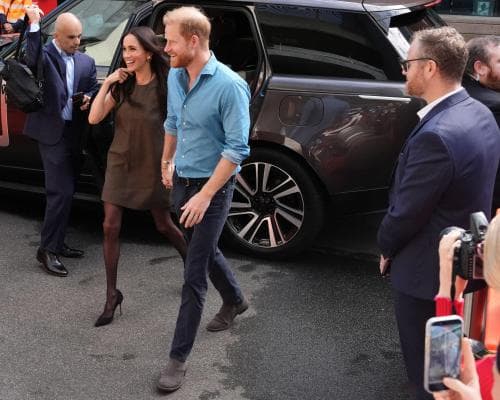
When the Duke and Duchess of Sussex pack up their Montecito mansion and land back on British soil this month, they won't be stepping into a royal welcome mat funded by the taxpayer. Andy Burnham, the Greater Manchester mayor, has called their security arrangements a 'private matter'—a polite way of saying the Sussexes are on their own when it comes to the bill for armed guards, secure vehicles, and safe houses. For anyone who's ever priced a premium asset, this is the ultimate lifestyle cost: the price of being royal-adjacent without the royal payroll.
The move marks a stunning reversal for a couple who fled the UK in 2020 citing media intrusion and safety fears. Now, with their children—Archie, seven, and Lilibet, five—enrolled in British schools starting in September, they're returning to a country where their security status has been a legal battleground. King Charles was reportedly told on Sunday and 'welcomes the opportunity to see more of his family in a personal capacity.' But there's a catch: the Sussexes remain private individuals, non-working royals, and there's no 'half-in, half-out' option. That means no automatic taxpayer-funded protection—a decision that has already cost Harry a court battle and could cost the couple millions in private security fees.
The numbers behind this are staggering. Private security for a high-profile family like the Sussexes—think round-the-clock close protection, armored vehicles, secure communications, and risk assessment—can easily run into the tens of millions of dollars annually. In the US, where they've been living, their security costs are already a line item in their lifestyle, but the UK adds a new layer: the threat landscape is different, and the legal framework is unforgiving. Last year, Harry lost a High Court challenge against the Home Office over his right to taxpayer-funded protection, after the automatic cover was withdrawn when he and Meghan stepped back as working royals. In his witness statement, Harry said, 'The UK is my home. The UK is central to the heritage of my children and a place I want them to feel at home as much as where they live at the moment in the US. That cannot happen if it's not possible to keep them safe.' That statement now reads like a prelude to a massive private expenditure.
The rarity of this situation is its own kind of asset. The Sussexes are among a tiny cohort of people who are globally famous enough to need constant protection but no longer have institutional backing. For the ultra-wealthy, this is a familiar problem: when you're worth billions—and the Sussexes, with their Netflix deal, Archewell ventures, and inherited wealth, are certainly in that orbit—security becomes a discretionary cost that scales with visibility. The couple's net worth, estimated in the tens of millions, isn't the issue; it's the liquidity required to sustain a security apparatus that most people can't even imagine. This is a lesson in wealth protection: the more visible your assets, the more you pay to shield them.
For markets and the wealthy, the Sussex return signals a broader trend: the privatization of safety. As state protection becomes more conditional—tied to 'working' status or political favor—the rich are increasingly building their own security ecosystems. This is a booming niche, with private security firms and 'risk consultants' seeing double-digit growth as geopolitical tensions rise. For investors, it's a reminder that security isn't just an expense; it's a sector with tailwinds. For the Sussexes, it's a line item that could rival their mortgage. The question now is whether they can afford to live in the UK without the royal umbrella—and what that means for their children's future.
Looking ahead, the Sussexes' return will be watched not just by royal watchers but by wealth managers. Their security bill, though private, is a proxy for how much it costs to be a global brand in a volatile world. If they manage to pull it off—living in a non-royal residence, funding their own protection, and keeping their children safe—they'll have written a playbook for other high-net-worth families navigating similar transitions. If not, the cost could force them back across the Atlantic. Either way, it's a story about capital: human, financial, and protective. And in this market, the smartest money knows that security isn't a luxury—it's the ultimate hedge.