The Royal Navy's 72-Hour Shadow Game: How Persistent Surveillance Is Rewriting Naval Deterrence
The Royal Navy's three-day tracking of four Russian vessels, including sanctioned cargo ships, showcases a new era of naval deterrence where constant surveillance and allied coordination force adversaries to divert warships from their core missions. This operation signals a shift toward proactive, technology-enabled maritime security that could redefine power projection in contested waters.
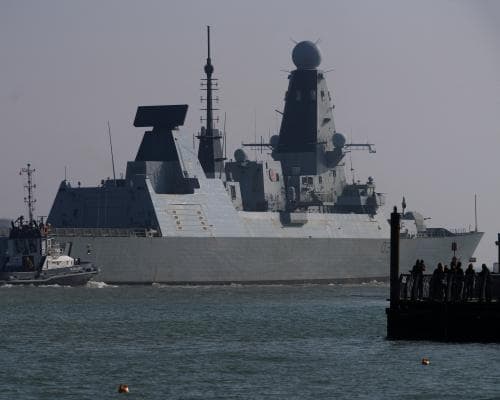
For 72 hours last week, the Royal Navy played a high-stakes game of cat-and-mouse in the chill waters of the North Sea, its radars locked onto four Russian ships slipping south toward the Channel. This was no passive watch. It was a choreographed show of force—HMS Duncan, HMS St Albans, and HMS Severn working in tandem, a Merlin helicopter buzzing overhead, all eyes on the Admiral Levchenko, a Russian destroyer escorting two sanctioned cargo vessels, the General Skobelev and Sparta, toward Dover. The message was unmistakable: Britain's maritime doorstep is no longer an open thoroughfare for Moscow's shadow fleet.
This operation is a glimpse into the future of naval warfare—where the prize isn't a dramatic battle but the quiet, relentless pressure of surveillance that forces an adversary to react. The Russians did react, dispatching their own frigate, the Neustrashimy, to guard the shipment. That's precisely the point, according to First Sea Lord Gen Gwyn Jenkins, who warned there is 'no room for complacency.' He framed the operation as a strategic win: 'Alongside our allies, this approach is forcing Moscow to divert Russian warships away from their core purpose.' In other words, every frigate tied to escort duty is one less asset for power projection elsewhere—a zero-sum equation that favors the side with superior sensors and allied networks.
The shadow fleet itself is the real enemy here. These are aging, often poorly maintained tankers and cargo ships, many under sanctions, that Russia uses to move oil and goods while evading Western restrictions. They're a gray-zone threat, operating in legal limbo, but with real risks—from environmental disasters to espionage. The UK has sanctioned over 500 such vessels, and in June, Royal Marines stormed the tanker Smyrtos, marking the first direct boarding of a shadow fleet ship. That's a significant escalation, and it's not lost on the Kremlin, which has threatened retaliation. The stakes are rising, and the Royal Navy's recent stats show why: in July alone, it spent 21 days monitoring Russian activity, a 25% increase year-on-year.
This is about more than just defense; it's about leveraging technology and alliances to change the cost-benefit calculus for adversaries. The Royal Navy isn't just tracking ships—it's building a persistent surveillance network that integrates radar, satellite data, and intelligence sharing with NATO allies. The result is a form of deterrence that doesn't require firing a shot. By making every Russian transit through UK waters a monitored, publicized event, London is signaling that the shadow fleet's anonymity is gone. That's a powerful tool in an era where information is as strategic as firepower.
The competitive context is clear: Russia is testing the West's resolve, but the West is responding with a new playbook. The UK's recent pledge to provide Ukraine with blueprints for long-range Scalp missile components—announced during Prime Minister Andy Burnham's Kyiv visit this week—further underscores this shift toward proactive, tech-forward defense. These moves, combined with the naval surveillance, paint a picture of a military that's learning to fight in the gray zone, where deterrence is built on constant, visible presence and rapid response.
What does this signal for the sector? Expect more investment in autonomous surveillance systems, AI-driven threat detection, and undersea drones—tools that can extend the Navy's eyes without stretching its crew. The shadow fleet is a global problem, and the UK's approach could become a template for other nations facing similar threats. The Navy's message is simple: we will watch, we will track, and we will act. That's not just a defensive posture; it's a strategic offensive in the battle for maritime security.
Looking ahead, the Royal Navy's 72-hour operation may be remembered as a turning point—a moment when naval power shifted from brute force to smart, relentless observation. The Russians may have gotten their ships through, but they paid a price in prestige and operational distraction. As the shadow fleet grows and threats multiply, expect this playbook to evolve, with more allies joining the watch. The future of naval warfare isn't just about bigger guns; it's about who can see more, share faster, and act smarter. And right now, the Royal Navy is betting that persistence beats aggression—a bet that could shape the seas for decades to come.