The Prosthetic Legacy: How Tim Curry's Shapeshifting Art Foreshadowed Biotech's Identity Revolution
Tim Curry's death at 80 closes a chapter on transformative performance, but his legacy of radical physical metamorphosis—from Frank-N-Furter to Pennywise—now mirrors a biotech era where identity itself is becoming engineered, programmable matter. His career was a masterclass in using prosthetics and makeup as early 'bio-hardware,' anticipating today's synthetic biology and regenerative medicine frontiers.
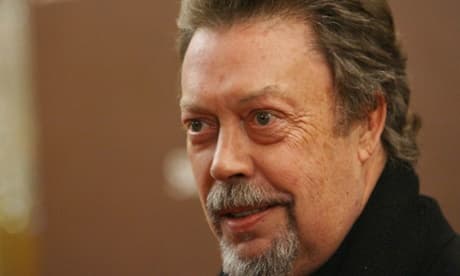
Tim Curry didn't just act. He *became* the hardware. When he died peacefully at his Los Angeles home aged 80, the world lost a performer who understood that the future of character lay not in subtle tics, but in total biological overhaul—a concept that now defines the bleeding edge of biotechnology. His manager's confirmation of his death, with no cause given, closes a career that was, ironically, a prophecy of our current obsession: the radical, physical re-engineering of the human form.
Consider the raw data of his transformations. As Dr. Frank-N-Furter in the 1975 *Rocky Horror Picture Show*, Curry wasn't just wearing makeup; he was deploying a prototype of identity modulation—layering lacquers, corsets, and heels to construct a new biological persona from scratch. By 1985's *Legend*, he was the Lord of Darkness, buried under scarlet latex and giant horns, effectively wearing a second skin that mimicked a non-human genome. Then came 1990's *Pennywise* in Stephen King's *It*—full-face clown pancake, yes, but also a study in how prosthetics can trigger primal neurological fear responses. These weren't costumes; they were early, analog iterations of what synthetic biologists now call 'morphological hacking.'
This is where the innovation desk leans in. Curry's physical sacrifices—hours in makeup chairs, layers of silicone adhered to his skin—mirror the current pipeline of biotech startups engineering living tissue for therapeutic and enhancement purposes. The prosthetics he wore were inert; today's equivalents are bioactive. We're seeing companies build 3D-printed skin grafts that integrate with nerve endings, and lab-grown cartilage that could replace the very joints Curry contorted on stage. His art was static transformation; the new science is dynamic, regenerative change. The 'Lord of Darkness' horns are being replaced by biocompatible scaffolds that encourage bone regrowth.
The capital flow here is staggering. While Curry's transformations were funded by film studios, the modern iteration is backed by elite venture funds and billionaire philanthropists who see the human body as the ultimate frontier of upgradeable architecture. The market for advanced biomaterials—smart polymers, self-healing hydrogels, and gene-edited tissues—is projected to hit hundreds of billions within a decade. Curry's career arc, from the West End's *Hair* in 1968 to Broadway's *Spamalot*, tracked the rise of physical performance art; now, the same cultural hunger for metamorphosis is driving demand for anti-aging therapies and elective bio-enhancement that blur the line between medicine and identity.
But the deeper signal is more profound. Curry's genius was making the grotesque feel human, proving that altered flesh could still convey vulnerability and wit. That is precisely the challenge facing biotech's elite players today: ensuring that as we gain the power to rebuild bodies—to fight disease, extend life, or even augment capability—we don't lose the soul that Curry so brilliantly animated. The technology is moving from the makeup chair to the operating room, but the ethical question remains identical: what does identity mean when the envelope containing it is endlessly editable?
Looking forward, the next decade will see the prosthetics of Curry's era become obsolete museum pieces, replaced by living, responsive materials. Imagine a future where a burn victim regenerates skin that feels like the original, or where a genetic disorder is corrected in utero—not by a latex mask, but by an mRNA payload. Curry showed us the spectacle of change; the biotech sector is now building its substance. The final act of his legacy isn't a curtain call; it's a handoff to the scientists and founders who are making permanent metamorphosis a clinical reality.
As we mourn the man, we should also note the trajectory. Tim Curry's death marks the end of an era of *simulated* transformation. The era of *engineered* transformation is just beginning. The question is whether we'll have the artistry to match the science—to ensure that in our quest to redesign the human chassis, we retain the unmistakable, irreplaceable spark that made Curry's creations unforgettable. The prosthetics are off now, but the blueprint he left behind is more relevant than ever.