The Oscar Race Just Found Its Most Exclusive Story: Andrew Scott and the Role That Could Break a 96-Year Silence
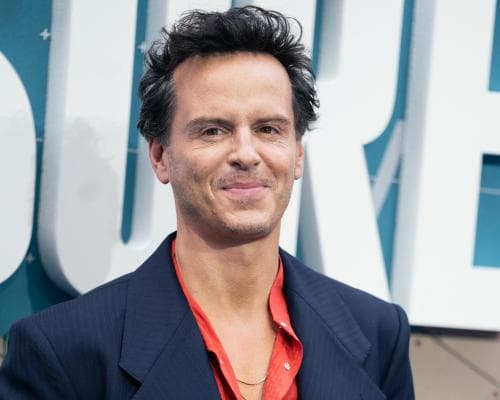
Imagine a club so exclusive it has admitted only straight men for nearly a century. Now imagine the key to that club being handed to a 49-year-old Irish actor who was once advised to hide who he loved. That's the seismic shift happening in Hollywood right now, and it's centered on Andrew Scott.
As the Toronto film festival wrapped last weekend—the final jewel in autumn's trifecta of Venice, Telluride, and Toronto—the awards conversation crystallized around one name. Scott, who turns 50 next month, is no longer just a lock for a best actor nomination. He's the prohibitive favorite to win the Oscar next spring. If he does, he will become the first out gay man to take that prize in the Academy's almost 100-year history. Let that sink in. In an industry that prides itself on progress, this glass ceiling has stood since the days of silent films.
The film driving this moment is Elsinore, a passion project Scott not only stars in but produced, rallying funding alongside Stephen Beresford. Beresford wrote Scott's big-screen breakthrough, 2014's Pride, another real-life tale of 1980s gay history. Elsinore is set in 1989 and tells the story of Ian Charleson, the dashing Scottish star of Chariots of Fire and Gandhi. Charleson was a talent of undeniable magnetism, but he muted his sexuality, believing it essential for stardom. He even excised his first role—given by Derek Jarman—from his CV, causing a lifelong rift. Despite his gifts, Charleson never reached the fame he felt he deserved. Then, in December 1989, he took over Hamlet from Daniel Day-Lewis at the National Theatre, secretly battling AIDS. His performance was reckoned one of the finest ever. He died six weeks after the final show, aged 40. His family then went public with his diagnosis and sexuality. It was the first celebrity death in the UK attributed to AIDS, and it did much to boost awareness and acceptance.
For Scott, the film is deeply personal. He was galvanized to get it made by the death of his mother, Nora, in 2023. 'When you're in that grief state,' he said, 'you feel like you've got nothing to lose.' That raw honesty fuels every frame. And the contrast between Scott and Charleson is striking. Born in Dublin in 1976, Scott shot his first film at 17, studied drama at Trinity College Dublin, and moved to London at 22. Despite playing gay characters, he too was advised to stay silent about his own sexuality to avoid being pigeonholed. Speaking after Elsinore's Toronto premiere, he said that climate gave him 'a horrible feeling that I perhaps wasn't going to be able to speak a language I was desperate to speak.' He came out publicly in 2013, aged 37, shortly after his breakout as Moriarty opposite Benedict Cumberbatch in Sherlock. In the 13 years since, he has arguably done more than any man since Ian McKellen to refute the idea that publicly gay actors cannot plausibly play straight roles. His turn in Fleabag is the most lusted-after example, yet the hot priest is just one note in a symphony of range.
This is where wealth, taste, and status intersect. Elsinore isn't just a movie; it's a piece of cultural heritage, a restoration of a forgotten chapter. The film's craftsmanship—from the period detail of 1989 London to the haunting theatricality of the Hamlet sequences—speaks to a collector's sensibility. It's the kind of story that appeals to those who understand that true luxury isn't just about price tags; it's about owning a piece of history. And the rarity here is profound. Charleson's story was nearly lost. Scott's victory would be a first. In a world where exclusivity is the ultimate currency, this narrative is a blue-chip asset.
What does this signal about the luxury market? It says that authenticity is the new status symbol. The ultra-wealthy have long collected art, watches, and cars. But now, they're collecting stories—stories that challenge, that matter, that shift paradigms. Andrew Scott's rise is a reminder that the most valuable things in life are often the ones that were once hidden. His Oscar would not just be a personal triumph; it would be a cultural milestone, the kind that redefines what's possible for the next generation. For those who move in elite circles, aligning with such a moment is the ultimate expression of discernment.
As the awards season unfolds, keep your eyes on Scott. He is not just an actor; he is a torchbearer. And if he wins, he will not just be holding a statuette. He will be holding a door open. For the first time in nearly a century, that door will be open to everyone. And that, in the end, is the most exclusive club of all: the one that welcomes all who dare to be themselves.
The Experience
To immerse yourself in this world, attend a private screening of Elsinore in London or New York, followed by a dinner with the filmmakers. Or simply reserve a seat at the National Theatre for the next Hamlet revival—and feel the ghost of Charleson in the room.