The New Crown Jewel of Gastronomy: Zareh Redefines What 'Restaurant of the Year' Means
In a world where the ultra-wealthy often chase the same Michelin-starred rituals—white tablecloths, tasting menus, and sommeliers who whisper—a quiet revolution is simmering in Melbourne. It’s called Zareh, and it just stole the crown from the establishment. When Gourmet Traveller named this Armenian-Lebanese eatery its restaurant of the year, it wasn’t just an award; it was a seismic shift in how we define culinary excellence. For the discerning palate, this is a signal that the future of luxury dining isn’t about gilding the plate—it’s about stripping it bare to reveal soul, story, and spice.
The numbers are telling. Zareh, which opened its doors in August 2025, has leapfrogged a legacy of winners that includes the likes of Attica, Saint Peter, and Quay. That’s not just a win; it’s a heist. Co-owners Tom Sarafian and Jinane Bou-Assi have crafted a menu that reads like a passport: aish baladi flatbread made from flour milled just a stone’s throw away on the Mornington Peninsula, kafta nayyah with raw minced lamb sourced from Tasmania and Victoria, and hummus crowned with delicate spanner crab. This is not fusion for fusion’s sake—it’s a deliberate, loving cartography of their Armenian, Egyptian, and Lebanese roots, mapped onto Australian soil.
But the real story is the craftsmanship behind the casual veneer. Sarafian, with a disarmingly honest shrug, admits to imposter syndrome: “It’s not fine dining, but we may be part of the new sort of scene that handles food just as well… but a bit more casual in their approach.” That’s the secret. The rarity here isn’t truffles or caviar; it’s authenticity. Zareh is named after Sarafian’s paternal grandfather, and every dish is a love letter—specifically, as Sarafian notes, “a love letter from us to Lebanon, who opened their arms and their country to Armenia.” This isn’t a restaurant; it’s a living archive of diaspora, resilience, and cross-cultural celebration. For those who have everything, this is the one thing money can’t buy: a meal that tastes like memory.
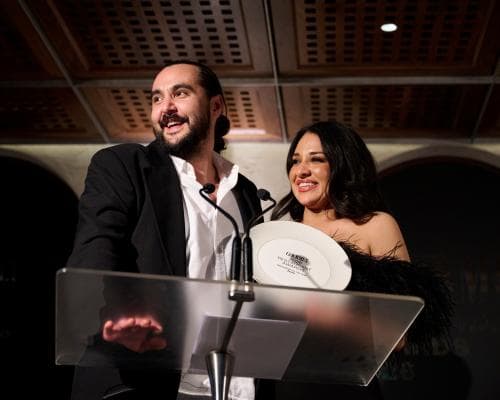
The award ceremony in Sydney was a masterclass in the new luxury ethos. Winners repeatedly invoked Australia’s migrant history, and none more poignantly than Marc Polese, whose 70-year-old Italian institution Beppi’s took the reader-voted “enduring excellence” award. He thanked “the immigrants that work alongside us and make this such a rich industry,” even as he acknowledged the ugly political rhetoric swirling outside. Meanwhile, Saadi’s Saavni Krishnan and Aditya Suresh, first-generation migrants, won best new talent for their “modern Indian” food—hand-rolled wheat noodles from Uttarakhand topped with wild barramundi from the Northern Territory. And “Big” Sam Young, who rose from a $10-an-hour kitchen hand to co-own Sydney’s Young’s Palace and S’more, took restaurant personality of the year. His acceptance speech was a tear-jerker: “Being in this room is absolutely a privilege.”
What does this signal for the luxury market? The old guard—the stuffy, the formal, the European-centric—is yielding to something more visceral. Wealthy diners are no longer satisfied with perfection; they want perspective. They want to taste a story of survival, a narrative of migration, a plate that carries the weight of history. The rise of Zareh is a bellwether: the next-generation luxury experience is intimate, unpretentious, and deeply personal. It’s about the chef’s grandmother’s recipe, not the chef’s pedigree. It’s about the hand-milled flour, not the gold leaf. This is a democratization of taste, but make no mistake—it’s elite in its execution.
Looking forward, Zareh is more than a restaurant; it’s a blueprint. As the industry applauded Stephanie Alexander with a standing ovation for her lifetime contribution, the message was clear: legacy is no longer built on static menus but on dynamic stories. For the connoisseur who has dined at Noma and Osteria Francescana, the next frontier is a table in a modest Melbourne eatery where the hummus arrives with a side of history. Book now, because the secret is out—and the world’s most discerning palates are already on the next flight.
The Experience
To taste this award-winning revolution, book a table at Zareh in Melbourne and let Sarafian and Bou-Assi guide you through their cross-cultural menu—or commission a private tasting for your next soiree.